Understanding virtual family counseling autism services
When you first start looking into virtual family counseling autism options, it can feel overwhelming. The terminology, platforms, and different therapy models may seem complex at a time when you already have a lot on your plate. Virtual family counseling simply means that you and your child receive autism support services through secure video calls or other digital tools instead of in a clinic.
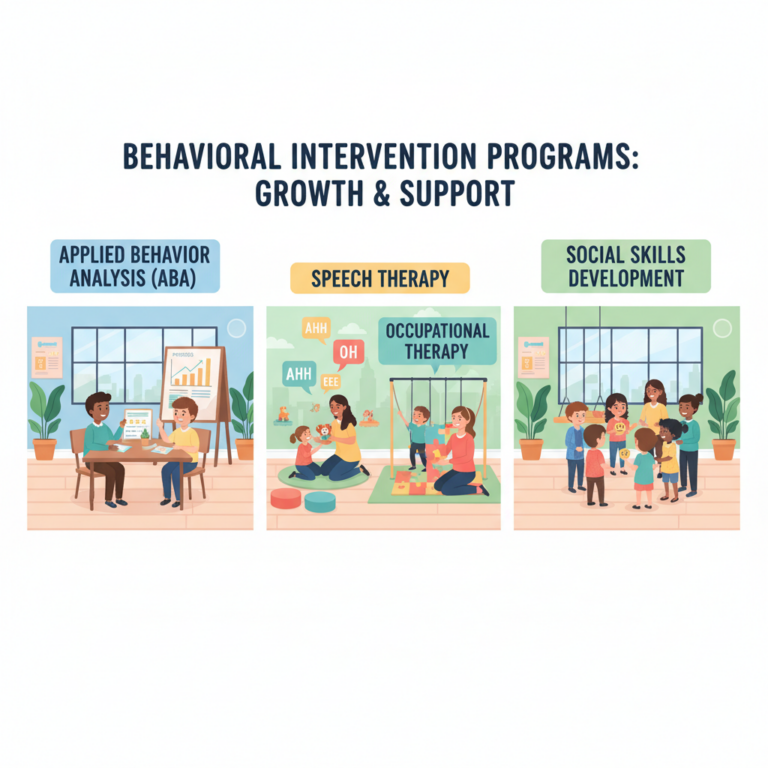
These services can include Applied Behavior Analysis (ABA), speech therapy, occupational therapy, social skills training, and structured parent coaching, all delivered online. Remote therapy for autism, also called teletherapy or telehealth, already supports a wide range of services, from speech and behavioral therapy to social skills work, and it allows you to access care from home [1].
For many families, this model provides a realistic way to start or continue treatment without long drives, waitlists, or repeated disruptions to daily routines. As you explore your options, it helps to understand how virtual family counseling works, what it can offer, and what limitations to consider.
How virtual family counseling works for autism
Virtual family counseling autism services use secure video platforms and digital tools to connect you with autism specialists who might otherwise be out of reach. Sessions usually take place at home through a phone, tablet, or computer with a camera and microphone.
In most programs, you meet regularly with a clinician such as a Board Certified Behavior Analyst (BCBA), speech-language pathologist, occupational therapist, or psychologist. They guide you and your child through structured activities, coach you on strategies, and adjust your child’s care plan based on progress.
Common telehealth formats you may encounter
You will see several types of virtual support. Most families use a mix rather than only one format:
- Direct telehealth therapy with your child and clinician
- Parent or caregiver coaching sessions
- Joint family sessions that focus on communication, routines, or behavior plans
- Virtual assessments and progress reviews
- Home-based programs that blend live sessions with between-visit practice
Telehealth has proven to be a highly effective method for diagnosis and therapy, with diagnostic accuracy via telehealth reported in the 80 to 91 percent range, while also supporting early diagnosis, monitoring, caregiver training, and evidence-based treatment across locations [2].
If you want to see how different remote services fit together in a full program, it can help to look at structured options like telehealth autism support programs or a dedicated telehealth autism center.
Key components of effective virtual autism support
Not all virtual programs are created equal. Research highlights several ingredients that make family-centered remote support more effective. A 2025 analysis pointed to the importance of video conferencing, mobile apps, real-time feedback, tailored services, peer support, and structured feedback loops for adapting care plans over time [3].
In practice, that means a strong virtual program usually offers the following.
1. Real-time video and interactive tools
High quality video sessions allow your clinician to observe your child’s behavior in real situations at home. Many programs use features like:
- Screen sharing for visual schedules, social stories, or communication boards
- Virtual backgrounds or digital games tailored to your child’s interests
- Interactive activities that closely mimic in person therapy tasks
These tools have been shown to increase engagement and make online sessions feel more like in person therapy for children with autism [2].
If your child needs consistent speech work, structured programs such as teletherapy for speech in autism often rely heavily on these interactive tools.
2. Tailored goals and care plans
Family-centered virtual autism support works best when goals are adapted to your child’s developmental level and your family’s daily realities. Effective programs:
- Set specific, measurable goals in communication, behavior, or daily living
- Adjust activities to fit your home environment and available materials
- Revise the plan frequently based on your reports and session observations
Many providers now build a full telehealth autism care plan so that everyone, including you, knows the priorities, methods, and ways to track progress.
3. Parent and caregiver involvement
Virtual family counseling autism programs rely heavily on your participation. This is not a drawback. In fact, multiple randomized trials have found that telehealth parent training can:
- Improve how accurately parents follow intervention protocols
- Reduce parental psychological distress
- Increase satisfaction with services
- Improve social communication skills and reduce behavioral difficulties in children with ASD [3]
Structured online parent training autism and remote coaching for parents of autism help you turn each day at home into meaningful practice time, rather than relying solely on what happens during scheduled sessions.
Types of virtual family counseling autism services
When you look into virtual autism counseling services or broader virtual autism therapy services, you will find several core service types. Many families combine these so that children receive comprehensive support.
Virtual ABA and remote behavioral intervention
Applied Behavior Analysis is one of the most studied approaches for autism treatment. Telehealth ABA brings these principles into your home through video sessions and coaching. Retrospective data from the COVID period found that virtual ABA can maintain similar treatment hours to in person services, around 8 to 10 hours weekly, with slightly higher improvements in independent responding, 75 percent versus 74 percent, in one analysis [4].
Key features of telehealth ABA therapy autism and remote behavioral intervention autism usually include:
- Virtual assessment of your child’s skills and behaviors
- A structured behavior plan with clear goals
- Live modeling and coaching as you practice strategies in real time
- Ongoing data collection using apps or shared forms
- Regular review and adjustment with a BCBA
Caregiver engagement makes a significant difference to outcomes. High engagement, including active participation and applying strategies between sessions, is linked with stronger developmental gains in virtual ABA [4].
Teletherapy for speech and communication
Online speech therapy can be especially well suited to telehealth. It focuses on communication, which translates effectively through video. Telehealth speech services for autism:
- Use video calls to practice articulation, vocabulary, and language understanding
- Incorporate visual supports, shared screens, and interactive activities
- Coach you on communication strategies to use throughout the day
Evidence suggests that remote therapy can be as effective as in person treatment for some modalities like speech and behavioral therapy [1]. Programs dedicated to teletherapy for speech in autism usually build in strong parent training so that gains carry over into daily routines.
Remote social skills and peer interaction
Many children on the spectrum struggle with conversation, play, and peer interaction. Virtual platforms have opened new possibilities in this area. Remote social skills therapy and broader online autism therapy for children may include:
- One-to-one sessions focused on turn taking, perspective taking, and conversation
- Small virtual groups where children practice skills with peers
- Visual scripts, role plays, and games that build confidence in social situations
Virtual reality (VR) is also emerging in this space. Immersive VR environments have shown moderate to strong effectiveness for improving communication, social skills, daily living, and emotion regulation for autistic individuals, with platforms such as XRHealth leading this work [4].
Parent coaching and family counseling
In virtual family counseling autism programs, you are not a passive observer. Parent sessions typically focus on:
- Understanding your child’s behavior and communication
- Creating predictable routines and visual supports at home
- Handling challenging behavior in consistent ways
- Managing stress and building your own coping skills
A 2025 randomized controlled trial involving 140 parents of children with autism found that adding remote support courses to existing caregiver mediated interventions reduced parental stress, increased feelings of efficacy, and boosted enthusiasm for training [3].
If you are also a professional or paraprofessional supporting a child, you might see options like virtual aba supervision services that extend this coaching and oversight model to your role.
Benefits of virtual family counseling for autism
Virtual family counseling autism programs offer clear advantages for many families. These benefits are practical as well as clinical.
Improved access and flexibility
Telehealth services help you connect with experienced therapists regardless of where you live. Multiple reports highlight how online therapy removes geographic barriers, shortens waiting lists, and reduces travel time and costs, especially for rural or underserved families [5].
This flexibility can make it easier to:
- Schedule sessions around work and school
- Involve more than one caregiver
- Maintain consistent attendance
One program review reported higher completion rates, 85 percent versus 70 percent, and higher attendance, 90 percent versus 75 percent, for virtual autism therapy compared to in person care [4].
Therapy in your child’s natural environment
Telehealth sessions take place where your child lives and plays. This allows the clinician to observe real routines and behaviors, not just clinic behavior. A 2025 review of telehealth autism assessments found that many caregivers and clinicians believed home based observation improved the accuracy of evaluations because children showed more typical behaviors than in clinical settings [6].
For ongoing therapy, working in your home environment:
- Increases the chances that new skills will generalize
- Makes it easier to use your existing toys and materials
- Helps you integrate strategies into regular activities, such as meals and bedtime
Programs that emphasize home-based virtual autism support are built around this idea of practicing in real life settings.
Active family involvement and empowerment
Virtual family counseling autism models require you to be part of the process. This can feel like extra work at first, but research suggests it leads to stronger overall outcomes. Families often report:
- Greater understanding of autism and behavior
- Increased confidence in supporting their child
- Reduced stress related to challenging situations
Parents in web based programs that included therapist assistance or parent components showed more positive outcomes compared to app only interventions without support [7].
Programs such as online autism intervention programs and remote autism developmental support frequently weave education and coaching into every step, so that you are building skills alongside your child.
Evidence and real world examples of telehealth autism services
You may wonder whether virtual services really work outside of research studies. Several large providers and systematic reviews give a clearer picture.
What research tells you
Recent studies and reviews have noted that:
- Six out of ten randomized controlled trials of web based interventions for children and young people with neurodevelopmental disorders, including ASD, showed effectiveness in reducing core or associated symptoms, although the overall pooled effect size was not statistically significant because of small samples and high variability between studies [7].
- Interventions that included therapist support or active parent involvement tended to perform better than standalone apps [7].
- Videoconferencing based behavioral interventions for tic disorders, which often co-occur with autism, were effective and well accepted by children and families [7].
- Telehealth autism assessments helped clinicians reach diagnostic conclusions in about 80 to 95 percent of cases, with high satisfaction from both caregivers and professionals [6].
Remote delivery of pivotal response treatment, or PRT, for children aged 2 to 5 has also shown promising improvements in communication and engagement, and ongoing studies are exploring how to optimize these protocols and integrate them into insurance coverage at the same level as in person treatments [2].
How organizations are using telehealth today
Larger autism providers have expanded telehealth in ways that may mirror what you encounter:
- Hopebridge offers telehealth autism services, including ABA, occupational therapy, and speech therapy, so children can continue customized programs at home and maintain progress when in person visits are disrupted, such as during the COVID 19 pandemic [8].
- Ascend Autism delivers ABA through encrypted video platforms like Zoom and Skype, pairing child sessions with remote parent training and frequent plan adjustments, while also managing intake and insurance verification remotely [9].
- Analyses of virtual autism programs have found not only similar or better treatment outcomes, but higher engagement levels, more sessions completed, and better attendance than in person models in some cases [4].
Programs like these often bundle services into broader telehealth therapy for autism spectrum offerings so that you can access ABA, speech, and parent coaching through a single coordinated approach.
Challenges and limitations to be aware of
Virtual family counseling autism services are not always the right match for every child or family. It helps to understand common challenges before you decide.
Technology access and reliability
Effective telehealth requires:
- A stable internet connection
- An updated device with camera and microphone
- A quiet, reasonably private space
Families without reliable technology or who have limited digital literacy can find these requirements stressful. Some reviews have also noted that families with fewer resources or those who are not fluent in the language of service may be at a disadvantage in telehealth models [6].
If you know technology will be a barrier, ask potential providers about backup plans such as phone based coaching, offline materials, or support in setting up devices.
Limits of hands-on interventions
Some therapies rely on physical prompts, sensory integration activities, or specialized equipment that is difficult to replicate over video. Reports on telehealth autism therapy acknowledge that:
- Certain motor or sensory tasks are less feasible virtually
- Engagement can be harder to sustain with very young children
- Parents can feel pressure when they are asked to implement complex strategies themselves
Systematic reviews suggest that hybrid models that combine in person visits with remote sessions are often preferred when hands-on work is needed [1].
You can clarify which portions of a program are practical online and when occasional in person support might be recommended.
Not every child is an ideal candidate
Clinicians reviewing telehealth assessments have noted that children who are older, less medically or psychosocially complex, less active, and with clearer autism presentations tend to be the best fit for remote evaluations. Younger children and those with complex needs may require more in person support [6].
The same general principle can apply to ongoing therapy. That does not mean virtual options are off the table, but you may need a more individualized mix of telehealth services autism center support and local resources.
How to evaluate and choose a virtual autism program
When you start comparing options, a simple framework can make your decision process more manageable.
Ask any potential provider how they will support both your child and your family, not just what they will do during a weekly session.
Here are key questions to consider when looking at virtual autism counseling services or related programs:
-
What services are included?
Do they offer ABA, speech therapy, social skills, parent coaching, or a combination through virtual autism therapy services? -
How is your child assessed?
Do they conduct a structured intake, perhaps including a virtual functional behavior assessment, parent interviews, and standardized tools? -
How are goals set and tracked?
Will you receive a written telehealth autism care plan with clear goals, timelines, and methods for measuring progress? -
What is expected of you as a caregiver?
How many sessions are devoted to parent coaching or remote coaching for parents of autism? What kind of between session practice is realistic for your schedule? -
How do they handle technology and privacy?
Are platforms secure and compliant with health privacy regulations, similar to models using HIPAA compliant tools such as Zoom or Skype [9]? -
What support is available if your child is struggling to engage?
Do they have strategies for attention, behavior, and screen fatigue? Will they adjust the format to better fit your child?
Taking time to ask these questions often leads to a better fit and more sustainable engagement over the long term.
Getting started with home based virtual autism support
Once you choose a provider, you can take several practical steps to make the transition smoother:
- Prepare a small, consistent therapy space with minimal distractions
- Test your internet connection and device settings before the first visit
- Gather basic materials such as paper, markers, or preferred toys
- Talk with your child about what telehealth sessions will look like
- Schedule sessions at times when your child is usually alert
As you move forward, remember that progress with autism supports is often gradual, whether services are in person or online. The goal of virtual family counseling autism services is to wrap support around your real daily life, not to add another layer of stress. By combining structured telehealth services with your knowledge of your child, you can create a home environment where learning and growth are possible, even when in person therapy is limited.