Training for autism at home can feel overwhelming at first, but with the right strategies you can create a supportive environment where your child thrives. By combining consistent routines, visual supports, communication strategies, ABA techniques, progress monitoring, and family collaboration, you’ll build a framework that promotes learning, reduces anxiety, and fosters independence. Throughout this guide you’ll find practical advice drawn from expert sources to help you implement effective training for autism at home.
With clear steps and real-world examples, you’ll learn how to tailor daily schedules, introduce new skills gradually, track progress with data, and involve everyone in your household. Whether you’re just beginning or refining your approach, these insights will give you confidence in supporting your child’s development every day.
Emphasize consistent routines
Children with autism spectrum disorder especially benefit from routines at home because they appreciate predictability and patterns, which promote positive bonds and ease everyday unpredictability [1]. When you establish clear, consistent sequences for morning, mealtime, schoolwork, and bedtime, you reduce anxiety and help your child anticipate transitions smoothly.
Why routines matter
A well-designed home routine provides consistency and predictability, which reduces behavioral issues while supporting learning, development, and independence [2]. When your child knows exactly what happens next, they’re more likely to engage willingly rather than resist changes.
Identify natural rhythms
Start by observing your child’s alertness, challenging behavior times, focus duration, and interests. Aligning tasks with these natural rhythms helps you schedule more demanding activities—like focused learning—when they’re most receptive, while reserving breaks or sensory play for moments when they might lose concentration.
Maintain consistency
Consistency and patience are critical. Children take time to learn routines, so use the same language and cues every time. Offer supportive praise when they follow steps correctly, and gently guide them back on track when they need extra reminders. Over time, the repetition will foster independence.
Use timers and alarms
Timers, alarms, or transitional cues help signal the end of one activity and the start of another. Visual or auditory timers let your child anticipate shifts, making transitions smoother. Gradually fade these supports as your child masters the routine steps.
Create visual schedules
Visual supports such as pictures, icons, or written words can help your child understand the sequence of events and follow routines more independently [1]. A daily visual schedule becomes a roadmap that your child can reference repeatedly.
Choose schedule type
Decide whether you’ll use picture cards, a whiteboard with magnets, an app on a tablet, or a laminated chart on the wall. Pick the format that best matches your child’s preferences and your household setup—you may even combine methods.
Review and adjust daily
Build time into your morning routine to review the schedule together. Point to each item, use clear language to describe the task, and let your child ask questions. At night, briefly revisit what went well and what might need tweaking, so you can update tomorrow’s chart.
Visual schedules can include:
- Picture icons for each task
- Simple written descriptions
- Color-coded segments for different parts of the day
- Digital timers or countdown apps
- Physical cues like objects related to the activity
By placing schedules in prominent locations—like the kitchen or your child’s bedroom—you ensure they’re always in view and easy to use. As your child grows more independent, you can fade piece by piece: remove icons, let them verbally confirm steps, or shift to a purely text-based schedule.
Integrate communication strategies
Whether your child is verbal or nonverbal, targeted communication strategies help them express needs, understand expectations, and engage socially. You’ll create opportunities for language growth while reducing frustration.
Promote language development
Many nonverbal children eventually develop speech, even after age four, providing hope for families seeking to bolster communication at home [3]. Use natural interactions—mealtime, play, and daily routines—to model words and phrases. Narrate what you’re doing, encourage imitation, and celebrate any attempt to communicate.
Ask open-ended questions
Instead of yes/no queries, ask questions that prompt longer responses. For example, you might say, “What toy do you want next?” rather than “Do you want the ball?” This encourages fuller language use and helps your child practice constructing responses [4].
Use assistive technologies
Augmentative and alternative communication (AAC) devices—from picture exchange systems to speech-generating tablets—can give nonverbal children a voice. Introduce AAC tools alongside spoken words so your child learns to use them interchangeably. As spoken language emerges, you can gradually shift emphasis from the device to verbal speech.
Collaborate with therapists
Therapists can guide you in selecting and customizing communication strategies. Regular check-ins with speech-language pathologists ensure that home practices align with clinical goals and evolve as your child makes progress.
Embed ABA techniques
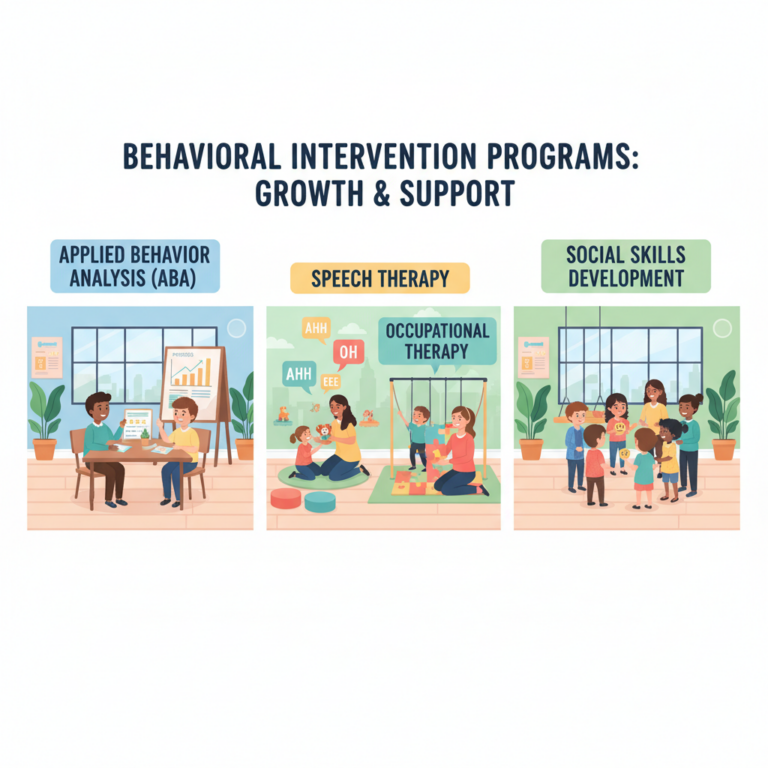
Applied Behavior Analysis (ABA) offers evidence-based methods you can apply throughout the day to teach new skills and reduce challenging behaviors. By integrating ABA into your home routines, you’ll reinforce learning in natural contexts.
Use positive reinforcement
Identify rewards that genuinely motivate your child—praise, stickers, extra playtime, or preferred snacks—and deliver them immediately when they demonstrate the desired behavior. Consistent reinforcement boosts the likelihood of skill acquisition and encourages repetition.
Implement prompting and fading
When teaching a new task, provide prompts (verbal cues, hand-over-hand guidance, visual reminders) to help your child succeed. Over time, systematically reduce or fade prompts so your child can perform independently. This prevents prompt dependency and builds confidence.
Apply task analysis
Break complex activities into small, manageable steps. For example, brushing teeth might involve wetting the brush, applying toothpaste, brushing top teeth, brushing bottom teeth, rinsing, and placing the brush away. Teach one step at a time and practice until each is mastered before moving on.
Numbered ABA techniques:
- Positive reinforcement, to reward and shape desired behaviors
- Prompting and fading, to guide correct responses then encourage independence
- Task analysis, to break down skills into teachable components
- Functional communication training, to replace problem behaviors with appropriate requests
By weaving these techniques into everyday moments—mealtime, play, transitions—you create countless learning opportunities that feel natural rather than clinical.
Monitor and track progress
Data-driven decision making lets you see patterns, celebrate wins, and tweak strategies when needed. Systematic tracking ensures that you know what’s working and where to adjust.
Data collection methods:
| Method | Description | Example |
|---|---|---|
| Frequency recording | Counts each occurrence of a behavior | Number of independent requests per day |
| Duration recording | Measures how long a behavior or task takes | Time to complete morning routine |
| Interval recording | Notes whether behavior occurs during set intervals | Checking engagement during 5-minute teaching segments |
| Latency recording | Records time between instruction and response | Seconds between “brush your teeth” prompt and action |
Use simple tools—sticky notes, a notebook, or a digital app—to record data. Review charts weekly to spot trends. If a behavior is increasing or a skill plateaus, adjust reinforcers, modify prompts, or revisit the task analysis.
Visual data tools like line graphs or bar charts can make progress more tangible. Sharing these visuals during family discussions ensures everyone understands outcomes and stays aligned on next steps [5].
Build family collaboration
Effective training for autism at home is a team effort. When everyone—parents, siblings, caregivers—understands the plan and uses consistent cues, your child benefits from unified support.
Involve parents and siblings
Educate family members about the routines, visuals, and ABA techniques you’re using. Encourage siblings to participate in practice sessions, reinforcing positive behaviors through play. This not only supports your child’s learning but also strengthens sibling bonds [6].
Maintain consistent cues
Whether you say “first, then” or use a specific hand gesture, use the same language and signals across caregivers. Consistent cues reduce confusion and help your child generalize skills across people and environments.
Offer ongoing parent training
Parents benefit from targeted coaching in behavior strategies and emotional support. Consider enrolling in autism parent coaching services or behavior coaching for parents to deepen your understanding and resilience. Regular counseling sessions can address caregiver stress and keep you focused on your child’s goals.
Access support resources
No one should navigate training for autism at home in isolation. A wealth of resources—both within your community and online—can bolster your efforts and connect you with professionals and peers.
Internal programs
Your organization may offer parent training ABA techniques, family counseling autism, or autism family support services. These programs provide structured workshops, one-on-one coaching, and group forums where you can share experiences and learn proven strategies.
Local support groups
Joining a support group for autism families connects you with parents facing similar challenges. Hearing how others solve problems and celebrate successes can spark new ideas and reassure you that you’re not alone.
External expert resources
- Visual schedules and home routine tips [1]
- Personalized routine design [2]
- Language development guidance for nonverbal children [3]
Professional therapy options
If you need more intensive support, look into in-home ABA therapy from certified providers, speech-language pathology services, or play therapy. Home-based programs offer flexibility and allow you to observe and reinforce strategies in real time. For resources on parent training and counseling, explore autism parent training programs or counseling for autism caregivers.
Training for autism at home involves patience, consistency, and collaboration, but with the right tools and support, you’ll see steady progress. By emphasizing routines, using visual aids, integrating communication and ABA techniques, tracking data, and building a supportive team around your child, you create an environment where learning flourishes. Keep refining your approach, celebrate every achievement, and lean on community and expert resources to guide you on this rewarding journey.