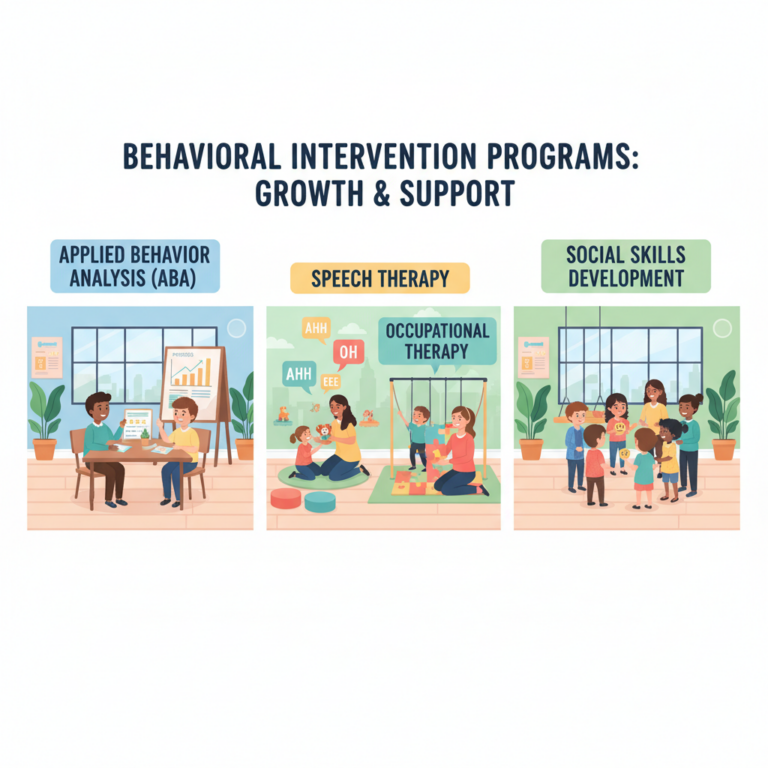
Understanding telehealth autism support programs
Telehealth autism support programs allow your child to receive autism evaluation, therapy, and family support through secure video sessions at home. These services can include Applied Behavior Analysis (ABA), speech therapy, social skills training, occupational therapy, counseling, and parent coaching delivered remotely through platforms like Zoom or similar tools that meet privacy standards.
Many families now use telehealth to access autism care that might not be available locally. Telehealth can shorten waitlists, reduce travel time and costs, and make it easier to fit services into your schedule. Programs like those offered by Ascend Autism use video conferencing to deliver ABA therapy and parent training while following evidence-based practices for children diagnosed with autism spectrum disorder (ASD) [1].
As you compare telehealth autism support programs, you will want to understand what types of services are available, how quality is ensured, and how well each program can meet your child’s unique needs at home.
Benefits of telehealth for autism support
Telehealth offers more than convenience. It can change how your child experiences therapy and how you participate as a caregiver.
Families in rural or underserved areas often face long travel times, limited specialists, and long waiting lists. Telehealth connects you with autism professionals without requiring you to leave home, which can lead to more timely and accurate diagnosis and earlier intervention [2].
Telehealth programs can also:
- Reduce costs related to transportation, childcare for siblings, and lost work time for parents, lowering the financial burden of ongoing care [2]
- Allow therapists to observe your child in their natural home environment, which can give a more accurate picture of everyday behaviors and challenges [3]
- Support stronger communication between providers and families by making it easier to attend sessions, case reviews, and team meetings
For many children, home is where they are most comfortable. This familiar setting can help them show more natural behavior, engage more fully, and generalize skills to daily life. Studies show that virtual autism support can be as effective as in person services when programs are personalized and consistent [4].
Types of telehealth autism services available
When you evaluate telehealth autism support programs, it helps to understand the main types of remote services you might use. Each service plays a different role in your child’s overall care plan.
Telehealth ABA therapy and behavior support
Applied Behavior Analysis is one of the most common treatments for autism. Telehealth ABA programs typically include direct virtual sessions with your child and intensive parent coaching.
Providers like Ascend Autism deliver ABA remotely through secure video platforms, combining structured activities, behavior plans, and real-time coaching for caregivers [1]. Telehealth ABA can include:
- Direct 1 to 1 sessions with a therapist working on communication, daily living skills, and behavior reduction
- Parent training sessions where you learn how to use behavior strategies in everyday routines
- Ongoing data collection and remote supervision by a Board Certified Behavior Analyst (BCBA)
If your child needs structured, behavior focused treatment, you might explore options such as telehealth aba therapy autism, remote behavioral intervention autism, and virtual functional behavior assessment to understand how remote behavior services could fit your needs.
Speech and language teletherapy
Speech and language challenges are common for autistic children. Many programs now offer teletherapy with licensed speech language pathologists who specialize in autism.
Telehealth speech services can include:
- Language development and vocabulary building
- Support for social communication and conversation skills
- Articulation practice using interactive digital materials
- Parent coaching so you can embed language skills into daily routines
You can learn more about what to expect from remote speech services by visiting teletherapy for speech in autism.
Occupational therapy and developmental support
Occupational therapists often help autistic children with fine motor skills, sensory regulation, self care routines, and play skills. During the COVID 19 pandemic, many clinics moved OT services online, which led to new insights about how telehealth can work for families.
A qualitative study of telehealth OT for autistic children identified both challenges and benefits. Families and therapists reported that virtual sessions could increase access to therapy, use home resources effectively, and support child comfort in their own environment. At the same time, they noted the need for strong therapist parent communication and clear boundaries to avoid burnout [5].
Some telehealth autism support programs integrate OT into broader developmental services. If you are looking for this type of help, you might consider options similar to remote autism developmental support and home-based virtual autism support.
Virtual counseling and social skills support
Many autistic children and teens benefit from counseling and structured social skills training. Telehealth can make these services more accessible and less intimidating, especially for young people who feel more comfortable interacting from home.
Virtual counseling may address anxiety, mood concerns, self advocacy, and coping skills. Group and individual formats are common. You can explore these options by reviewing services like virtual autism counseling services and virtual family counseling autism.
Social skills programs delivered by telehealth can include:
- Small group sessions that practice conversation, turn taking, and perspective taking
- Role play and video modeling exercises
- Real life practice assignments between sessions
If you want structured help with peer interaction, remote social skills therapy can be a useful starting point for your research.
Parent coaching and training
In telehealth models, you are not only a participant but also a key partner in your child’s progress. Parent coaching is often built into high quality telehealth autism support programs.
Research points to the value of programs that equip parents with practical tools and real time feedback. Telehealth makes it easier to attend coaching sessions, which can increase your confidence and consistency using strategies at home [2].
You might look into resources such as online parent training autism and remote coaching for parents of autism to see how different providers structure caregiver support.
How telehealth autism assessments and therapy work
Understanding what actually happens during telehealth assessments and ongoing therapy can help you feel more prepared and confident when you choose a program.
Assessment and diagnosis by telehealth
Telehealth has become an important tool for autism assessment. A mixed methods systematic review of 27 studies that included more than 1000 caregivers and over 500 clinicians found high overall satisfaction with telehealth assessment procedures for children. Families and professionals highlighted increased convenience, efficiency, and faster access to care, along with good clinical effectiveness [3].
Caregivers often appreciated that clinicians could observe their children at home, which helped shy or anxious children show more typical behavior. Parents also reported feeling comfortable participating and sharing concerns through virtual sessions. Clinicians noted that home based observation gave them unique insight into family routines and dynamics [3].
At the same time, telehealth assessment may not be right for every child. The same review found that children evaluated virtually were generally older, less medically complex, and had clearer signs of autism, which suggests that more complex cases may still require in person evaluation [3].
Telehealth tools such as structured rating systems and specialized observation protocols have helped expand access to diagnosis. Studies indicate that telemedicine based autism assessments can be accurate and reduce travel burdens while giving providers the chance to coach parents in real time [6].
Starting telehealth therapy
Once you choose a telehealth autism support program, your first steps will usually include:
- Enrollment and intake paperwork, often completed online or by phone
- Insurance verification and discussion of payment options
- A formal assessment, which might include standardized tools, caregiver interviews, and structured play or conversation with your child
- Development of a customized treatment plan with goals for behavior, communication, social skills, or daily living
For example, Ascend Autism begins telehealth treatment with an assessment by a BCBA who then creates and reviews a tailored plan before remote therapy starts [1].
Your child’s plan might combine different types of services, such as online autism therapy for children, telehealth therapy for autism spectrum, and focused online autism intervention programs.
Key factors to consider when choosing a program
Not all telehealth autism support programs are the same. Comparing providers carefully can help you choose an option that fits both your child’s needs and your family’s reality.
Clinical qualifications and treatment approach
You will want to confirm:
- Who provides the services, such as BCBAs, RBTs, speech language pathologists, occupational therapists, or licensed counselors
- How often your child will interact with a licensed clinician versus a technician or assistant
- Whether the program uses evidence based interventions, such as ABA, CBT, or structured social skills training, that are supported by research for autistic children [2]
Programs like telehealth autism center and telehealth services autism center may offer multidisciplinary teams that collaborate through telehealth. This team model can improve continuity of care by allowing pediatricians, psychologists, speech therapists, and occupational therapists to coordinate treatment remotely [2].
If your child is receiving ABA, you might also ask about virtual aba supervision services to understand how BCBAs oversee treatment plans and staff performance from a distance.
Technology, privacy, and accessibility
High quality telehealth autism support programs should use secure, HIPAA compliant video platforms that protect privacy while supporting video, audio, and screen sharing. Ascend Autism, for example, uses tools like Zoom and similar platforms to deliver therapy and parent training while maintaining confidentiality [1].
You can ask potential programs:
- What technology platform they use
- How they protect your child’s information
- What happens if there are technical issues during a session
- Whether they offer language support, interpreter services, or accommodations for families with limited technology access
Research suggests that telehealth can reduce barriers for many families but that socioeconomically disadvantaged families and those with limited English proficiency may face new challenges. Programs that offer technology support or flexible options can help address these equity concerns [3].
Parent involvement and support
In telehealth models, your involvement is central to success. Before choosing a program, think about the level of coaching and support you want and what you can realistically commit to.
You may want to ask:
- How often you will meet with your child’s therapist for parent training
- Whether the program offers written materials, videos, or practice plans between sessions
- How your feedback is incorporated into goal setting and progress monitoring
If you are looking for a program that actively trains and supports you, reviews of online parent training autism, remote coaching for parents of autism, and home-based virtual autism support can give you a sense of what stronger caregiver involvement looks like in practice.
Practical fit for your family
You are more likely to stay consistent with a program that fits your schedule and daily life. When comparing telehealth autism support programs, consider:
- Frequency and length of sessions
- Flexibility for rescheduling when your child is ill or when conflicts arise
- Time zone differences if providers are located in another region
- How much preparation you will need to do before each session, such as gathering materials or setting up a quiet space
Telehealth can reduce transportation time and costs, but there is still a real commitment involved. A program that respects your family’s limits and collaborates with you on realistic scheduling will help you participate over the long term [2].
Pros and cons of telehealth autism services
When you consider telehealth autism support programs, it can help to look at both advantages and potential limitations in a clear way.
| Aspect | Potential advantages | Possible challenges |
|---|---|---|
| Access to care | Reaches families in rural or underserved areas, shortens waitlists, connects you with specialists, improves early intervention [2] | Requires reliable internet and a device, may be harder for families with limited technology or language access [3] |
| Convenience & cost | Reduces travel time and transportation costs, lowers disruption to work and school, simplifies scheduling [2] | Home routines can still be disrupted during sessions, parents may need to coordinate with siblings and other responsibilities |
| Clinical insight | Lets clinicians observe your child in a naturalistic environment, supports more realistic assessment and coaching [3] | Some complex medical or behavioral presentations still require in person evaluation or support [6] |
| Parent role | Increases parental involvement, supports collaborative care and real time coaching, strengthens follow through between sessions [2] | Higher demand on parents can risk burnout without strong support and clear expectations [5] |
By weighing these factors against your child’s profile and your family circumstances, you can decide whether to choose telehealth alone or to combine it with some in person services.
Practical questions to ask potential providers
When you meet with a telehealth autism provider for an initial consultation, it helps to bring specific questions. You can adapt this list to your situation:
- What is your experience providing telehealth services to children with autism who are my child’s age and support level
- Which services do you offer remotely, such as ABA, speech therapy, OT, social skills groups, or counseling
- How do you individualize treatment goals for each child
- How often will my child be seen by a licensed clinician
- What is your approach to parent coaching and how will you support me in using strategies between sessions
- How do you measure progress and how often will you review our plan, for example through a structured telehealth autism care plan
- What technology do I need and what happens if we have technical problems
- How do you handle safety concerns or behavioral crises during virtual sessions
- How do you coordinate with schools, pediatricians, or other providers
The answers can give you a clear picture of whether a program’s structure, communication style, and expectations align with your needs.
Creating a coordinated virtual support system
You do not have to rely on one provider for everything. Many families build a coordinated support system that combines several telehealth resources with school based or local services.
You might:
- Use virtual autism therapy services for core ABA or developmental sessions
- Add teletherapy for speech in autism through a different provider if your child needs specialized speech support
- Participate in virtual family counseling autism to strengthen communication and coping across your household
- Incorporate digital tools like behavior tracking apps and online learning modules, which organizations such as the Dan Marino Foundation highlight as valuable digital autism resources for parents [4]
Online communities and support groups can also play an important role. Virtual groups and forums give you emotional support, practical tips, and the reassurance that you are not alone in navigating autism care [4].
By combining clinical telehealth services with peer support and school collaboration, you can create a more complete network around your child.
Taking your next steps
Choosing among telehealth autism support programs is a significant decision, but you do not have to decide everything at once. You can start by:
- Listing your child’s top needs, for example communication, behavior, daily living skills, or social interaction
- Identifying which telehealth services would address those priorities, such as ABA, speech, or parent coaching
- Reviewing options such as online autism therapy for children, telehealth therapy for autism spectrum, and related services to see which models align with your goals
- Scheduling consultations with two or three providers so you can compare their approaches, expectations, and communication styles
As you evaluate programs, focus on how well each option understands your child, supports you as a caregiver, and uses telehealth tools thoughtfully. With the right fit, virtual services can open meaningful access to care, give your family greater flexibility, and help your child build skills where they matter most, in everyday life at home.
References
- (Ascend Autism)
- (CalTRC)
- (NCBI PMC)
- (Dan Marino Foundation)
- (PMC)
- (SmartBrief)