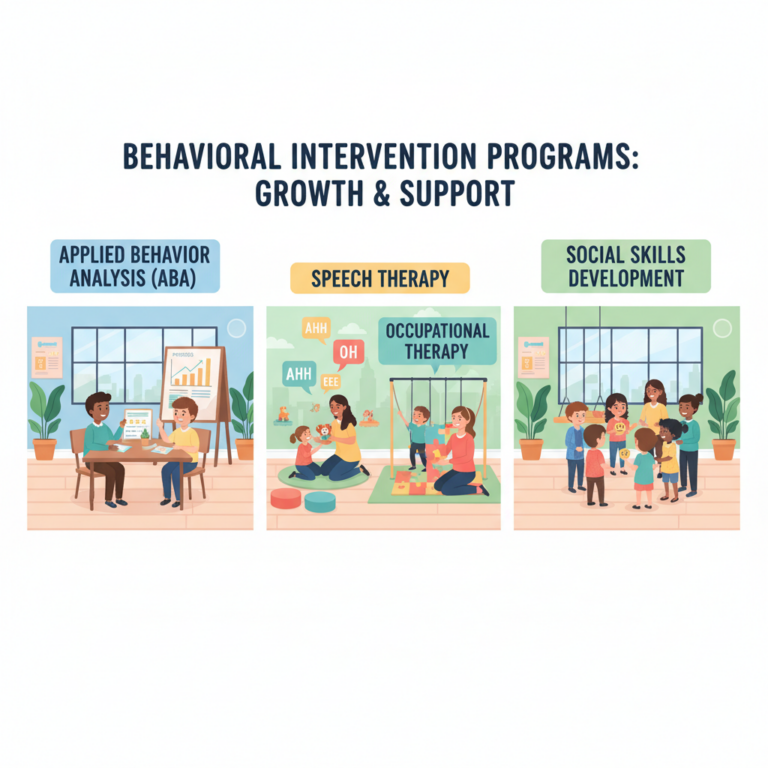
Understanding your telehealth autism care plan
A telehealth autism care plan is more than a set of virtual appointments. It is a coordinated roadmap for your child’s assessment, therapies, goals, and family support that happens through secure video, phone, and online tools.
Research shows that telehealth autism services can be highly acceptable to families and often compare well with in person care for training parents and improving child outcomes [1]. Many families find that virtual services reduce travel, wait times, and stress, and make it easier to involve both caregivers in sessions, even when schedules are busy [2].
To make telehealth work for you, you need a clear, personalized telehealth autism care plan that covers:
- Which services your child receives remotely
- How often you meet and for how long
- What you, your child, and your providers do before, during, and after sessions
- How everyone will track progress and adjust when needed
When you approach telehealth as a structured, team-based plan instead of a temporary substitute for in person visits, you can often see meaningful gains in communication, behavior, independence, and family confidence.
Clarifying your goals and priorities
Before you adjust or build a telehealth autism care plan, step back and clarify what matters most for your child and your family right now.
Identify your top 3 to 5 goals
Focus on concrete, observable goals that you can notice in daily life. For example, you might want your child to:
- Use 10 new words to ask for favorite items
- Sit for 10 minutes for online class without leaving the chair
- Tolerate hair washing with fewer meltdowns
- Play turn taking games with a sibling for 5 minutes
Try to limit active goals to a small number at a time. This helps you and your providers design telehealth sessions that are targeted and realistic.
Match goals to telehealth friendly services
Many evidence based autism interventions adapt well to telehealth. Studies have shown that approaches like Applied Behavior Analysis (ABA), the Early Start Denver Model, and JASPER can effectively support behavior and communication through remote coaching and guidance [1].
Depending on your goals you might build your plan around:
- ABA focused sessions through telehealth ABA therapy autism
- Language and articulation work through teletherapy for speech in autism
- Home and community routines supported by remote behavioral intervention autism
- Emotional and family relationship support through virtual autism counseling services and virtual family counseling autism
Share your top goals with your telehealth team so they can suggest the mix of services that fits best.
Building a strong telehealth support team
A solid telehealth autism care plan usually involves several professionals who coordinate care around your child and family.
Know who is on your team
Your telehealth team may include:
- A Board Certified Behavior Analyst providing telehealth aba therapy autism or virtual aba supervision services
- Speech language pathologists offering teletherapy for speech in autism
- Psychologists or counselors through virtual autism counseling services
- Occupational therapists delivering remote autism developmental support
- Parent coaches through online parent training autism or remote coaching for parents of autism
Telehealth can make it easier for these providers to collaborate and share information, which supports more consistent care across settings [2].
Coordinate services through a central hub
If possible, anchor your services through a single program such as a telehealth autism center or telehealth services autism center. A central hub helps you:
- Keep one master plan instead of multiple conflicting recommendations
- Share progress data across ABA, speech, OT, and counseling
- Schedule sessions in a way that respects your family routines
- Adjust services quickly if needs change
Ask which provider will act as the primary coordinator for your telehealth autism care plan and how they prefer to communicate between appointments.
Making telehealth ABA work for your child
ABA is one of the most common elements in a telehealth autism care plan. In a telehealth model, ABA often focuses on parent coaching and real time guidance rather than the provider physically working with your child.
Understand how telehealth ABA runs
With telehealth aba therapy autism and related online autism therapy for children, your clinician can:
- Observe your child at home through secure video
- Coach you live as you use strategies such as prompting, reinforcement, and visual supports
- Review data and videos between sessions
- Adjust goals and teaching plans based on what is really happening in your daily life
Telehealth ABA sessions usually feel more like guided practice for you and less like “drop your child off for therapy,” but research shows that parent implemented interventions coached by telehealth can be very effective across ages 12 months to 19 years [1].
Use supervision and consultation wisely
If you have technicians or aides working in your home or in a school setting, virtual aba supervision services allow a BCBA to:
- Observe therapy sessions remotely
- Give immediate feedback on teaching quality
- Monitor behavior plans and safety procedures
- Review outcome data to prevent plateaus
Regular supervision built into your telehealth autism care plan strengthens consistency and reduces the risk of ineffective or outdated strategies.
Leveraging teletherapy for speech and communication
For many families, improving communication is a primary goal. Teletherapy can be a powerful way to deliver speech services if you and your therapist plan carefully.
Adapt speech goals to telehealth
Through teletherapy for speech in autism your child can work on:
- Expanding vocabulary and phrases
- Improving articulation and speech clarity
- Using AAC devices, picture systems, or typing
- Pragmatic and social communication skills
Research on telehealth interventions shows that communication focused programs can significantly improve child outcomes while keeping families highly engaged [1].
Integrate speech goals into daily routines
One advantage of virtual speech therapy is that sessions happen where your child lives and plays. You and your therapist can:
- Practice communication during meals, playtime, and bedtime
- Use toys, books, and devices you already have at home
- Embed AAC or picture use in real choices and requests
- Create short practice routines that fit your schedule
If your child also receives remote social skills therapy or remote autism developmental support, ask your providers to align language goals so everyone is teaching and reinforcing the same skills.
Making parent coaching the centerpiece
Most telehealth autism care plans work best when you are an active partner, not just a watcher on the screen. In fact, parent training is the main delivery model in most telehealth autism studies and has been successful in empowering caregivers to deliver interventions at home [1].
Choose structured parent training options
Look for programs such as:
- online parent training autism for systematic skill building
- remote coaching for parents of autism for real time problem solving
- virtual autism therapy services that combine child sessions and parent education
- home-based virtual autism support for help embedding strategies into everyday life
Parent coaching through telehealth has been shown to improve your confidence and ability to manage routines, although it can also feel demanding at times [3].
Set clear expectations for your role
At the start of your work together ask your providers:
- What will I be doing during sessions?
- How much practice is expected between visits?
- How will you support me when things are not working?
- How will we measure my skill growth as well as my child’s?
Agreeing on your role upfront helps you avoid frustration and makes it easier to advocate for the coaching style you need.
Tip: If you feel overwhelmed by the level of involvement, tell your team directly. Many families in telehealth studies reported both empowerment and stress when their role expanded, and small adjustments often made a big difference to sustainability [3].
Designing your home telehealth environment
A thoughtful setup at home can dramatically improve the quality of your telehealth autism care plan. Although technical issues and distractions occur in a minority of cases, they can affect engagement if not addressed [4].
Optimize your space and equipment
You do not need an elaborate setup. Focus on:
- A quiet, consistent spot with minimal background noise
- A stable internet connection and a device with a camera
- Good lighting so your child and materials are visible
- Basic supplies within reach, such as toys, visuals, and sensory tools
Clinics sometimes provide devices or connectivity support to reduce barriers, especially in rural or underserved areas [1].
Prepare your child before sessions
Before a new telehealth routine:
- Show your child the video platform when you are not in a session
- Practice pressing “join” together and waving to the camera
- Use simple visual schedules so your child knows what is coming
- Start with shorter sessions and build up time as tolerated
These steps are consistent with best practice recommendations for getting started with telehealth autism therapy [5].
Scheduling for consistency and balance
A strong telehealth autism care plan respects both therapeutic intensity and your real life responsibilities.
Build a weekly rhythm
Work with your providers to spread services in a way that feels sustainable. For example, you might create a schedule like:
| Day | Morning | Afternoon | Evening |
|---|---|---|---|
| Monday | ABA parent coaching | 10 min speech practice | |
| Tuesday | Speech teletherapy | Family walk and social skills practice | |
| Wednesday | ABA session with child | Parent check in message | |
| Thursday | remote social skills therapy group | ||
| Friday | OT telehealth | Movie night with communication goals |
Short, frequent sessions and brief home practice blocks often work better than a few very long meetings, especially for younger children.
Plan for breaks and transitions
You and your child both need downtime. Protect:
- Regular days with no sessions
- Short breaks within longer visits
- Time between back to back appointments
- Pause periods after major life events or illness
If your child or family is also using telehealth autism support programs or online autism intervention programs, be honest about what you can realistically manage so services stay helpful, not overwhelming.
Tracking progress and adjusting your plan
To strengthen your telehealth autism care plan over time, you need simple ways to see what is working and where to pivot.
Use data that fits daily life
Your team might track:
- Frequency of challenging behaviors or meltdowns
- Number of new words, signs, or AAC uses
- Duration of independent play or on task time
- Tolerance for self care tasks such as dressing or brushing teeth
Many telehealth programs use shared digital tools or portals so you can enter data between visits and your team can review trends before each session.
Telehealth models have shown that parents can successfully collect meaningful data at home when supported with clear instructions and coaching [1].
Set regular review points
Ask your providers to schedule formal check ins every 8 to 12 weeks to:
- Review your child’s progress
- Update goals based on new strengths and challenges
- Reconsider the mix of services or frequencies
- Discuss whether any in person visits are needed
Some families find that a hybrid plan that pairs telehealth with occasional clinic visits, for example for hands on assessments or physical exams, gives the best of both worlds [6].
Addressing common telehealth challenges
Even with a solid plan, you might face obstacles. Most issues are manageable when you identify them early and work with your team.
Technology and connectivity issues
Problems such as unstable internet and complex setup affect a minority of families yet can be frustrating [6]. To reduce disruptions:
- Test your connection before important sessions
- Keep a backup device available when possible
- Ask your providers for a phone based backup option
- Request simple, step by step tech instructions in writing
If you live in a rural or underserved area, ask whether your program can help with equipment or internet resources, a strategy that has been used successfully in multiple studies [1].
Engagement and behavior during sessions
Children might behave differently on camera or become distracted by home surroundings. You can improve engagement by:
- Scheduling active sessions at times when your child is usually alert
- Using visuals and hands on activities instead of only talking
- Incorporating movement breaks and sensory tools
- Coordinating with remote behavioral intervention autism providers to build clear expectations and reinforcement systems
If your child has very intense behaviors or complex medical needs, discuss with your team how to safely combine telehealth with in person support.
Caregiver stress and burnout
Telehealth can increase your involvement, which is often positive yet can also lead to stress. Studies of families and therapists during telehealth OT and autism interventions noted the risk of burnout when demands are high [3].
If you notice rising stress:
- Bring this up during sessions, it is clinically important
- Ask to simplify home practice tasks or reduce the number of simultaneous goals
- Explore support options such as virtual autism counseling services or virtual family counseling autism
- Consider joining telehealth autism support programs or parent groups to connect with others
Your wellbeing is a central part of your child’s care plan, not an afterthought.
When telehealth may not be enough on its own
Telehealth is powerful but not always the full solution. Researchers and clinicians note that some situations still require in person services, especially when physical exams or highly hands on therapies are needed [7].
Talk with your team about adding or prioritizing in person care if:
- Your child needs detailed medical or neurological evaluations
- Safety concerns are high and difficult to manage remotely
- Severe self injury or aggression occurs frequently at home
- You feel stuck despite strong telehealth participation
In many cases, a blended approach that uses clinic visits for specific evaluations and home-based virtual autism support or remote behavioral intervention autism for ongoing coaching can maintain progress between appointments.
Putting it all together for your family
A strong telehealth autism care plan is not one size fits all. It is a living document that reflects:
- Your child’s unique strengths, challenges, and interests
- Your family’s routines, culture, and capacity
- The mix of services you access through tools such as virtual autism therapy services, online autism intervention programs, and remote autism developmental support
- Your evolving goals over time
By clarifying priorities, coordinating a supportive team, preparing your home environment, and reviewing progress regularly, you can turn virtual services into a steady, effective source of support.
Telehealth will not remove every challenge, but with thoughtful planning and open communication, it can bring expert autism care directly into your home and help you build skills and confidence right where daily life happens.