Why a speech therapy autism center matters
When your child is first diagnosed with autism, one of the most common recommendations is to connect with a speech therapy autism center. Speech and language challenges affect how your child shares wants and needs, builds friendships, and participates at school and in your family life. A specialized autism speech center focuses on these skills in a structured, supportive way so your child can communicate more confidently and independently.
At a dedicated speech therapy autism center, your child works with speech language pathologists (SLPs) who understand autism, sensory needs, and how communication develops differently for autistic children. These professionals are trained to support both verbal and nonverbal communication and to adjust their approach to match your child’s strengths and interests [1]. For many families, this becomes a cornerstone of a broader set of autism therapy programs that may also include ABA, occupational therapy, and social skills training.
Understanding speech and communication in autism
Autistic children can have a wide range of communication profiles. Some use full sentences but struggle with back and forth conversation. Others primarily communicate with gestures, pictures, or assistive technology. Some echo what they hear, a pattern called echolalia, while others might have difficulty understanding figurative language or body language [2].
Speech therapy focuses on several areas that are especially important for children with autism:
- Spoken language, including vocabulary and sentence building
- Nonverbal communication, such as eye contact, gestures, and facial expressions
- Understanding what others say, not just speaking
- Social communication, or how to use language with other people in daily life
SLPs are part of the multidisciplinary teams that often help diagnose autism and plan treatment. They assess how your child communicates across settings, then recommend strategies and tools, including augmentative and alternative communication (AAC) when needed [3].
Core services at a speech therapy autism center
A strong speech therapy autism center offers more than weekly speech sessions. It provides a coordinated set of services that grow with your child and that fit into a larger plan for therapy support for autism.
Comprehensive assessment and goal setting
Your child’s journey typically begins with a detailed evaluation. SLPs review developmental history, observe play and social interactions, and use standardized tests when appropriate to understand:
- How your child currently communicates
- What your child understands
- Any speech sound or oral motor issues
- How your child interacts with others and responds in groups
These assessments inform an individualized plan with functional, family centered goals [2]. For example, your child’s goals might focus on asking for help, answering simple questions, engaging in short conversations, or using AAC to make choices during daily routines.
Individual and small group therapy
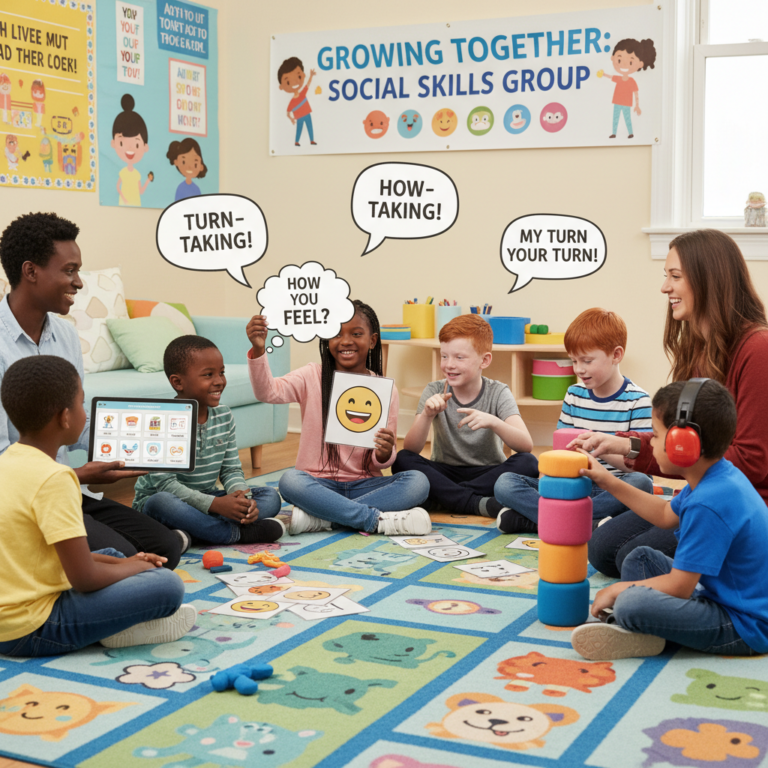
Direct speech therapy usually happens in one to one sessions, small groups, or a combination of both. Individual sessions let the SLP target specific skills at your child’s pace. Small groups help your child practice turn taking, perspective taking, and conversation with peers, which are core social pragmatic skills for autistic learners [3].
If your child also participates in autism social skills groups or dedicated social skills therapy autism, your speech therapist can coordinate with those providers so everyone is reinforcing the same goals.
Visual supports and structured routines
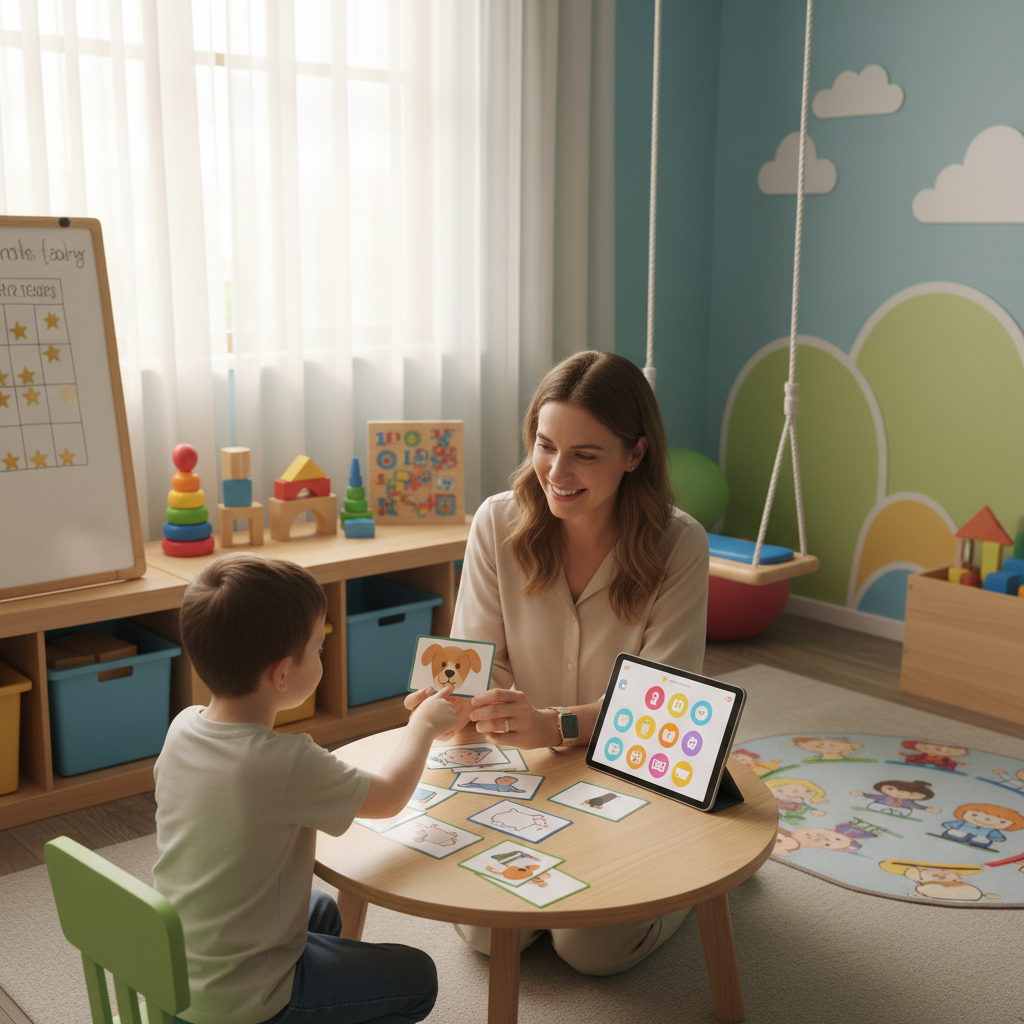
Many autistic children benefit from clear, visual information. Specialized centers make visual supports part of everyday therapy. For example, Triumph Therapeutics uses tools such as:
- Picture Exchange Communication System (PECS)
- Visual schedules
- Social stories
These visual tools can reduce anxiety, support transitions, and help your child understand expectations, which in turn makes communication easier [4].
Augmentative and alternative communication (AAC)
AAC gives your child additional ways to express themself if speech is limited, unreliable, or especially effortful. A speech therapy autism center may introduce and support:
- Sign language
- Low tech communication boards or picture books
- High tech speech generating devices and communication apps
Clinics like Triumph Therapeutics and DV Therapy use AAC systems to help nonverbal or minimally verbal children communicate choices, feelings, and ideas more effectively [5]. SLPs guide you in choosing and using AAC, so it complements spoken language rather than replacing it.
Play based and naturalistic approaches
Play is a powerful tool for learning. Many centers integrate speech and language work into play, daily routines, and child led activities so practice feels natural and engaging. Triumph Therapeutics uses role play, storytelling, and other play based approaches to build language and conversation skills in a low pressure way [4].
Similarly, CI Pediatric Therapy Centers include play therapy and natural language acquisition frameworks that match how gestalt language processors, often autistic children who use longer memorized phrases, develop their own flexible language [6].
How speech therapy builds real life skills
The ultimate goal of a speech therapy autism center is not perfect pronunciation. It is helping your child share and understand information in ways that work for them across home, school, and community settings [1].
Building functional communication
Therapists focus on skills that make a daily difference, such as:
- Requesting favorite items or activities
- Refusing or protesting safely and appropriately
- Asking for help or breaks
- Making simple choices
- Sharing interests and feelings
When your child can communicate needs more clearly, you often see fewer behavior challenges and less frustration. This aligns closely with autism behavior therapy services and autism behavioral intervention, which also target communication as a key part of behavior support.
Strengthening social communication
Autistic children may find it difficult to read facial expressions, understand tone of voice, or know how to start or maintain conversations. Speech therapy addresses these social communication skills through:
- Practicing greetings and simple conversations
- Role playing common social situations
- Working on perspective taking and problem solving
- Teaching how to recognize and respond to body language and facial expressions [2]
Centers like CI Pediatric Therapy Centers and Lighthouse Autism Center specifically include conversation practice, job interview preparation, and transition to adulthood support for older clients, which builds confidence and independence [7].
Expanding language step by step
For many children, language develops in stages. Lighthouse Autism Center describes a progression from early nonverbal communication to:
- Basic words and short phrases
- More complex vocabulary and sentences
- Full conversations that support richer social interaction [8]
A thoughtful speech therapy plan combines structured teaching with natural opportunities to practice each stage, which fits well within broader integrated therapy autism services.
A good question to ask any speech therapy autism center is: “How will these goals show up in our child’s everyday life?” The clearer the real life connection, the more meaningful therapy becomes for your family.
Integrating speech, ABA, OT, and social skills
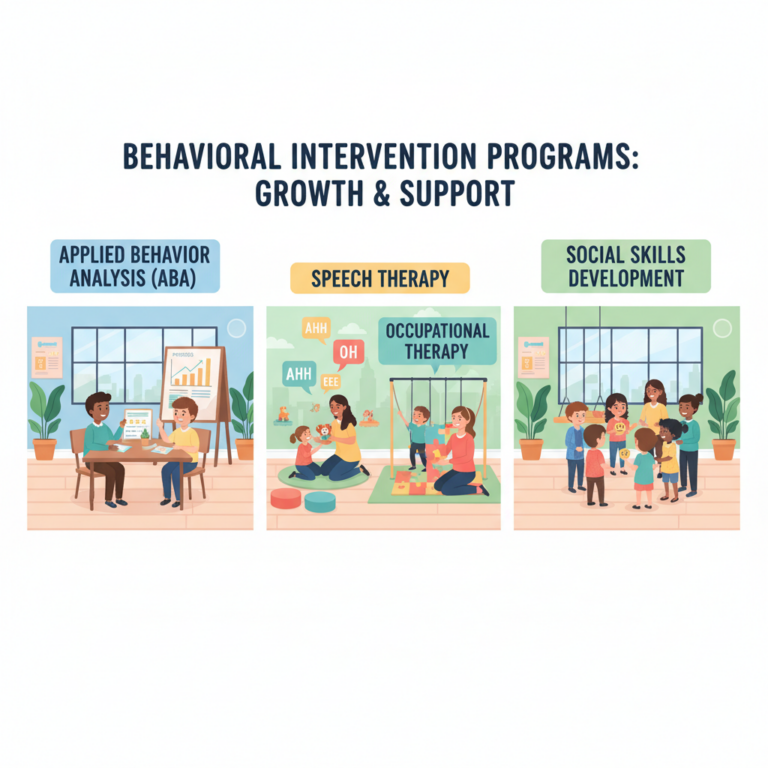
Speech therapy is often most effective when it is part of a coordinated plan that also includes ABA, occupational therapy, and social skills work. Many families find that an applied behavior analysis center or autism support therapy clinic that offers all of these services under one roof can make care more consistent and manageable.
Working alongside ABA therapy
ABA focuses on teaching new skills and reducing behaviors that interfere with learning and safety. Many ABA programs now integrate speech therapy as part of a collaborative model. Lighthouse Autism Center, for example, combines ABA with speech language services in its Lighthouse Fusion model so children can build strong communication skills in a unified program [8].
In a coordinated setting, your child’s SLP and ABA team can align:
- Communication goals
- Behavior support strategies
- Reinforcement systems
- Parent training supports
This alignment helps make aba therapy for autism and speech therapy feel like one cohesive plan rather than separate services.
Partnering with occupational therapy
Many autistic children also receive occupational therapy autism or ot for children with autism to address sensory processing, fine motor skills, and daily living tasks. When OT and speech therapy collaborate, your child can:
- Practice communication during sensory activities
- Learn to request sensory breaks or tools
- Work on feeding or oral motor skills that affect speech production
Centers like DV Therapy offer both speech and other therapy services, including teletherapy, allowing you to coordinate goals and strategies even when sessions happen in different locations [9].
Enhancing social skills work
If your child participates in autism social skills groups or other behavioral intervention programs, speech therapy can reinforce the language needed for:
- Sharing and taking turns
- Negotiating roles during play
- Joining and leaving groups
- Handling disagreements and repairing communication breakdowns
CI Pediatric Therapy Centers highlight the importance of social communication for adolescents and adults, not just young children, and weave these skills into their speech therapy services [6].
The importance of early and consistent support
Research and clinical experience show that early intervention leads to stronger long term outcomes for autistic children. Starting speech therapy as soon as you notice communication concerns, even before a formal diagnosis, can make a meaningful difference [10].
Why starting early helps
Early speech therapy can:
- Support foundational communication skills before unhelpful patterns become entrenched
- Help your child connect more with you and other caregivers
- Reduce frustration and behavior challenges linked to communication difficulties
- Build a strong base for academic and social learning
Lighthouse Autism Center notes that intensive and consistent speech therapy, often several hours per week, can maximize progress, especially when coupled with active parent involvement and practice at home [8].
Continuing support across ages
Although early intervention is ideal, it is never too late to benefit from speech therapy. ASHA emphasizes that adolescents and adults with autism can continue to improve communication for school, work, and community life through targeted speech language services [3].
Older clients might focus on:
- Conversation skills and relationship building
- Self advocacy and clarifying communication preferences
- Job interview skills and work related communication
- Planning and organizing language for independent living
Providers like CI Pediatric Therapy Centers and Autism Spectrum Therapies highlight these later stage skills to promote independence and confidence [11].
What to look for in a speech therapy autism center
When you evaluate a speech therapy autism center, you are choosing a partner in your child’s growth. You can use these questions and considerations to guide your decision.
Training, experience, and philosophy
Ask how the center’s SLPs are trained to work with autistic children and how they stay current on best practices. It is helpful to know:
- Whether they use evidence based approaches tailored to autism
- How they adapt therapy for nonverbal children or gestalt language processors
- How they integrate sensory needs and behavior supports into sessions
Centers such as AZ Autism United, CI Pediatric Therapy Centers, and DV Therapy all emphasize individualized, evidence based programs that respect each child’s learning style and communication profile [12].
Coordination with other therapies
If your child already receives ABA, OT, or other services, it is important that the speech therapy center is willing to collaborate. You might ask:
- How do you coordinate with ABA or autism behavior therapy services?
- Are you open to sharing goals with our applied behavior analysis center or OT?
- Can you attend team meetings or provide written updates to other providers?
Centres like Autism Spectrum Therapies and Lighthouse Autism Center are good examples of integrated models where speech therapy is built into broader autism programs [13].
Family involvement and parent training
Effective therapy extends beyond the treatment room. You want a center that involves you closely, since you spend the most time with your child. Ask about:
- Training or coaching for parents and caregivers
- Strategies you can use during daily routines
- How progress and next steps will be shared
This aligns with the spirit of parent training in aba and early intervention behavioral therapy, where you are supported to become an active part of your child’s therapy team.
Practical details and access
Finally, consider logistics that will affect your ability to attend consistently:
- Locations, hours, and teletherapy options
- Waitlists and availability
- Experience with autism therapy insurance accepted and help navigating coverage
Providers such as CI Pediatric Therapy Centers, Autism Spectrum Therapies, and DV Therapy note that they help families with insurance and scheduling, which can make it easier to maintain steady services [14].
Taking your next steps
Choosing a speech therapy autism center is a significant step, but you do not have to do it alone. Start by clarifying your priorities for your child. Is your main concern basic communication, social skills, behavior challenges linked to communication, or preparing for school or work? Then look for a provider that:
- Specializes in autism and communication
- Coordinates with your other integrated therapy autism services
- Welcomes your participation and questions
- Offers a clear, individualized autism therapy plan development
You might also want to explore dedicated autism speech & language therapy resources to learn more about specific techniques and what to expect in sessions.
With the right support, your child can build meaningful communication skills in their own way and at their own pace. A well chosen, autism informed speech therapy center becomes not just a place for weekly appointments, but a long term partner in helping your child connect, express themself, and participate more fully in everyday life.
References
- (NICHD)
- (AZ Autism United)
- (ASHA)
- (Triumph Therapeutics)
- (Triumph Therapeutics, DV Therapy)
- (CI Therapies)
- (CI Therapies, Lighthouse Autism Center)
- (Lighthouse Autism Center)
- (DV Therapy)
- (AZ Autism United, ASHA)
- (CI Therapies, Autism Therapies)
- (AZ Autism United, CI Therapies, DV Therapy)
- (Autism Therapies, Lighthouse Autism Center)
- (CI Therapies, Autism Therapies, DV Therapy)