Understanding social skills therapy for autism
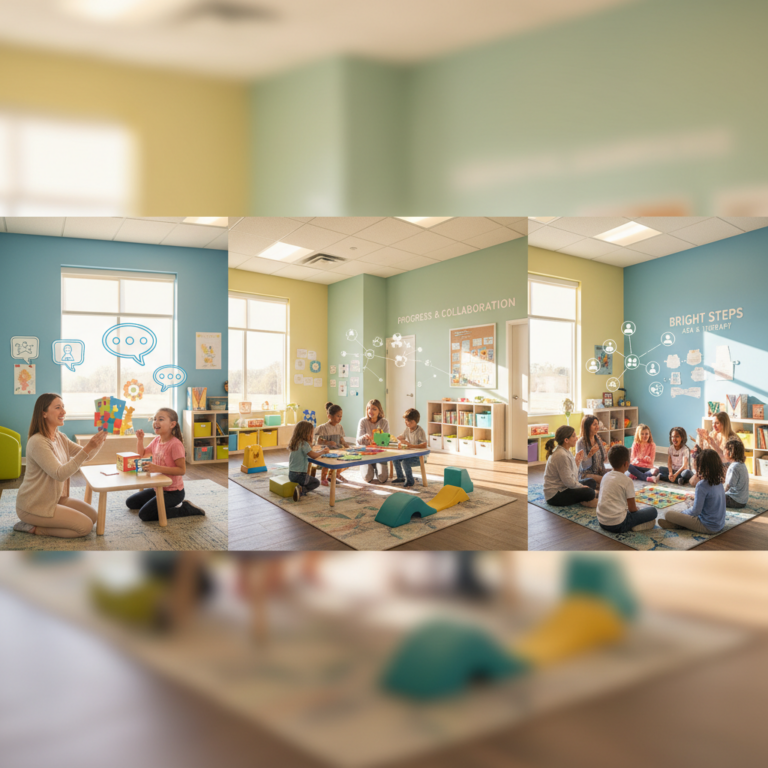
When your child is first diagnosed with autism, it is common to worry about friendships, playground interactions, and how they will navigate school and community life. Social skills therapy for autism gives your child structured, supported practice with skills like sharing, turn taking, noticing social cues, and communicating wants and needs.
Social skills challenges often stem from anxiety, behavioral difficulties, language delays, or simply finding it hard to relate to peers in fast moving situations [1]. Social skills therapy creates a safe space to slow everything down, teach skills step by step, and give your child many chances to practice in ways that feel achievable.
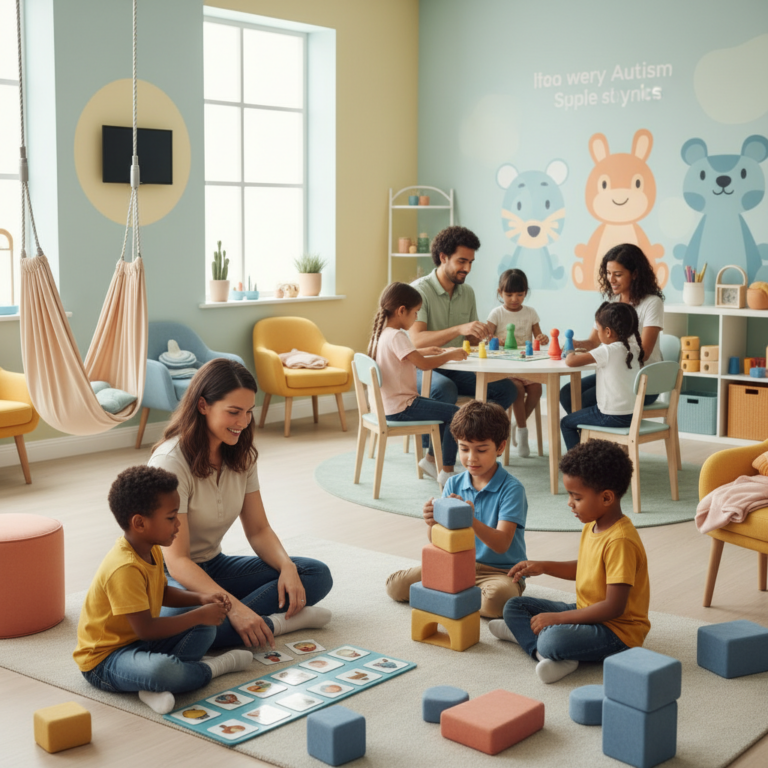
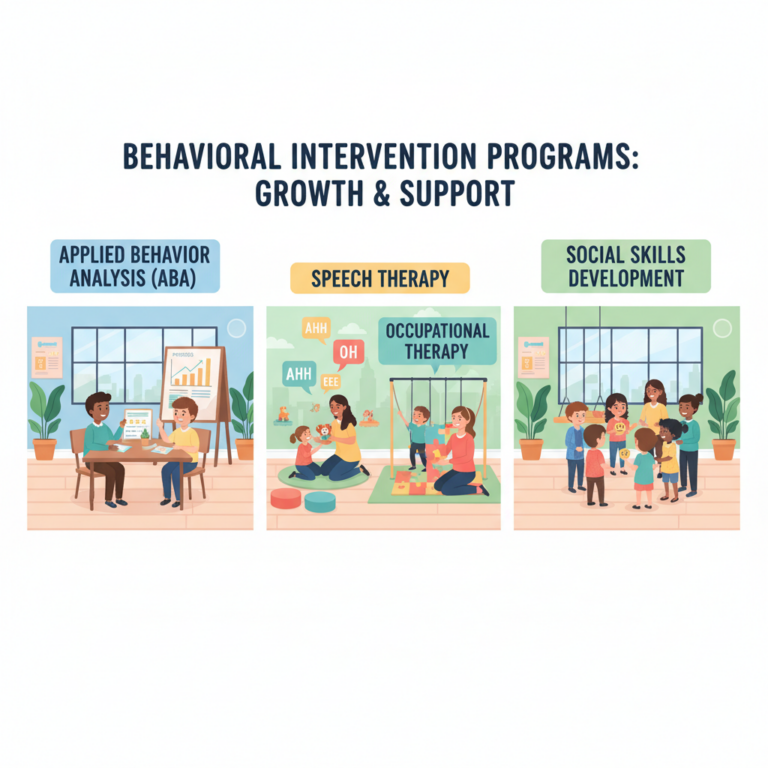
You will usually see social skills therapy woven into a broader set of supports, such as aba therapy for autism, autism speech & language therapy, and ot for children with autism. Together, these services help your child build communication, independence, and confidence across home, school, and the community.
Why social skills matter for your child
Social skills are not just about making friends. They touch almost every part of your child’s daily life, from asking for help to handling frustration in class.
Core areas social skills support
When your child improves social skills, you often see gains in:
- Communication, such as knowing when to approach someone, how to join a game, or when it is their turn to speak [2]
- Emotional regulation, including handling disappointment, waiting, or sharing attention with others
- Learning, since classroom success often depends on group work, following directions, and interacting with teachers and peers
- Independence, like asking store staff a question or ordering at a restaurant
- Self esteem, through more positive interactions and feeling understood by others
As your child’s social skills grow, everyday routines typically become smoother and less stressful for your family. This is one of the key reasons providers include social skills work in many autism therapy programs.
The social environment your child faces
Your child moves through many social environments each day. These settings can be unpredictable and demanding. Challenges may include:
- Fast changes in topics or activities
- Unwritten rules and “hidden curriculum” such as when it is acceptable to interrupt or how close to stand to someone
- Sensory overload that makes it hard to focus on people and conversations
- Pressure to respond quickly or in ways that feel unnatural
Many children with autism do not automatically pick up these rules. Social skills therapy breaks them into smaller, teachable pieces so your child understands what is expected and what options they have in a situation.
Evidence based approaches to social skills therapy
Social skills therapy for autism is not one single program. Instead, it is a group of approaches that can be combined and tailored to your child. Many of these approaches are grounded in behavioral, cognitive behavioral, and developmental science.
Group social skills training
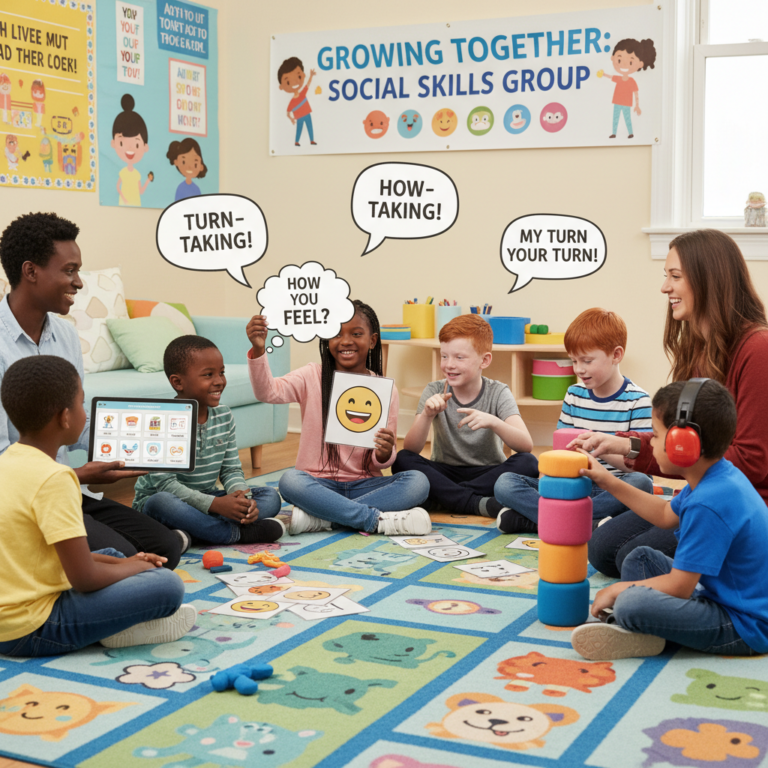
One common model is group social skills training, sometimes called group social skills intervention. In these groups, autistic children or teens meet regularly to:
- Learn specific skills through direct instruction
- Watch demonstrations and videos
- Practice with role play and games
- Receive feedback in a supportive setting
These groups are often used with adolescents and young adults to help them navigate increasingly complex social demands [3]. Social skills training shows small to moderate improvements in areas such as social communication, reciprocity, and joint attention, especially when programs are clearly structured and delivered as part of a broader plan [4].
Behavioral and CBT based strategies
Many social skills interventions use behavioral and cognitive behavioral techniques such as:
- Modeling, where your child watches an adult or peer demonstrate a skill
- Role play, where your child practices a situation, like greeting someone or asking to play
- Feedback and reinforcement, where successes are noticed and rewarded
- Visual supports, such as checklists or comic strip style conversations
These strategies can be offered through autism behavioral intervention and other behavioral intervention programs, and they can be used in one to one or group settings. A 2023 meta analysis found these approaches lead to modest to moderate gains in social functioning, especially when programs are well defined and delivered with consistency [4].
Technology assisted social skills practice
Some children respond well to technology based supports. These can include:
- Video modeling
- Computer programs that teach emotions or social understanding
- Virtual reality scenarios that simulate social situations
Research suggests that technology based interventions can perform as well as face to face social skills training for some children and teens, which may create new, flexible options for your family [4].
How ABA, speech, and OT support social skills
You do not need to choose between social skills therapy and other autism therapies. In practice, social skills are often taught across several services at once.
ABA and social interaction
Applied behavior analysis can provide a foundation for social skills by working on:
- Eye gaze and shared attention
- Imitation, such as copying actions or words
- Basic turn taking and waiting
- Responding to name and simple social questions
Early intensive behavioral intervention can help toddlers develop these crucial social building blocks, which can guide brain and behavior development in a more typical direction and make later social skills work more effective [5]. You will often see these goals built into early intervention behavioral therapy and services at an applied behavior analysis center.
Speech therapy and pragmatic language
Many social difficulties come from language delays or challenges with pragmatic language, which is the social use of language. At a speech therapy autism center or through autism speech & language therapy, your child may work on:
- Starting and ending conversations
- Staying on topic and asking follow up questions
- Understanding sarcasm, jokes, and figurative language
- Using nonverbal cues, such as tone and facial expressions, along with words
These skills help your child share ideas, express needs, and connect with others with greater success.
Occupational therapy and social participation
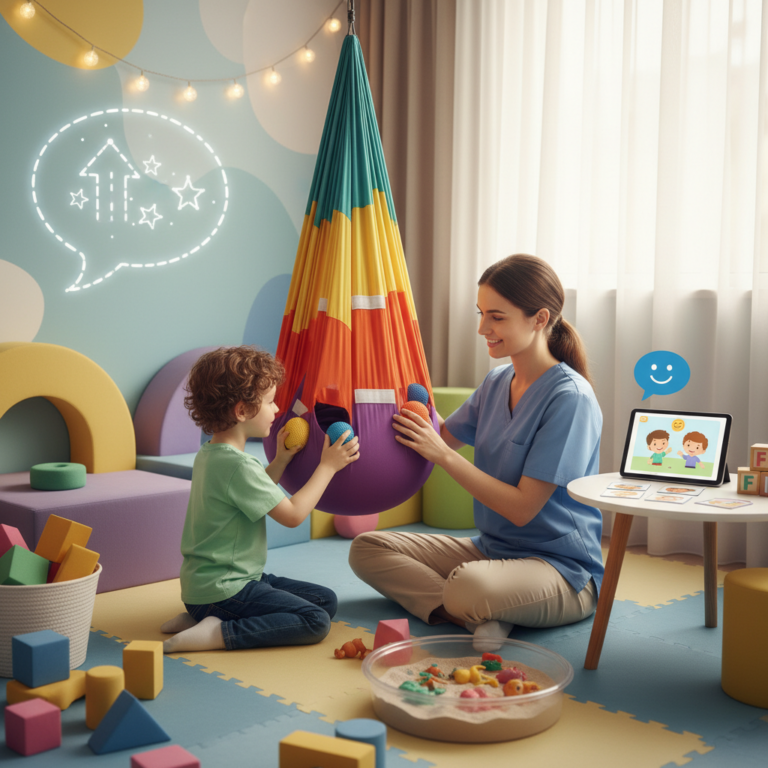
Occupational therapy focuses on helping your child participate more fully in daily activities, including social ones. In occupational therapy autism or ot for children with autism, you might see goals related to:
- Managing sensory input so your child can tolerate busy social environments
- Playing cooperatively, including sharing toys and taking turns
- Reading body language and personal space
- Joining group activities such as games, crafts, and sports
When these skills improve, your child is better able to use social skills in natural settings like the playground, classroom, or family gatherings.
What happens in social skills sessions
Although each program is unique, many social skills therapy sessions follow a predictable structure so your child knows what to expect.
Teaching tools therapists use
Your child’s therapist may use strategies such as:
- Social stories or narratives that describe a situation, what others might think, and what your child can do [5]
- Visual schedules that outline the steps in a social interaction
- Comic strip conversations that show what people say and think in a scene
- Scripts for common situations, such as greeting a teacher or asking a peer to play
These tools break complex interactions into smaller, more manageable steps. Over time, your child moves from heavily supported practice to more natural, flexible use.
Games and activities that build skills
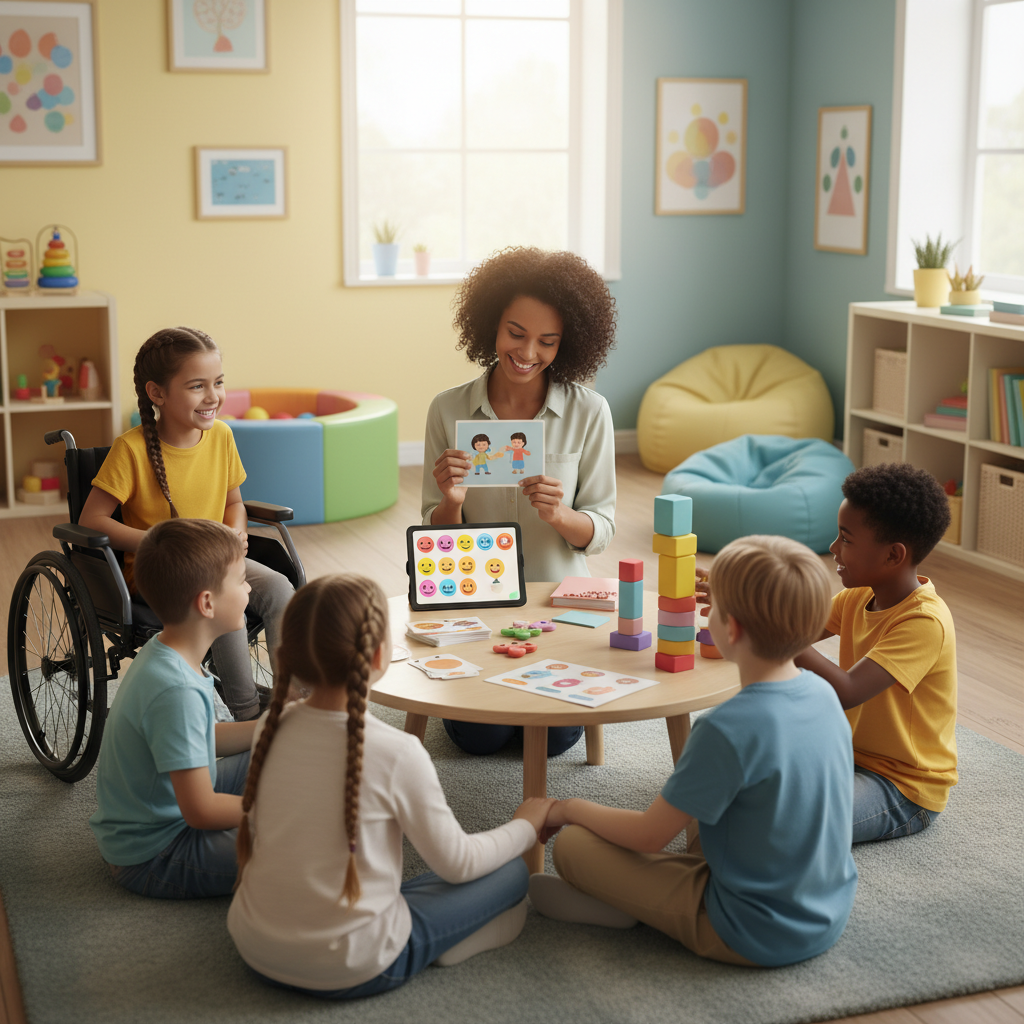
Play based activities are especially useful. For example, card games can teach turn taking, waiting, handling winning and losing, and interacting with multiple players. They can also strengthen matching and counting skills without demanding constant conversation, which makes participation easier for many autistic children [2].
Simple sensory based games, such as guessing smells or tastes while blindfolded, can help your child practice when to take a turn and how to wait for others, in a fun and low cost way [2]. Role play with peers or family members is also common, and it helps your child rehearse responses to situations they find challenging.
Many clinicians recommend integrating social skills practice into broader therapy support for autism, so your child can rehearse skills in structured sessions and then use them in everyday routines.
Home and community strategies that support progress
Your involvement can significantly increase the impact of social skills therapy. You can reinforce what your child learns in sessions and create natural opportunities to practice.
Modeling and explaining social cues
Children with autism often benefit when you clearly model social behavior and talk through what you are doing. You might:
- Label facial expressions, tone of voice, and body language in real time
- Explain your own thoughts, such as “I am crossing my arms because I feel cold”
- Gently describe others’ likely feelings in concrete ways
Daily modeling at home is a key strategy recommended for building social understanding [1].
Practicing with social narratives and role play
You can also prepare your child for upcoming events using:
- Short stories with pictures that describe where you are going, who will be there, and what your child can do
- Simple scripts for greetings, asking for help, or responding when someone says “no”
- Role playing with family members to practice turn taking, sharing, or problem solving
These low pressure rehearsals at home make it easier for your child to face similar situations with peers later [1].
Choosing community activities
Social skills grow when your child participates in activities that match their interests and abilities. Options might include:
- Art classes or clubs
- Sports teams or adapted physical activity
- Library groups or STEM clubs
- Specialized autism friendly recreation programs
Interest based activities create natural common ground with peers and can foster friendships and confidence over time [1]. If your clinic offers autism social skills groups, these can be an excellent bridge between therapy and real world experiences.
Respectful, neurodiversity affirming social skills work
As you consider social skills therapy for autism, it is important to understand how views on autism and social behavior are evolving. Many autistic advocates and clinicians now emphasize that differences in communication are not one sided deficits.
Rethinking “social deficits”
For many years, poor science promoted the idea that autistic people lack Theory of Mind, or the ability to understand others’ thoughts and feelings. More recent research shows that autistic people communicate as effectively with each other as non autistic people do among themselves [6]. Misunderstandings often stem from the “double empathy problem”, where autistic and non autistic people both struggle to read each other’s cues [6].
This perspective shifts the focus away from “fixing” your child’s social skills and toward building mutual understanding and accessible environments.
Avoiding harmful masking
Traditional social skills programs sometimes encouraged autistic people to camouflage or mask their natural traits to appear more neurotypical. Masking can temporarily reduce visible differences, but it is linked with exhaustion, poor mental health, suicidal thoughts, and a loss of identity [6].
When you evaluate social skills programs, you can look for:
- Respect for your child’s communication style
- Goals that emphasize authentic connection, not imitation
- Flexibility around eye contact, stimming, or preferred topics
- Collaboration with you and your child in setting priorities
Neurodiversity affirming providers use social skills therapy to expand your child’s options and comfort, not to teach them to hide who they are.
Making social skills therapy part of a comprehensive plan
Social skills supports usually work best as one component of a coordinated, individualized plan. You can think of your child’s services as a team effort.
Building your child’s therapy team
Depending on your child’s needs, your team might include:
- Behavior analysts who provide autism behavior therapy services and autism functional behavior assessment
- Speech language pathologists at a speech therapy autism center
- Occupational therapists through occupational therapy autism
- Social workers or psychologists who coordinate integrated therapy autism services
- Group leaders for autism social skills groups
Together, these professionals collaborate on autism therapy plan development so social skills goals align with language, behavior, and daily living goals.
Your role as a parent or caregiver
Parent involvement is a key part of effective autism therapy. Many providers offer parent training in aba and other coaching so you can:
- Understand your child’s goals and progress
- Use shared strategies and language at home
- Create natural practice opportunities in your routines
- Advocate for supportive environments at school and in the community
Healthcare providers recommend evidence based therapies that help autistic children build the skills they need to socialize, learn, and be as independent as possible, without trying to “cure” autism or force children into a specific mold [3]. Your insight as a parent guides which goals matter most for your child.
Questions to ask when choosing a social skills program
When you look at autism support therapy clinic options, you can use questions like these to find a good fit:
- How do you define social skills success for autistic children?
- How do you avoid teaching masking or suppressing natural autistic traits?
- Which evidence based strategies do you use, and how do you measure progress?
- How will you coordinate with my child’s other services, such as aba therapy for autism or integrated therapy autism services?
- What opportunities will my child have to practice skills in real life settings?
- How are caregivers included and supported, and what parent training is available?
- What are the options for scheduling, location, and autism therapy insurance accepted?
You can also ask how the program adapts for different ages and support needs, since research highlights that effectiveness can vary with age, type of intervention, and how consistently it is implemented [4].
Moving forward with confidence
Social skills therapy for autism gives your child structured support to understand others, express themselves, and participate more comfortably in daily life. While research shows modest to moderate gains overall, progress can be meaningful for your child when social skills are addressed within a comprehensive, individualized plan that respects their identity.
By combining social skills work with autism behavior therapy services, autism speech & language therapy, occupational therapy autism, and other autism therapy programs, you create many pathways for your child to learn and practice. With thoughtful questions, neurodiversity affirming providers, and your ongoing involvement, you can help your child build authentic, sustainable social connections in the ways that work best for them.