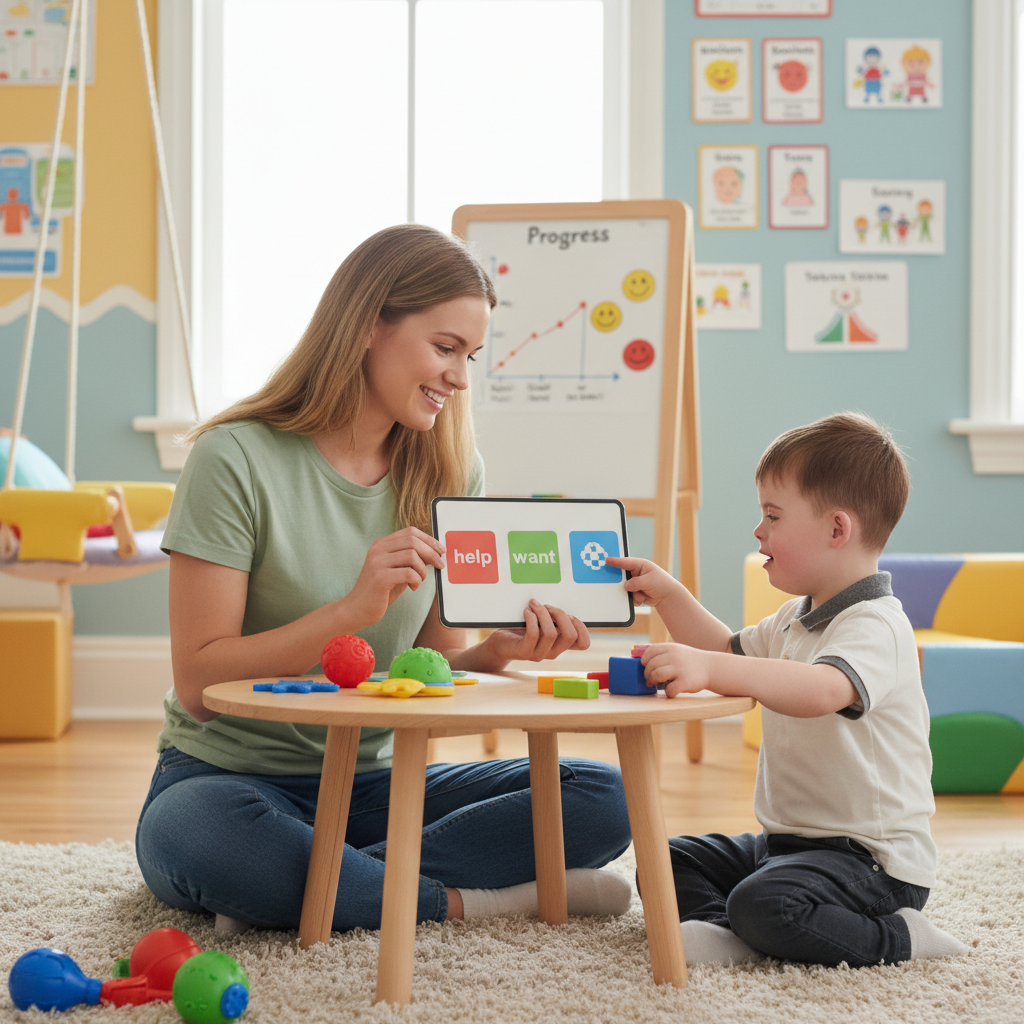
Understanding parent training in ABA
Parent training in ABA gives you practical tools to support your child’s development at home and in the community. Instead of turning you into a full‑time therapist, effective parent training helps you understand how Applied Behavior Analysis works, why your child’s team is using certain strategies, and how you can carry those strategies into daily life so progress is more consistent and long‑lasting.
In ABA, parent training is not a one‑time class. It is a structured, ongoing service where your child’s Board Certified Behavior Analyst (BCBA) and therapy team coach you in specific skills, answer questions, and adjust strategies as your child grows. This collaboration helps you feel more confident, less overwhelmed, and more equipped to handle both everyday routines and challenging moments at home [1].
If your family is already using aba therapy for autism or exploring new autism therapy programs, understanding how parent training fits in can help you make the most of every session.
Why parent training is essential in ABA
Extending progress beyond the clinic
Your child learns important skills in structured settings, but real life happens at home, at school, and in the community. Parent training in ABA helps bridge this gap so your child can use new skills wherever they go.
Research shows that when parents are trained to deliver ABA strategies, children often develop skills faster and use them more consistently in daily life, especially for communication and adaptive behavior [2]. Consistency across environments is one of the biggest predictors of long‑term success.
Parent training helps you:
- Use the same prompts, reinforcement, and expectations that your child sees in therapy
- Support skills like requesting, turn taking, and transitioning between activities at home
- Prevent “clinic only” progress so your child can generalize skills everywhere they go [3]
Supporting family dynamics and stress
Challenging behavior and communication difficulties affect the whole family. Effective parent training has been linked to calmer home environments, better sibling relationships, and lower parent stress, depression, and anxiety [4].
As you learn why behaviors happen and what actually works to change them, you can move from reacting in the moment to responding with intention. This shift often:
- Boosts your confidence managing difficult situations
- Reduces conflict and power struggles
- Strengthens your connection with your child [5]
Improving access to effective treatment
There are not always enough ABA providers, and scheduling can be difficult for busy families. Studies of parent‑led ABA models, where parents receive structured training and BCBA supervision, show strong gains in communication and social skills, with families using a higher percentage of the hours recommended to them compared with traditional clinic‑only care [6].
This tells you that when you are equipped with clear strategies and ongoing support, you can help your child make meaningful progress even when service hours or logistics are limited.
If you are looking for comprehensive options, an applied behavior analysis center or broader autism behavior therapy services can help you combine parent training with other supports.
What effective ABA parent training includes
Parent training in ABA can look different from one provider to another, but well designed programs tend to share several features.
Clear expectations and shared goals
Your team should work with you to clarify:
- What skills and behaviors you want to focus on first
- How progress will be measured
- What you can realistically practice between sessions
Setting clear expectations about goals, methods, and outcomes helps you understand why you are doing a certain strategy and what success will look like [7].
Often, your BCBA will use tools such as an autism functional behavior assessment to understand why certain behaviors are happening, then translate that information into step‑by‑step goals you can follow at home.
Practical, everyday ABA strategies
Parent training is most helpful when it is rooted in your real life. Rather than abstract theory, you learn specific skills you can use during meals, bath time, homework, community outings, and play.
Common strategies taught in parent training include:
- Positive reinforcement, how and when to praise or reward behavior you want to see more often
- Prompting, giving the right amount of help at the right time, then fading prompts so your child becomes more independent
- Clear instruction, using short, calm, specific statements and “do” requests instead of “do not” requests
- Visual supports and routines, using pictures, schedules, or simple checklists to make expectations clear
- Replacement behaviors, teaching your child what to do instead of a challenging behavior, for example asking for a break instead of throwing toys
Studies show that programs combining education with at‑home practice assignments are more effective than information‑only workshops [8]. The most helpful sessions will give you time to practice a skill, try it at home, then come back and adjust.
Strong communication between you and the team
Parent training works best when communication is open and ongoing. You might use:
- Regular meetings with your BCBA
- Written notes or a therapy journal
- Shared apps or videos to track progress and questions
These tools help you and your child’s therapists stay on the same page about what is working, what is not, and what to adjust next [9]. If your child also attends a speech therapy autism center, ot for children with autism, or autism social skills groups, good communication makes it easier to coordinate approaches across services.
Core ABA skills you will learn as a parent
Reading the “why” behind behavior
One of the most powerful parts of parent training in ABA is learning to identify the function or purpose of a behavior. Instead of seeing a meltdown or refusal as “bad behavior,” you learn to ask what your child might be trying to get or avoid.
Common behavior functions include:
- Gaining attention
- Escaping or avoiding a task
- Getting access to a preferred item or activity
- Seeking sensory input
Once you know why a behavior is happening, you and your BCBA can design more effective strategies that address the root cause rather than just reacting to the surface behavior [10].
Giving clear, effective instructions
Small changes in how you give directions can lead to big changes in how your child responds. Behavior analysts often coach parents to:
- Gain your child’s attention first, for example by getting close, saying their name, and making eye contact if that is comfortable for them
- Use calm, specific, one‑step instructions, “Put shoes in the basket,” instead of “You need to listen”
- Phrase directions as statements, not questions, “It is time to wash hands,” instead of “Do you want to wash your hands?”
- Use “do” requests rather than “do not” requests, “Walk inside,” instead of “Do not run”
These techniques are supported by research on parent‑delivered instruction and can increase cooperation while reducing power struggles [11].
Using prompts and fading them
Prompting means giving just enough help so your child can succeed, then gradually reducing that help so they become more independent. In parent training you might learn to:
- Wait a few seconds after giving an instruction before adding another prompt, called a time delay
- Start with a stronger prompt, such as hand‑over‑hand help, then fade to lighter prompts like pointing or a verbal reminder
- Avoid repeating demands over and over, and instead adjust the level of support your child needs
This approach encourages independent responding and prevents both you and your child from getting stuck in repeated demands and refusals [11].
Keeping interactions positive
ABA is most effective when your child experiences you as a source of encouragement and success, not constant correction. Parent training shows you how to:
- Offer lots of praise and positive feedback, ideally at least five positive comments for every demand you make
- Notice and comment on small steps in the right direction
- Embed choices within instructions, for example, “It is homework time. Do you want to start with math or reading?”
These strategies help your child feel more cooperative and in control, and they also make your daily routines more enjoyable for everyone [11].
How parent training supports other therapies
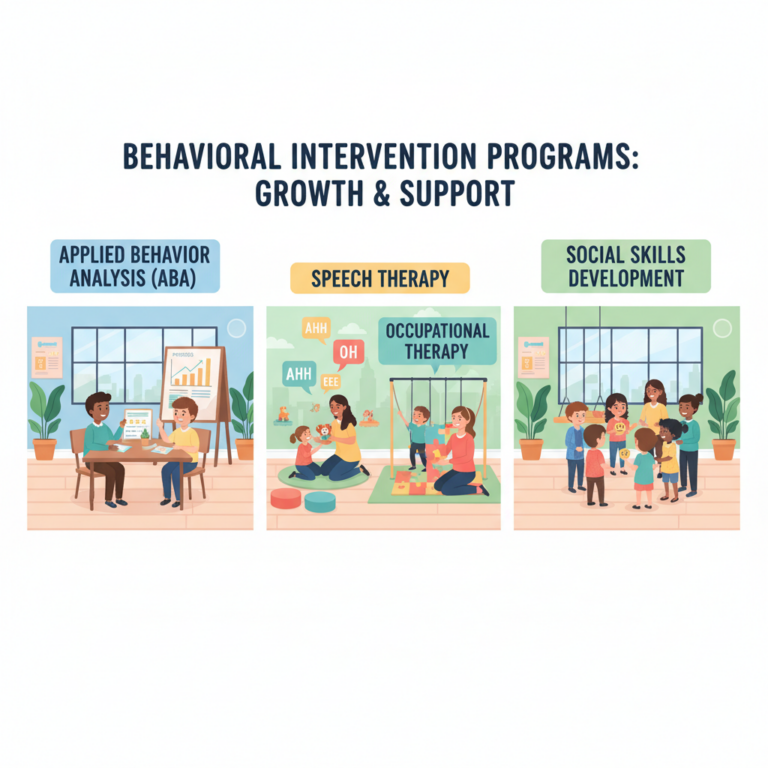
Many children receiving ABA also participate in speech, occupational, or social skills therapies. Parent training helps you connect these services so your child’s progress does not stay siloed in separate sessions.
Speech and language development
If your child is in autism speech & language therapy or a dedicated speech therapy autism center, ABA‑based parent training can help you:
- Reinforce new communication skills at home, such as using words, pictures, or devices to make requests
- Respond consistently when your child communicates, so they see that communication works
- Reduce behaviors that may be triggered by communication frustrations
Research has found that parent‑led and parent‑supported interventions can produce significant gains in communication skills, especially when strategies are practiced across many daily routines [6].
Occupational therapy and daily living skills
If your child receives occupational therapy autism support, parent training in ABA helps you apply motivation and reinforcement to daily living tasks such as bathing, dressing, feeding, and toothbrushing [12].
You learn how to:
- Break big goals into smaller, manageable steps
- Reward effort and progress, not just perfection
- Use visual schedules and routines to reduce anxiety around tasks
This combination of OT expertise and ABA strategies can build your child’s independence in everyday life.
Social skills and peer relationships
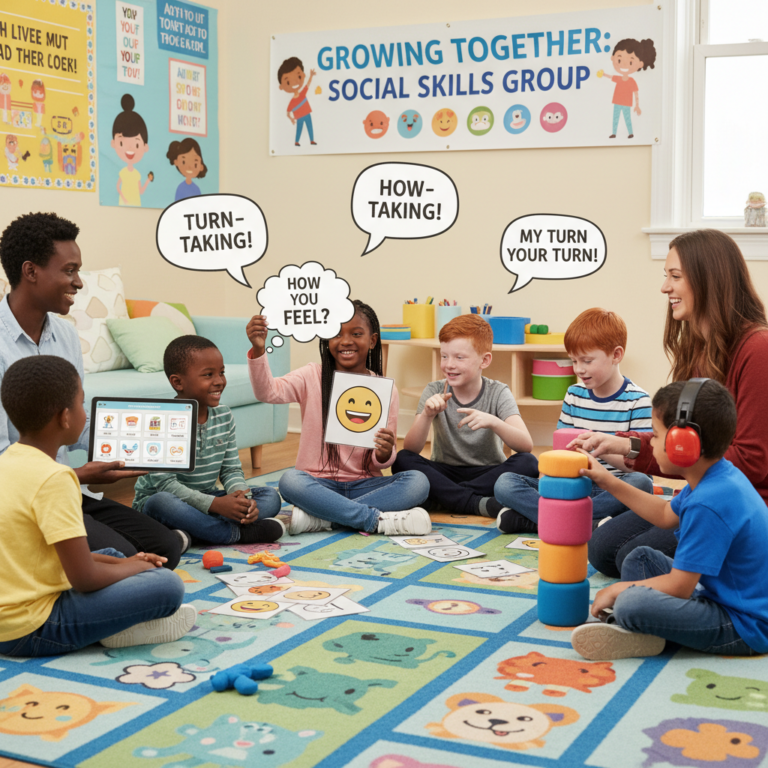
For many families, social interaction is a major concern. If your child is enrolled in social skills therapy autism or autism social skills groups, parent training can show you how to:
- Practice turn taking, sharing, and conversation skills during play at home
- Set up simple playdates with clear structure and support
- Reinforce flexible thinking and coping skills before and after social events
Studies suggest that when parents are actively involved in social skills interventions, children are more likely to use new skills in real‑world settings, not just in group sessions [6].
What a typical parent training plan can look like
Every program is different, but research reviewing dozens of parent training interventions gives you a sense of what to expect.
Many effective programs:
- Last between 10 and 30 weeks
- Offer sessions that are 60 to 120 minutes long
- Include both education and practice, with home assignments between meetings
Programs that include technology, such as video examples and telehealth coaching, can be especially helpful for home‑based training and have shown strong effectiveness across many countries and settings [8].
You may also see a mix of individual and group formats. Individual coaching has shown very high effectiveness, and group formats add peer support. Some providers combine both to give you personalized guidance and a chance to connect with other parents [8].
Registered Behavior Technicians (RBTs) often support these sessions by demonstrating techniques with your child while the BCBA explains what they are doing and why. You then practice the same skills with coaching and feedback [13].
In practice, effective parent training feels less like a class and more like a partnership. You bring your knowledge of your child. The team brings a toolkit of evidence‑based strategies. Together, you shape a plan that fits your family.
Coordinating parent training with broader autism services
You may already be working with an autism support therapy clinic or exploring integrated therapy autism services that combine ABA, speech, OT, and social supports under one roof. In these settings, parent training becomes the unifying thread that connects all parts of your child’s care.
Here is how coordination often works:
- Your team completes assessments, such as an autism functional behavior assessment, speech and language evaluations, and OT assessments.
- Clinicians collaborate on an autism therapy plan development process that identifies shared goals across services, for example communication, self‑care, and social engagement.
- Parent training sessions give you a single place to understand how each therapy contributes to those goals and what you can do day to day to support them.
If you are just starting to explore therapy support for autism or behavioral intervention programs, ask specifically how each provider includes parents, and how they coordinate with other disciplines.
You can also ask practical questions about access, such as autism therapy insurance accepted, available schedules, and whether telehealth options are offered for parent training.
Getting the most from parent training in ABA
Parent training works best when it is truly collaborative. You do not need to know everything about ABA to get started. You only need a willingness to learn, ask questions, and share honestly about what life looks like at home.
To make the most of your experience:
- Bring real examples from your week, both successes and challenges
- Ask your BCBA to prioritize a few key strategies at a time
- Practice small, realistic changes rather than trying to overhaul everything
- Share what feels sustainable for your family schedule and stress level
Over time, you will see that the strategies you practice in sessions begin to feel more natural. You will recognize patterns more quickly, respond with more calm and confidence, and see your child use new skills in places that used to be difficult.
If you are ready to explore options, connecting with an autism behavioral intervention provider or a comprehensive autism behavior therapy services program is a helpful next step. With the right support, parent training in ABA can become one of the most powerful tools you have in supporting your child’s growth.
References
- (GreenLight ABA, Breakthrough ABA)
- (Breakthrough ABA)
- (Breakthrough ABA, Regis College)
- (Breakthrough ABA, PMC – Iranian Journal of Public Health)
- (Behavioral Innovations, Regis College)
- (NCBI PMC)
- (GreenLight ABA, Regis College)
- (PMC – Iranian Journal of Public Health)
- (GreenLight ABA)
- (Breakthrough ABA, Regis College)
- (PMC – Behavior Analysis in Practice)
- (Regis College)
- (Behavioral Innovations)