Parent training ABA defined
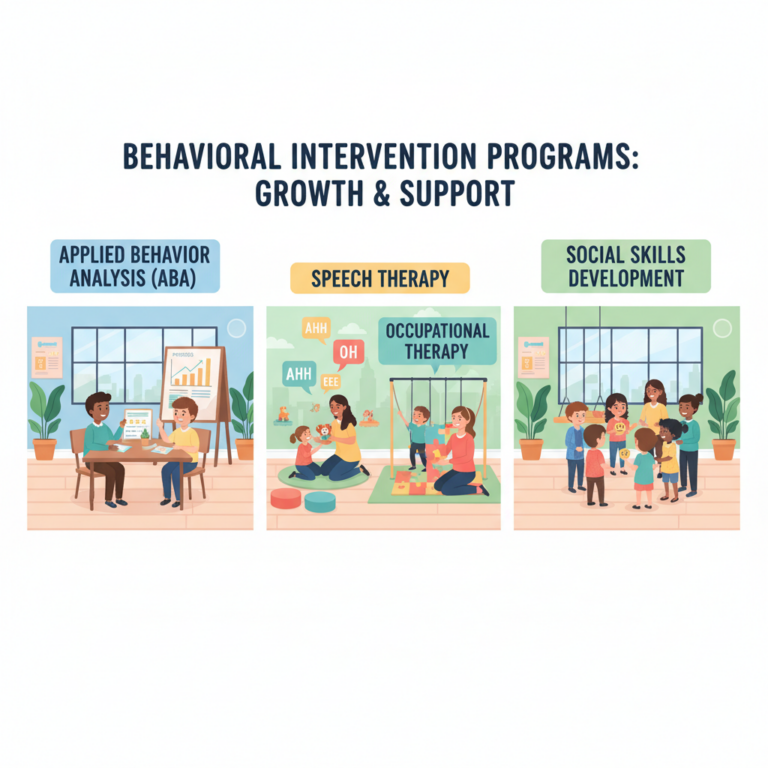
You’re looking for ways to support your child’s growth and behavior every day, and parent training ABA techniques put proven methods directly in your hands. Applied Behavior Analysis (ABA) parent training trains you to use evidence-based ABA strategies—like discrete trial training, prompting, and reinforcement—in everyday routines. By mastering these methods, you become an active partner in your child’s therapy, reinforcing skills outside clinical hours and boosting overall progress.
ABA parent training empowers caregivers to actively participate in their child’s treatment plan through evidence-based practices that address autism spectrum disorder (ASD), ADHD, and other behavioral challenges (Behavioral Innovations). When you learn to apply techniques such as the ABC framework—Antecedent, Behavior, Consequence—you gain clarity on why behaviors occur and how to guide your child toward more adaptive responses. A systematic review and meta-analysis of 17 papers up to March 2020 found parent training interventions yielded mild to moderate treatment effects on core ASD symptoms, with approaches like Pivotal Response Treatment and parent-focused training showing measurable improvements [1].
Understanding how and why these techniques work builds confidence. You’ll see firsthand how consistent, targeted ABA strategies create lasting change, from improved communication to reduced challenging behaviors. As you become fluent in these methods, your home transforms into a natural extension of therapy, reinforcing skills in every meal, play session, and transition.
Understand training benefits
Empower caregiver involvement
Parent training ABA techniques position you at the center of your child’s journey, deepening your role beyond observer to active coach. When you implement strategies under the guidance of a Board-Certified Behavior Analyst (BCBA), you internalize therapy goals and practice in real time. This level of engagement accelerates skill acquisition and ensures interventions align with your family’s rhythms and routines.
Foster child independence
As you apply shaping and prompting systematically, you help your child break complex skills into manageable steps. Over time, they move from full physical prompts to verbal cues and finally independent mastery. This scaffolded approach builds confidence for both of you, as your child experiences success and you witness their growing autonomy in self-care, communication, and play.
Reduce stress and improve outcomes
Adding ABA techniques at home can ease challenging behaviors and ease family stress. Studies of professionally supported parent-focused interventions show significant declines in problem behaviors and irritability, as well as enhanced parental sense of competence [1]. When you see fewer meltdowns and more positive interactions, everyone gains emotional bandwidth, making daily life more predictable and joyful.
Key ABA strategies
To unlock positive change, familiarize yourself with these core ABA strategies. Each one tackles behavior from a different angle and can be woven into your child’s everyday experiences.
Positive reinforcement
Positive reinforcement means delivering a rewarding stimulus immediately after your child exhibits a target behavior. Whether it’s verbal praise, a high-five, or a small token, reinforcing success increases the likelihood of that behavior recurring. For example, you might praise your child the moment they use a new word correctly, linking communication to a positive outcome.
Prompting and shaping
Prompting provides support when you expect a new skill. Physical, gestural, or verbal cues guide your child through each step. Over time, you fade prompts gradually—shaping the behavior toward independence. If your child struggles to wash hands, you can start with hand-over-hand guidance, then shift to gestural prompts, then to verbal reminders, until they complete the task alone.
Visual supports and timers
Visual schedules, choice boards, and timers reduce uncertainty and fuss around transitions. A visual timer set for five minutes can signal the approach of bedtime, lowering anxiety by showing how much time remains. Social stories or illustrated routines prepare your child for novel situations, reinforcing expected behaviors through clear, consistent imagery [2].
Natural environment teaching
Natural Environment Teaching (NET) embeds learning opportunities in everyday contexts. If your child enjoys playing with blocks, use that interest to teach color names or counting. When you harness natural motivation, skills become more meaningful and generalize more readily beyond structured sessions.
Pivotal Response Treatment
Pivotal Response Treatment (PRT) focuses on pivotal areas like motivation and self-initiation. You learn to create choice opportunities, follow your child’s lead, and reinforce attempts at communication. In one study, parents trained in PRT saw significant improvements in language utterances and social communication by week 12, with high fidelity in technique implementation and increased parental confidence [1].
Implement ABA techniques
Bringing ABA strategies into your home requires planning, collaboration, and flexibility. These steps help you establish a sustainable practice that meshes with family life.
Integrate strategies in daily routines
Identify moments—mealtime, bath time, homework—where ABA techniques fit naturally. During breakfast, reinforce your child for stacking dishes correctly. While dressing, use visual supports to outline each step. Over time, these micro-teaching moments accumulate, strengthening skills throughout the day. For guidance on building ABA practices into home life, see our resource on training for autism at home.
Collaborate with professionals
Working closely with a BCBA and Registered Behavior Technician (RBT) is essential. RBTs can demonstrate and coach you through specific techniques, ensuring correct implementation under BCBA supervision [3]. Regular check-ins let you troubleshoot challenges, refine goals, and maintain high treatment fidelity. You can also explore behavior coaching for parents to bolster your skill set.
Track progress and adjust
Data collection turns impressions into insights. Record occurrences of target behaviors, note prompts used, and tally reinforcement delivered. Reviewing trends helps you spot plateaus and adjust parameters like prompt level or reinforcement schedule. Keeping data aligned with clear goals ensures your efforts yield measurable gains over time.
Choose a training program
Selecting the right parent training path depends on your schedule, learning style, and the level of support you need. Compare formats and credentials before committing.
In-person and online programs
| Format | Description | Advantages | Considerations |
|---|---|---|---|
| In-person workshops | Hands-on, face-to-face sessions with BCBAs and RBTs | Direct feedback, peer support, practice opportunities | Scheduling constraints, travel time |
| Online self-paced courses | Pre-recorded modules you work through independently | Flexible timing, repeatable content | Limited real-time guidance, self-motivation needed |
| Virtual group training | Live webinars or small group coaching sessions online | Interactive Q&A, community learning | Fixed session times, group dynamics variability |
| Hybrid models | Mix of self-paced content and live coaching | Balance flexibility with expert support | May require juggling formats and schedules |
Online ABA parent training often takes four to eight weeks to complete and can be more accessible for busy families. Programs led by BCBAs with interactive lessons, video examples, and progress tracking deliver professional-level instruction without frequent clinic visits [4].
Group-based vs self-directed
Group-based programs foster peer accountability and shared problem-solving, which can lower isolation and build community. Self-directed formats suit those who prefer independent study but may lack immediate feedback. Professionally supported interventions tend to yield greater reductions in child-related stress and higher parental confidence than purely self-directed options.
Accreditation and credentials
Always choose training led by licensed BCBAs or experienced ABA providers. Verify that the program aligns with guidelines from the Behavior Analyst Certification Board and offers clear pathways for ongoing consultation. Insurance coverage, including Medicaid, may apply to parent training—confirm authorization to reduce out-of-pocket costs.
Sustain long-term progress
Maintaining gains requires consistent effort, ongoing collaboration, and access to continuing resources. These strategies help your family embed ABA practices into daily life for the long haul.
Generalize skills across settings
Skills learned at home should transfer to school, community, and social environments. Coordinate with teachers and caregivers to ensure everyone uses similar prompts, reinforcers, and visual supports. Consistent messaging helps your child apply new behaviors wherever they go, maximizing therapy returns [3].
Maintain consistency and fidelity
High-fidelity implementation means sticking to recommended reinforcement schedules, prompt hierarchies, and data collection procedures. Regularly revisit your training materials, role-play challenging scenarios with an RBT, and ask for booster sessions from your BCBA. Consistency is the backbone of lasting change.
Access ongoing support and resources
You don’t have to navigate this journey alone. Tap into newsletters, support groups, and community workshops to refresh your knowledge and share experiences. Explore resources like autism caregiver resources, autism parent training programs, and support group for autism families to stay connected.
Conclusion
Parent training ABA techniques open the door to meaningful, evidence-based change in your child’s life and your family’s well-being. By defining clear goals, mastering key strategies, collaborating with professionals, and choosing the right training format, you lay the groundwork for lasting progress. As you generalize skills across settings and sustain high-fidelity implementation, you’ll see how transformative daily ABA practices can be. Embrace this journey with confidence—your dedication turns every moment into an opportunity for growth.