What home-based virtual autism support means
When you hear “home-based virtual autism support,” you might think of video calls with a therapist. That is one part of it, but the concept is broader and more flexible than that.
Home-based virtual autism support refers to services and tools that help you support your autistic child or teen from home using secure video, apps, and digital platforms. This can include:
- Telehealth autism evaluations and follow up
- Telehealth ABA therapy and behavior coaching
- Teletherapy for speech and language
- Remote occupational or social skills sessions
- Online parent training and coaching
- Virtual reality or app-based practice for communication and daily living skills
Telehealth has made it much easier for families in rural or underserved communities to connect with autism specialists without long drives or high transportation costs, which can be a significant barrier to care [1].
When you bring services into your home virtually, you do more than “move therapy online.” You embed support into your child’s daily life, and you get a stronger role in guiding their progress.
Why home-based virtual autism support is growing
Several trends have pushed home-based virtual autism support to the forefront of care.
Telehealth has been shown to be an effective way to deliver evidence based autism treatment, including ABA based behavioral therapy, when in person options are limited or hard to access [2]. During the COVID-19 pandemic, many children who moved from in person services to telehealth kept similar therapy hours and even showed slightly higher rates of independent correct responses in virtual sessions compared with in clinic services [3].
At the same time, technology has become better suited to autism support. You now have:
- HIPAA compliant video platforms that protect privacy during telehealth sessions [2]
- Apps designed for communication, behavior tracking, and skill building
- Tools that help you as a caregiver track progress and receive coaching in real time
As these tools have matured, providers have created full telehealth autism support programs that are built specifically for home use rather than simply copying clinic based models.
Key benefits for you and your child
Better access to specialists
If you live far from an autism clinic or a large city, it can feel impossible to get consistent support. Telehealth removes many of those barriers.
Virtual autism therapy services connect you with specialists who might not be available locally but can see your child online. This improves access to both diagnosis and treatment and can significantly reduce wait times for new families [1].
Instead of planning for half a day off work and long drives, you schedule an online autism therapy for children session around your family’s routine. That flexibility makes it more realistic to keep up with weekly or multiple weekly appointments over the long term.
Comfort of the home environment
Many autistic children feel safer and more regulated in familiar surroundings. Telehealth autism support lets your child engage from their own room, a favorite chair, or another familiar space, which can lower anxiety and improve participation.
Receiving care at home can support more accurate assessment of how your child communicates, plays, and behaves in real life settings [1]. Therapists see what is typical for your child instead of what happens only in a clinic, and they can coach you on strategies that match your actual environment.
Stronger parental involvement
Virtual sessions often invite you to be an active part of therapy rather than a quiet observer in the waiting room. Telehealth makes it easier for both parents or multiple caregivers to join a session, even if one is traveling or working a different shift.
This increased parental participation has several advantages:
- You learn directly from the therapist in real time
- You can practice strategies in your own space with your child
- You and the therapist can adjust routines and supports quickly based on what you notice between sessions
Telehealth models have been shown to increase supervision time and communication between therapists and families, which leads to more frequent treatment plan updates and better caregiver training [2].
If you want more structured guidance, options like online parent training autism and remote coaching for parents of autism provide focused support to build your skills and confidence at home.
Continuity and long term support
Autism support is not a short term project. As your child grows, their needs change, and treatment plans should change with them. Telehealth makes it easier to keep up with consistent follow up and monitoring over years instead of months.
Regular virtual check ins allow providers to adjust goals as your child matures, without frequent in person visits or major schedule disruptions [1]. A well designed telehealth autism care plan combines therapy sessions, parent coaching, and periodic reassessment so that support stays relevant.
Types of home based virtual autism services
Home-based virtual autism support is not one size fits all. You can combine different service types depending on your child’s age, needs, and your family’s schedule.
Telehealth ABA therapy and behavior support
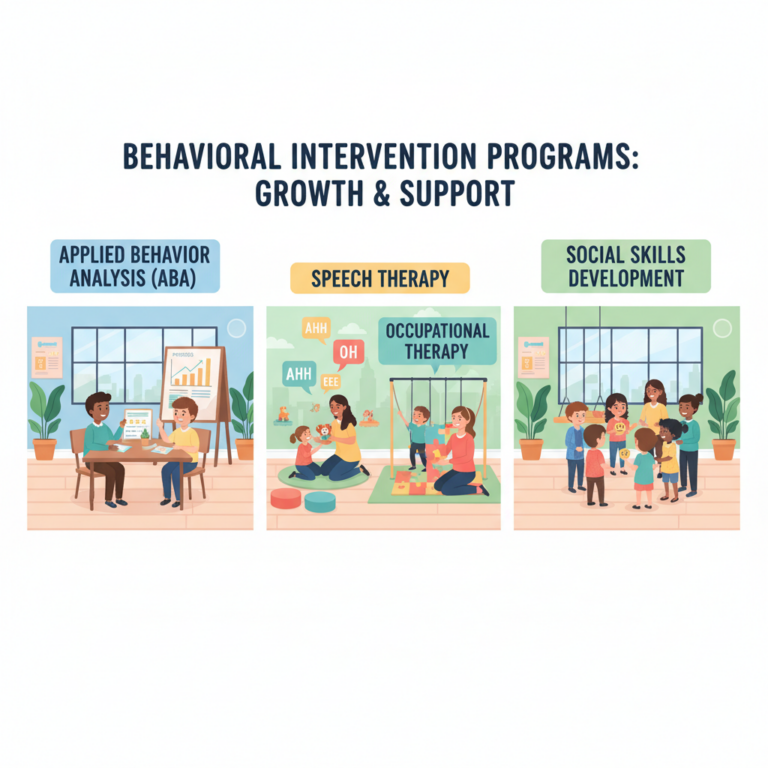
Applied Behavior Analysis (ABA) is one of the most studied approaches for autism. It focuses on teaching new skills and reducing behaviors that interfere with learning or safety. ABA does not have to happen in a clinic.
Telehealth ABA therapy has been validated as an effective model for many children, with ABA based programs delivered virtually producing meaningful gains in social and emotional skills [2]. Virtual sessions often include:
- Direct work with your child via video
- Coaching for you to implement strategies between sessions
- Review of behavior data you enter into an app or online tracker
A strong telehealth aba therapy autism program can also include:
- Virtual functional behavior assessment to understand why challenging behaviors occur in your home
- Remote behavioral intervention autism plans that fit your routines
- Virtual aba supervision services to ensure quality and consistency across your child’s care team
Home settings are ideal for behavior support because you and your therapist can design strategies around mealtimes, bedtime, school transitions, and community outings that your family actually experiences.
Teletherapy for speech, language, and social communication
Many autistic children need support with speech, language, and social communication. Teletherapy has proven to be a practical way to provide these services.
Through secure video platforms, speech language pathologists can deliver:
- Articulation practice
- Language expansion activities
- Social communication and conversation coaching
- Parent training so you can carry strategies into daily interactions
Platforms designed for teletherapy for speech in autism may use screen sharing, interactive whiteboards, visual supports, and videos to keep your child engaged during sessions. This is especially helpful if your child is already comfortable with screens and digital tools.
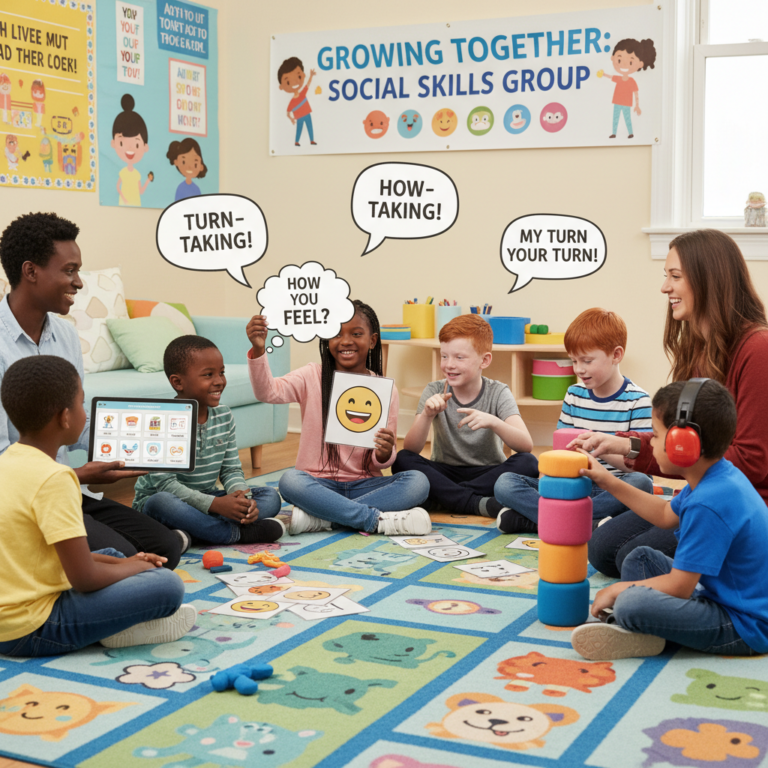
For social skills, remote social skills therapy can connect your child to small online groups where they practice turn taking, flexible thinking, and perspective taking, often using games or structured discussions. Research on virtual reality based social skills training has also shown promise, with VR environments helping children and adolescents with autism build social abilities in safe, controlled scenarios [4].
Online autism therapy and counseling
Not all needs are purely behavioral or educational. Many autistic children, teens, and adults benefit from counseling or mental health support that respects autistic experiences.
Virtual autism counseling services and virtual family counseling autism can help you and your child address:
- Anxiety and mood challenges
- Stress related to school or social situations
- Family communication and problem solving
- Sibling relationships and caregiver burnout
Receiving counseling from home can make it easier for a child or teen who finds new environments overwhelming. It can also allow more than one family member to join, so you can work together on specific situations that arise at home.
Parent training, coaching, and support
As a caregiver, you are with your child far more than any therapist. When you have tools that fit your child and your family, your daily routines become powerful learning opportunities.
Home-based virtual autism support now includes a wide range of resources for parents, such as:
- Live online parent training autism sessions
- Self paced video courses and interactive modules
- Remote coaching for parents of autism for ongoing guidance
These resources can help you learn to:
- Use reinforcement effectively
- Support communication and AAC use
- Create visual schedules and routines
- Respond to meltdowns or challenging behavior in a consistent way
Parent training delivered virtually has been shown to improve the consistency of ABA strategies at home and to strengthen outcomes for children by making learning continuous, not limited to therapy hours [5].
Helpful technologies and tools for home support
You do not need a complex setup to benefit from home-based virtual autism support. A stable internet connection, a tablet or computer, and a quiet space are often enough. Still, certain tools can make life easier.
Apps for communication and learning
Augmentative and Alternative Communication (AAC) apps such as Proloquo2Go and TouchChat have dramatically expanded communication options for many nonspeaking or minimally speaking autistic individuals [6]. Therapists can model AAC use during virtual sessions, and you can practice throughout the day.
Other apps focus on:
- Language building and concept development
- Visual schedules and timers
- Daily routine support for dressing, hygiene, or chores
Parent focused apps can help you track behaviors, sleep, or mealtime patterns, which supports more detailed discussions in your telehealth autism support programs sessions [7].
Organization and executive functioning tools
Older children, teens, and adults on the spectrum may benefit from digital planners and executive functioning tools. Platforms like Todoist, Microsoft To Do, or Tiimo offer visual scheduling and reminders that help with planning and time management [6].
You can work with your therapist in a telehealth autism center format to:
- Build a visual weekly schedule
- Set up routines with reminders for schoolwork, chores, or self care
- Practice breaking large tasks into smaller, manageable steps
Sensory and smart home tools
Sensory regulation is a major part of daily life for many autistic people. Technology can support this at home:
- Noise canceling headphones tailored for sensory needs
- Smart lighting with adjustable brightness and color
- Wearable devices that track heart rate or stress indicators
These tools can help your child notice and manage early signs of overwhelm, which you can then address with strategies developed through telehealth therapy for autism spectrum services [6].
Smart home devices such as voice assistants, programmable lights, and smart locks can also support independence and routine, particularly for older autistic individuals [6].
Virtual tools are most effective when they are used to support real world interaction, not replace it. The goal is to make connection, communication, and independence more achievable, not to keep your child on screens constantly.
What research says about virtual autism treatment
While virtual care is still evolving, there is a growing body of evidence that supports home-based approaches for many autistic individuals.
Telehealth ABA and direct therapy
Studies and clinical reports show that ABA based interventions delivered virtually can:
- Maintain similar weekly therapy hours compared to in person services
- Achieve comparable or slightly improved rates of independent correct responses in some children
- Increase caregiver participation and use of strategies outside sessions [3]
These findings support the use of telehealth services autism center models as a valid alternative when in person therapy is not possible or practical.
Online pivotal response treatment (PRT)
Stanford Medicine researchers transitioned pivotal response treatment, an evidence based naturalistic behavioral therapy, from in person to telehealth for preschoolers. In a pilot involving 17 children ages 2 to 5, including those with speech delays, children participated for several hours per week over 10 weeks to a year [8].
Therapists used:
- Virtual backgrounds
- Screen sharing
- Interactive onscreen objects that matched each child’s interests, such as dinosaur scenes or airports
These features were used to reward verbal engagement and keep children motivated. The researchers found that the online environment provided advantages over clinic based sessions by offering a vast range of tailored stimuli and strong control over session dynamics [8].
Future controlled research is planned to strengthen the evidence and help expand insurance coverage so more families can access this kind of online autism intervention programs [8].
Virtual reality and social skills
VR based interventions are an emerging area. A systematic review of 14 studies found that VR technology can improve social skills in children and adolescents with ASD, with more pronounced benefits for individuals with high functioning autism [4].
Key points from the review include:
- Immersive VR is more useful for complex social skills
- Nonimmersive VR might be better suited for basic social skills and is often more affordable
- Duration and frequency of VR sessions matter and should be optimized for each individual
- Some participants experienced side effects, such as dizziness or sensory overload, which need to be monitored carefully [4]
You can work with your providers to decide if VR based tools, used carefully and in moderation, might complement your child’s remote autism developmental support plan.
Screen time, “virtual autism,” and healthy balance
As you consider more virtual services, you may also hear about “virtual autism,” a term used for autism like symptoms in very young children that appear to be linked to heavy screen exposure and limited real world interaction.
This concept is different from autism spectrum disorder. Reports describe it as a temporary condition where symptoms improve when screen time is significantly reduced and adult child interaction increases [9].
If a clinician suspects “virtual autism,” the process often starts with ASD screening, followed by careful observation of how the child changes when screens are pulled back and face to face engagement is prioritized [9].
For your family, the key is balance:
- Use telehealth and digital tools intentionally, as part of online autism intervention programs and coaching
- Prioritize hands on play, sensory activities, outdoor time, and rich interaction with you and peers
- Work with your care team to set reasonable limits on non therapeutic screen time
Home-based virtual autism support should enhance real-world connection, not replace it. That is especially important for very young children whose brains are rapidly developing.
Making virtual services work in daily life
A successful home-based program is not only about the right therapies. It is about how well those therapies fit into your real life.
Preparing your home for telehealth
You do not need a dedicated therapy room, but a few simple steps can improve sessions:
- Choose a quiet, uncluttered area when possible
- Have basic materials nearby, such as paper, markers, simple toys, or fidgets
- Use headphones if your child tolerates them, especially in noisy homes
- Place the device at a steady angle so your child and therapist can see each other clearly
Being organized and prepared helps you get the most from virtual autism therapy services, and it makes sessions smoother for your child [2].
Collaborating on a coordinated care plan
Since virtual services often involve multiple providers, a coordinated telehealth autism care plan can help everyone stay aligned. You can ask your team to:
- Agree on a small set of shared goals
- Use common tools for tracking progress
- Share updates after key sessions or evaluations
If you use a telehealth autism center model, coordination may be built in. If your providers work at different organizations, you might be the main connector, but regular virtual family meetings can still keep everyone on the same page.
Knowing when in person support is still needed
Home-based virtual autism support is powerful, but it does not replace every in person service. You might still need clinic visits for:
- In depth diagnostic evaluations
- Medical or neurological assessments
- Certain occupational therapy needs that require specialized equipment
- Crisis support or intensive behavior intervention in severe situations
You and your providers can decide which components are best done in person and which can move online. Many families find a blended model most realistic over time.
Moving forward with home-based virtual autism support
You do not have to transform everything at once. A practical next step is to choose one area that would be easier or more effective if you shifted it into your home.
That might be:
- Starting telehealth therapy for autism spectrum with a focus on one priority, such as communication or behavior at mealtimes
- Adding remote behavioral intervention autism coaching to your existing in person services
- Enrolling in online parent training autism to build specific skills before adding more therapy hours
Home-based virtual autism support allows you to shape services around your child’s strengths, your family’s culture, and your daily rhythms. With the right mix of telehealth ABA, speech teletherapy, parent coaching, and ongoing supervision, you can create a flexible, responsive support system that grows with your child and fits your life.