Every family’s journey with autism is unique, and finding the right environment can make all the difference. As you explore options for a family therapy autism center, you want a program that brings your loved ones closer, teaches practical skills, and eases everyday challenges. In this guide, you’ll learn what family therapy for autism entails, how to compare different approaches, and what to look for when you tour a center. By the end, you’ll feel confident selecting a supportive setting where every member of your family can grow.
Understanding family therapy
Family therapy at an autism center aims to improve social interaction skills, emotional regulation, and parental understanding about autism, ultimately reducing familial stress and enhancing communication among family members [1]. Unlike one-on-one clinical sessions, family therapy invites parents, siblings, and sometimes extended family into the process. You’re not just a bystander—you’re an active participant in shaping strategies that work at home, at school, and in the community.
The core goals of family therapy autism centers include:
- Teaching caregivers how to respond effectively to challenging behavior
- Equipping siblings with tools to support their brother or sister
- Building family routines that foster independence and reduce anxiety
- Fostering empathy and mutual understanding in every relationship
Early involvement helps everyone feel prepared and valued. When you and your child’s therapist collaborate, you’ll notice small breakthroughs: eye contact during dinner, smoother bedtime routines, or a sibling who knows just when to step in. Those moments add up to meaningful progress.
Exploring therapy approaches
No single model fits every family, so it pays to understand the main techniques you might encounter. A well-rounded center will offer a blend of play-based, behavioral, cognitive, and systemic therapies to address your child’s needs and your family’s dynamics.
Play-based and PCIT
Techniques such as Play-Based Learning and Parent-Child Interaction Therapy (PCIT) are used in family therapy for autism to foster improved communication between parents and autistic children, thereby promoting family cohesion and support for the autistic individual [1]. In play-based sessions, a therapist guides you and your child through structured games that highlight positive interactions. PCIT goes further by coaching you in real time—sometimes through a one-way mirror—so you can practice effective praise, limit-setting, and emotion coaching on the spot.
Behavioral and cognitive methods
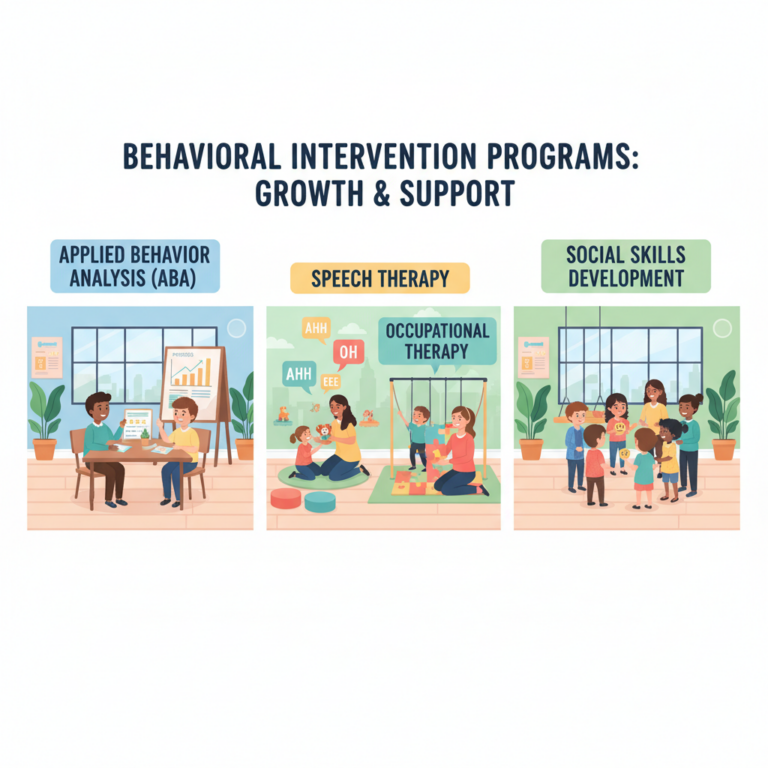
Applied Behavior Analysis (ABA) and Cognitive Behavioral Therapy (CBT) often form the backbone of skill-building plans. ABA breaks complex tasks into manageable steps and uses systematic reinforcement to encourage new skills. CBT teaches you and your child how to label emotions, challenge unhelpful thoughts, and develop coping strategies for anxiety or frustration.
Integrative and mindfulness techniques
Integrative family therapy approaches combining Family Systems Therapy, ABA, CBT, and mindfulness have been shown to reduce parental stress more effectively than traditional therapies alone for families of children with autism spectrum disorders [1]. Mindfulness exercises—simple breathing, body scans, or guided imagery—help everyone pause, reset, and approach challenges with a clearer mind.
Systemic therapy and narrative techniques
Systemic family therapy helps families of individuals with autism contextualize relational dynamics and communication patterns, overcoming biases like “oughtism” and strengthening empathy, thereby creating nurturing environments conducive to growth and acceptance in 2024 [1]. Narrative techniques and genograms offer a way to map family stories and pinpoint recurring patterns, giving you insight into how past experiences shape your present day interactions.
When you find a center that weaves together these approaches, you’ll benefit from both structure and flexibility—tailored strategies that evolve as your child grows.
Evaluating program features
As you narrow your list of prospects, compare what each center offers against your family’s priorities. A side-by-side view helps you spot gaps and overlaps quickly.
| Program feature | What to look for |
|---|---|
| Multidisciplinary team | Board-certified therapists, behavior analysts, social workers, and child psychiatrists |
| Family-centered philosophy | Active involvement in goal-setting, progress reviews, and weekly coaching [2] |
| Caregiver and sibling training | Hands-on sessions, observation opportunities, and follow-up materials (see caregiver training for autism) |
| Parent coaching and workshops | Group or individual sessions like autism support workshops or autism family education workshops |
| Therapeutic modalities | ABA, CBT, PCIT, play therapy, mindfulness, social skills groups |
| Progress tracking | Regular reports, data charts, family meetings to review goals |
| Insurance and affordability | Accepted plans, sliding‐scale fees, financial counsellor assistance |
| Community support networks | Links to support group for autism families or local parent cafés |
| Home-school coordination | Liaison with teachers, IEP support, training for teachers (see training for autism at home) |
That table gives you a clear checklist to weigh each center’s strengths. If you find one that checks off most categories, you’re on the right track.
Visiting and assessing centers
No amount of brochures can replace an in-person visit. When you tour a family therapy autism center, pay attention to both logistics and atmosphere. You want a setting that feels professional yet welcoming, structured yet warm.
Questions to ask a program director
- How do you tailor plans when siblings have different needs?
- What ongoing training do your therapists receive?
- How often do families meet as a group versus in private sessions?
- Can parents observe or join sessions remotely if needed?
- What measures confirm that a plan is working after three months?
What to observe during your visit
- Interaction style – Do therapists model respectful, patient communication?
- Family engagement – Are parents and siblings greeted as partners?
- Facility layout – Are there sensory-friendly spaces, quiet rooms, and play areas?
- Group sessions – Can you sit in on a social skills or parenting workshop?
- Progress tracking – Do you see charts or whiteboards documenting goals?
Even a single conversation with a lead therapist can reveal the depth of a center’s commitment. If you leave feeling inspired and supported, that’s a promising sign.
Preparing for your sessions
Once you select a center, setting the foundation for success begins at home. Your therapist will guide you through paperwork, but you can speed up the process by gathering a few essentials in advance.
Before your first meeting, collect:
- Medical and developmental history forms, including past evaluations
- Samples of your child’s communication attempts (photos, videos, or journals)
- A list of your family’s daily routines, stresses, and recent breakthroughs
- Any educational plans or school reports you have on file
- Specific questions about strategies you’ve tried and areas where you feel stuck
Having this information on hand lets your therapist craft a realistic plan from day one. Share it openly and honestly—you’re laying the groundwork for honest, effective collaboration.
Maximizing family support
Therapy sessions are only part of the equation. The real gains happen when you bring strategies into everyday life. Your goal is to turn clinical tools into habits that stick.
Embed skill practice in daily routines. For instance, if your child learns a new turn-taking game in therapy, set aside five minutes at breakfast for practice. If mindfulness calms an older sibling’s frustration, remind them gently to breathe when tension rises.
Lean on community resources. Joining a support group for autism families or enrolling in autism parent training programs can renew your motivation and introduce you to new ideas. Many centers offer behavior coaching for parents or resilience training for caregivers to keep you on track.
Balance focus on your child with self-care. Siblings benefit when their needs aren’t overshadowed—consider sibling support for autism activities that help brothers and sisters voice concerns and get guidance. Parents who practice self-compassion model resilience for the entire family.
A few final tips:
• Schedule weekly check-ins with your therapist to adjust goals.
• Keep a shared calendar of therapy, school, and family events.
• Use visual supports at home to reinforce routines and expectations.
• Celebrate every win, no matter how small.
With consistent follow-through, you’ll see the ripple effect of therapy extend into quiet moments at home, school success, and stronger family bonds.
Your family’s path forward
Choosing the right family therapy autism center is a big step toward greater confidence, communication, and connection for everyone in your household. As you weigh different programs, remember that the best fit is one that respects your family’s culture, meets your practical needs, and equips you with strategies you can use long after formal sessions end. From initial visits to everyday implementation, you hold a powerful role in driving your child’s progress.
If you’re ready to learn more about how to sustain momentum between sessions, explore our autism caregiver resources or join an upcoming autism family education program. Support is available, and you don’t have to navigate this journey alone. With the right center and a committed approach, your family can thrive.