What early intervention behavioral therapy means
Early intervention behavioral therapy is a group of services that support your child’s development in the first years of life, typically from birth to around age 3. During this time your child’s brain is especially flexible, so new skills can be learned more quickly and more deeply than later in childhood [1].
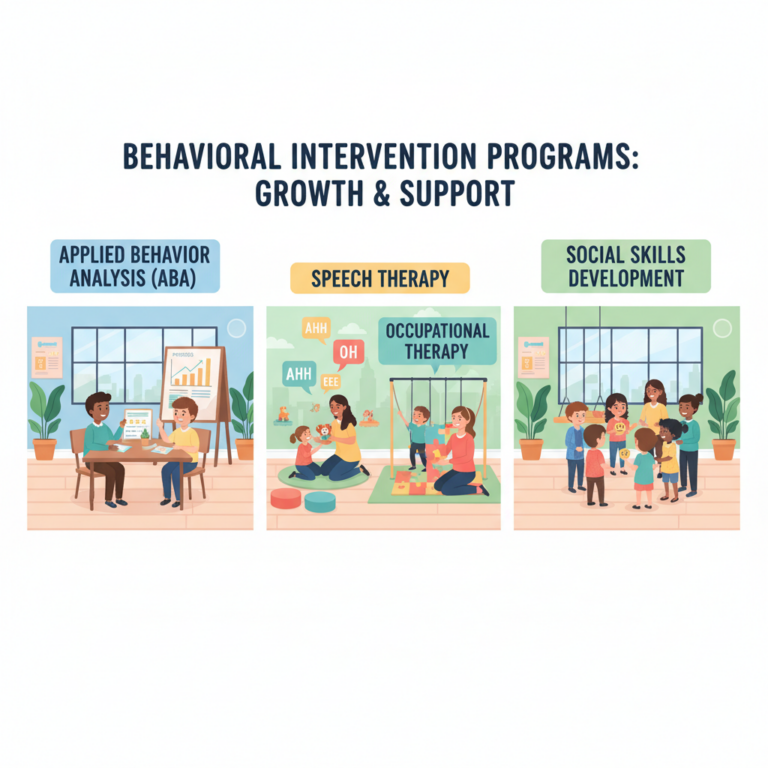
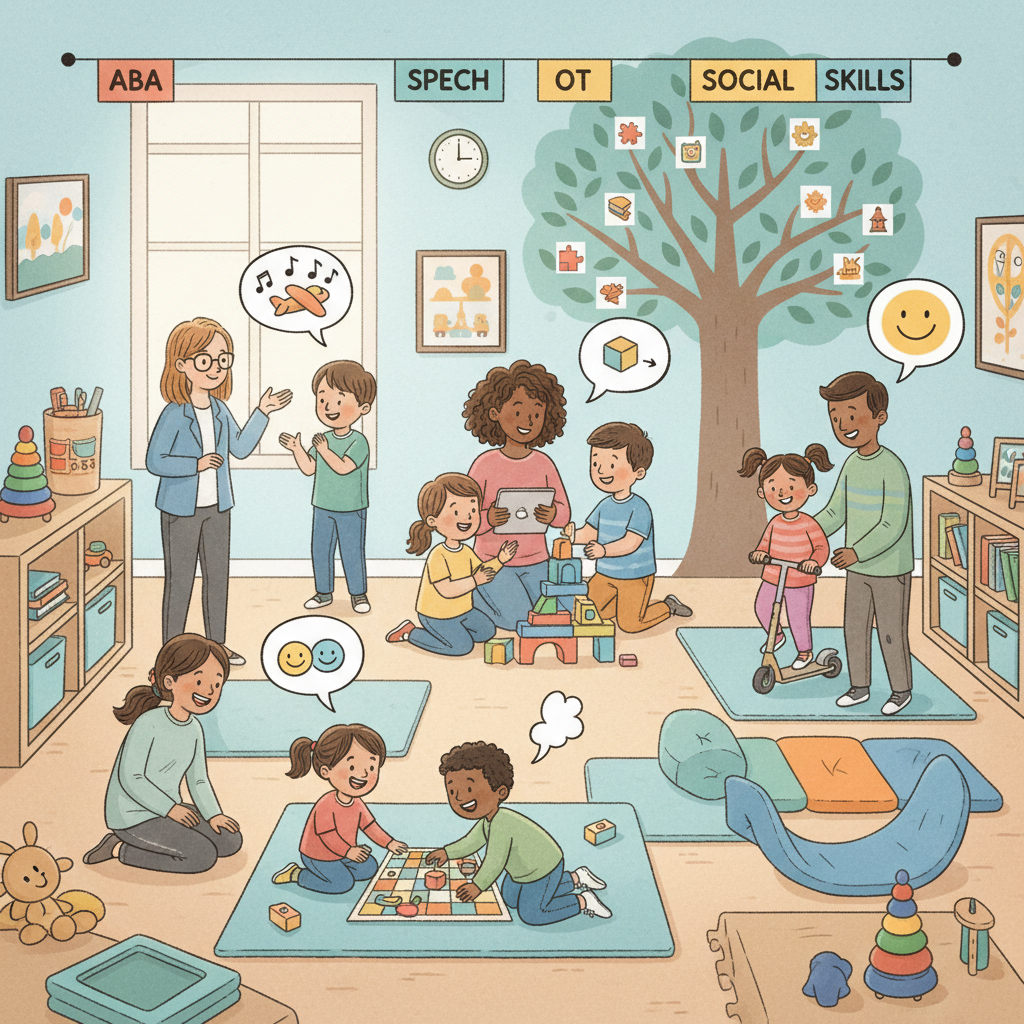
If your child has autism or developmental delays, early intervention behavioral therapy can help with communication, social skills, behavior, play, self-care, and school readiness. It usually combines several approaches, such as:
- Applied Behavior Analysis (ABA) and other behavioral interventions
- Speech and language therapy
- Occupational therapy
- Social skills and play-based therapies
You might receive some services through state Early Intervention programs, and others through private autism therapy programs or clinics. Your child can often do both at the same time.
Why starting early matters
Research consistently shows that acting early can change your child’s developmental path and improve long-term outcomes for both children and families [1]. This does not mean there are quick fixes or guaranteed results. It does mean that starting now gives your child the best chance to build important skills.
Experts note that early intervention behavioral therapy is most effective when started within the first three years, when the brain’s neural connections are most adaptable [1]. For children with autism, early intervention is linked with better communication, stronger social skills, and improved overall functioning into school age and beyond [2].
At the same time, it is important to keep expectations realistic. A large 2022 review of 33 randomized controlled trials found that early behavioral interventions for preschool children with autism produced small to moderate improvements in cognitive ability, daily living skills, and motor skills [3]. After accounting for study quality, the clearest ongoing benefits were in everyday living and motor skills, not all areas of development.
The takeaway for you is balanced:
- Early, consistent support can help your child make meaningful progress
- Effects vary by child, and not every area improves at the same rate
- Progress is usually gradual and builds over months and years
How early intervention behavioral therapy works
Early intervention behavioral therapy is not one single program. It is a coordinated set of assessments, goals, and services tailored to your child and family.
Developmental screening and assessment
Your first step is usually a developmental screening or evaluation. This can be done by your child’s pediatrician, your state Early Intervention team, a psychologist, or specialists at an autism support therapy clinic.
Assessments help you understand:
- Your child’s strengths and current skills
- Areas where there may be delays or differences
- Whether your child meets criteria for autism or other diagnoses
- Which types of therapies are likely to be most helpful
Developmental screening and assessment are central to early intervention because they guide an individualized plan, rather than a one-size-fits-all approach [4].
Building an individualized therapy plan
Once assessments are complete, your team works with you on an autism therapy plan development process. A strong plan will:
- Set clear, specific, and realistic goals
- Prioritize safety, communication, and daily living skills
- Respect your family values and routines
- Coordinate across behavioral, speech, occupational, and social skills services
If your child has challenging behaviors, a clinician may conduct an autism functional behavior assessment. This helps identify what triggers behaviors, what your child might be trying to communicate, and which replacement skills they need.
Applied behavior analysis and related interventions
Behavioral therapies are often a core part of early intervention for autism. Applied Behavior Analysis (ABA) is the most common framework, and many modern approaches are based on or influenced by ABA principles.
What ABA is and how it has changed
ABA, first developed by psychologist Ole Ivar Lovaas in the 1980s, focuses on understanding how environment and consequences affect behavior. In early work, children received hours of daily drills with rewards and corrections, and 9 of 19 children in one study met typical developmental milestones by age 7 [5].
Over the last 20 years, behavioral treatments have moved away from rigid table-top drills toward more naturalistic, play-based approaches that fit into everyday life [5]. Newer models focus on:
- Following your child’s lead in play
- Using natural rewards, such as access to favorite toys or activities
- Teaching in real-life settings like home, daycare, or playgrounds
- Supporting social-emotional development, not just discrete skills
You may see services described as autism behavioral intervention, autism behavior therapy services, or behavioral intervention programs. Many of these are ABA-based, but style and quality can differ. It is appropriate to ask providers how they involve you, how they respect your child’s autonomy, and how they measure progress.
Early Start Denver Model and Pivotal Response Treatment
Two ABA-based early intervention models you may hear about are:
- Early Start Denver Model (ESDM), a play-based program for very young children that targets social, language, and cognitive skills during everyday routines
- Pivotal Response Treatment (PRT), which focuses on key “pivotal” areas like motivation and self-management so that gains generalize to many skills [5]
Both are designed to feel more like engaged play than drills and can be combined with other therapies.
Early intensive behavioral intervention (EIBI)
Early Intensive Behavioral Intervention (EIBI) is a form of ABA designed specifically for children under age 5 with autism. Programs often recommend 20 to 40 hours per week, especially when started before age 2 [6].
EIBI typically uses:
- Positive reinforcement to encourage desired behaviors
- Structured teaching, such as discrete trial training (DTT)
- Naturalistic, play-based teaching embedded in daily routines
Studies suggest that EIBI can increase adaptive functioning and reduce the need for special services, and some children in these programs gained an average of 11 IQ points compared with children in routine treatment [6]. Outcomes still vary widely by child.
If you are exploring ABA or EIBI, you can ask about:
- How therapists will coordinate with your integrated therapy autism services
- What a typical session looks like
- How your child’s interests and sensory needs are respected
You can also look into an applied behavior analysis center that emphasizes collaboration, transparency, and family support.
Speech and language therapy in early intervention
Speech and language therapy is another central part of early intervention behavioral therapy, especially after an autism diagnosis. A speech therapy autism center or autism speech & language therapy program focuses on how your child understands and uses communication.
What speech therapy addresses
In early intervention, speech-language pathologists help your child build:
- Understanding of language, such as following simple directions
- Expressive language, through sounds, words, signs, or pictures
- Nonverbal communication, such as eye gaze, gestures, and facial expressions
- Social communication, like taking turns in conversation and staying on topic
For some children, the first goals are not spoken words but reliable ways to ask for what they need, like pointing to pictures, using a speech-generating device, or signing.
How speech fits with behavioral therapy
Speech therapy often works hand in hand with behavioral intervention. For example:
- ABA sessions might reinforce new communication skills that were first introduced by a speech therapist
- Behavior plans may include goals that require your child to use language or communication tools to get needs met
- Joint sessions can target problem behaviors that occur when your child cannot easily communicate
When these approaches are coordinated, you get a more complete therapy support for autism plan.
Occupational therapy and daily living skills
Occupational therapy (OT) in early intervention helps your child participate more fully in daily life. An occupational therapy autism program or ot for children with autism service may be recommended if your child has challenges with:
- Fine motor skills, such as grasping, drawing, using utensils, buttons, or zippers
- Sensory processing, including over or under sensitivity to sound, touch, movement, or light
- Self-care tasks, like dressing, toileting, or feeding
- Play, attention, and motor planning
OT within early intervention behavioral therapy
Occupational therapists often work inside the same framework as behavioral therapists and speech therapists. For example, your child might:
- Practice getting dressed as part of a daily routine while ABA therapists reinforce each step
- Use sensory activities before or during sessions to reduce overwhelm and improve focus
- Work on fine motor skills through play, art, or games while therapists track small, measurable gains
Research shows that early behavioral interventions can improve daily living and motor skills, which are areas where OT often plays a large role [3].
Social skills and play-based therapies
Social skills and play are not “extras.” For many autistic children, they are central therapy targets, especially in early childhood.
You may be offered:
- Individual or small group social skills therapy autism sessions
- Autism social skills groups that focus on turn-taking, sharing, joint attention, and cooperative play
- Naturalistic social interventions built into preschool, daycare, or home routines
Play-based early intervention strategies use both structured and unstructured play to support cognitive, social, and emotional development [4]. Therapists weave learning goals into activities your child enjoys, such as:
- Pretend play with dolls or action figures
- Building with blocks or sensory play with sand and water
- Simple games that require waiting, taking turns, and following rules
When social skills, behavior, speech, and OT are well integrated, you get a truly integrated therapy autism services approach that feels more natural for your child.
Early Intervention, private therapy, and how they fit together
In the United States, Early Intervention (often called EI or Part C) is a federal program that provides free or low-cost developmental services to children from birth to age 3 who meet eligibility criteria [7]. Services usually happen in your home or your child’s daycare and focus on family-centered coaching.
Strengths and limits of Early Intervention
EI can be a crucial starting point because it:
- Offers developmental screening and assessments
- Coordinates services like behavioral, speech, OT, and special instruction
- Provides family training and support at no or low cost
However, EI also has limits. Many states require a 25 to 33 percent delay or a diagnosed condition to qualify, there can be waitlists, and sessions may be limited to 30 to 60 minutes per week [7]. Services also end at age 3, which can create a gap in support.
How private therapy can help
Private therapy, such as services from an autism behavior therapy services provider or autism support therapy clinic, can:
- Start more quickly, since you do not have to meet state eligibility rules
- Provide higher session frequency than many EI programs
- Offer more specialized approaches in behavior, speech, OT, or social skills
- Continue beyond age 3 for consistent care [7]
You may be able to use autism therapy insurance accepted at these clinics. It is reasonable to ask about coverage, prior authorizations, and support with paperwork.
Combining services
Many families use both EI and private services at the same time. EI provides a baseline of free or low-cost support, while private therapy increases intensity and extends care beyond age 3 [7]. Coordinating both can be demanding, especially when you are managing multiple providers and schedules. When possible, ask your teams to:
- Share reports and progress notes
- Align goals so your child is working on similar skills across settings
- Use consistent strategies and communication tools
Programs that offer coordinated integrated therapy autism services can reduce this burden by keeping services under one roof.
Parent involvement and training are among the strongest predictors of positive outcomes in early behavioral interventions, because families provide daily opportunities to practice new skills in real-life situations [3].
Your role as a parent or caregiver
You are central to your child’s success in early intervention behavioral therapy. Professionals can guide and coach, but you are the constant in your child’s life.
Parent training and coaching
Many programs include parent training in ABA or broader parent coaching. These sessions help you:
- Understand your child’s sensory and communication profile
- Use consistent strategies to encourage communication and reduce problem behaviors
- Embed learning opportunities into daily routines like meals, bath time, and play
- Respond to challenging moments in ways that are safe and effective
Family training and support are key components of early intervention, and they empower you with practical tools you can use every day [4].
Supporting development while you wait
If you are on waitlists for formal services, there are still meaningful steps you can take. The CDC recommends:
- Talking, reading, and singing with your child daily
- Playing simple games that involve turns and interaction
- Spending time outdoors and exploring different environments
- Using their Milestone Tracker App to follow your child’s development from 2 months to 5 years [1]
These activities do not replace professional therapy, but they support your child’s growth and give you more information to share with your team.
What to expect in terms of time and intensity
Early intervention behavioral therapy is usually a long-term process rather than a short program. Many evidence-based interventions recommend significant time each week. For example:
- EIBI often involves 20 to 40 hours per week of structured behavioral therapy [6]
- Many early intervention approaches anticipate several years of support, tapering off around age 5 rather than ending quickly [5]
At the same time, a large review did not find a clear pattern that more hours automatically lead to better outcomes in every study [3]. Quality of intervention, fit with your child, and consistent family involvement all matter.
When you plan your child’s schedule, consider:
- Your child’s energy level and tolerance for structured time
- The balance between therapy and time for free play and rest
- Your family’s capacity for appointments and home practice
A collaborative autism therapy programs provider can help you right-size intensity and adjust over time.
Moving forward with early intervention behavioral therapy
If you are considering early intervention behavioral therapy after a diagnosis or concern:
- Share your observations with your child’s doctor and ask for developmental screening and referrals [1]
- Contact your local Early Intervention program to see if your child qualifies
- Explore private services such as aba therapy for autism, autism behavior therapy services, speech therapy autism center, occupational therapy autism, and social skills therapy autism
- Ask how providers coordinate care and how they include you in goal setting and daily strategies
Early intervention behavioral therapy is not about changing who your child is. It is about understanding your child, building on their strengths, and giving them tools to navigate the world more comfortably and successfully. With the right mix of behavioral, speech, occupational, and social skills supports, you can create a path that fits your child and your family.