Transformative ABA Therapy
Applied Behavior Analysis (ABA) therapy is a structured and evidence-based approach designed to enhance the quality of life for individuals with Autism Spectrum Disorder (ASD). This section will explore how ABA therapy can significantly transform communication skills through targeted interventions.
Enhancing Communication Skills
ABA therapy plays a vital role in improving communication skills in children with autism. This is achieved through various techniques and structured interventions. According to Apex ABA, ABA therapy targets areas such as language skills and social interactions by employing strategies such as data-driven assessments. These assessments ensure that interventions remain effective and can be adjusted based on observed progress over time.
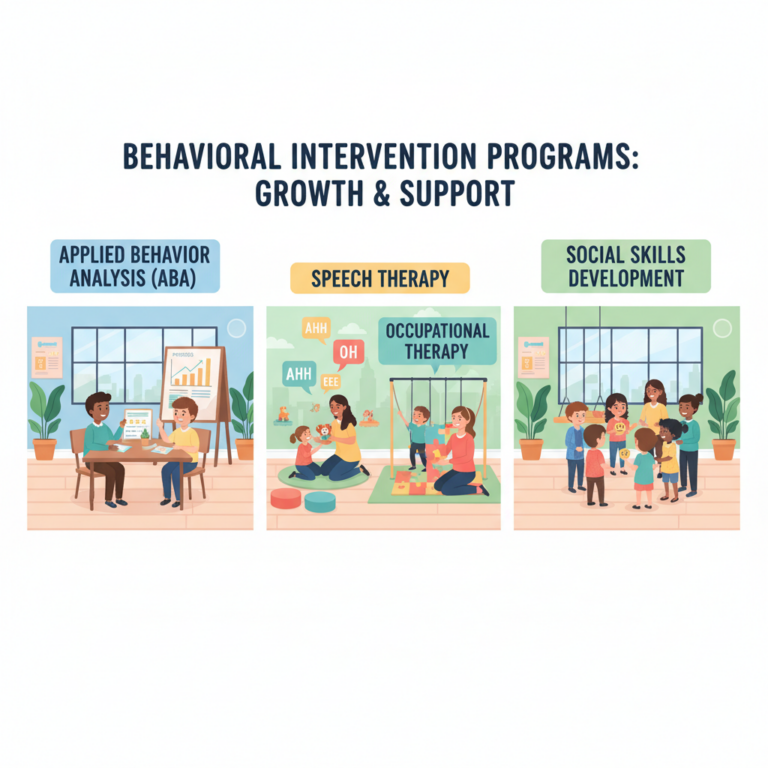
Techniques such as Functional Communication Training (FCT), Verbal Behavior Training (VBT), Prompting and Reinforcement Techniques, Picture Exchange Communication System (PECS), and Discrete Trial Training (DTT) are commonly used to facilitate effective communication skills. ABA therapy interventions are highly individualized, ensuring that each child’s unique communication needs are addressed.
For more information on the fundamental principles of ABA therapy, including positive reinforcement techniques, explore our section on key principles in ABA therapy.
Targeted Interventions
Targeted interventions in ABA therapy are designed to address specific communication challenges faced by children with autism. By focusing on individualized strategies, these interventions can significantly enhance a child’s ability to express needs, engage in meaningful social interactions, and improve overall quality of life [2].
The most effective targeted interventions include:
- Functional Communication Training (FCT): Teaches children to use alternative forms of communication to express needs and desires.
- Verbal Behavior Training (VBT): Focuses on teaching specific verbal behaviors and understanding social cues.
- Picture Exchange Communication System (PECS): Utilizes pictures to help children communicate, especially useful for non-verbal children.
To ensure the success of these interventions, continuous data monitoring and collaboration with families are crucial. This collaborative approach helps in adjusting the strategies based on the child’s progress and specific needs.
| Intervention Technique | Goal | Effectiveness |
|---|---|---|
| Functional Communication Training (FCT) | Alternative communication methods | High |
| Verbal Behavior Training (VBT) | Teaching verbal behaviors | Medium |
| Picture Exchange Communication System (PECS) | Non-verbal communication | High |
| Prompting and Reinforcement Techniques | Behavior reinforcement | High |
| Discrete Trial Training (DTT) | Structured learning sessions | Medium |
For more on individualized therapy approaches that break down complex skills, visit our section on tailored communication plans.
ABA therapy, with its structured and evidence-based methods, particularly enhances communication skills in children with autism. These specialized interventions provide a pathway for improved language development, making it essential for any treatment plan. Discover our options for center-based ABA therapy and learn more about the enrollment process to start your child’s transformative journey today.
Effective Strategies in ABA Therapy
Family Involvement Importance
Family involvement is crucial in Applied Behavior Analysis [3] for children with autism. By actively participating, families can reinforce skills learned during therapy at home, leading to more consistent and effective results. Research emphasizes the significance of parent training as it equips caregivers with strategies to support communication and behavioral development.
Parents and caregivers who understand the principles of ABA therapy can better support their child’s development. They can apply techniques learned during therapy sessions to everyday situations, creating a more holistic and supportive environment. To help families, Radiant Autism Center offers extensive parent training for autism, ensuring that caregivers are well-prepared to handle various scenarios.
By being involved, families can observe and track progress more accurately, providing valuable feedback to therapists. This collaboration not only enhances the child’s communication skills but also fosters a greater understanding of the child’s needs and behaviors.
Techniques for Communication Improvement
ABA therapy employs various techniques to improve communication skills in children with autism. These methods are evidence-based and tailored to the individual needs of each child, making them highly effective in enhancing communication abilities.
Role-Playing and Modeling
Role-playing and modeling are powerful techniques used in ABA therapy to teach new communication skills. By observing and imitating others, children can learn appropriate ways to express themselves and understand social cues. These methods are particularly useful in helping children grasp both expressive and receptive language skills.
Visual Aids
Visual aids play an essential role in reinforcing communication skills. Tools like communication boards and picture exchange communication systems (PECS) provide visual support that helps children better understand and express their needs. These aids make abstract concepts more tangible, aiding comprehension and communication.
| Technique | Description |
|---|---|
| Role-Playing | Children practice scenarios to learn social skills. |
| Modeling | Demonstrating behavior for children to imitate. |
| Visual Aids | Includes communication boards and PECS. |
Positive Reinforcement
Positive reinforcement is a cornerstone of communication skills ABA therapy. It involves rewarding desired behaviors to encourage their recurrence. By using positive reinforcement, children are more likely to repeat effective communication behaviors while reducing those that are less effective. This method contributes to improved relationships and overall quality of life.
Radiant Autism Center utilizes state-of-the-art techniques and tools to enhance communication skills in children with autism. Learn more about our ABA therapy for communication delays and center based ABA therapy options.
For additional information or to schedule an autism therapy consultation, please visit our website or contact us directly.
ABA Therapy Success Stories
Exploring specific success stories can help you understand the transformative impact of ABA therapy for your child. Here, we dive into a real-life case study and highlight the benefits of early intervention.
Case Study: Alex’s Progress
Alex’s journey with ABA therapy began early, demonstrating the significant improvements that can be made with a tailored approach. Before starting ABA therapy, Alex struggled with verbal communication and displayed numerous behavioral challenges. Once engaged in a personalized ABA program, his progress was remarkable [4].
Within a few months, Alex’s verbal communication skills showed significant improvement. Consistent use of targeted interventions led to:
- Increased eye contact
- Expanded vocabulary
- Improved sentence structure
- Reduced tantrums related to communication frustrations
The table below highlights Alex’s progress before and after starting ABA therapy:
| Developmental Aspect | Before ABA Therapy | After ABA Therapy (6 months) |
|---|---|---|
| Eye Contact | Rare | Frequent |
| Vocabulary | Limited (10 words) | Expanded (50+ words) |
| Sentence Structure | Simple phrases | Complete sentences |
| Behavioral Tantrums | Frequent (daily) | Reduced (weekly) |
For more information on individualized treatment options for your child, explore ABA therapy with individualized treatment plans.
Early Intervention Benefits
Starting ABA therapy at a young age has shown to significantly enhance communication skills, reduce behavioral issues, and foster greater independence in children with autism. Early intervention allows children to develop essential communication capabilities, laying a solid foundation for their future interactions and social engagements.
Key benefits of early intervention ABA therapy include:
- Faster acquisition of verbal skills
- Improved social interactions
- Enhanced adaptability to new environments
- Better management of communication-related frustrations
- Increased independence in expressing needs
Explore the significance of early intervention in our detailed article on early intervention autism therapy.
By learning from these success stories and the benefits of early intervention, you can make informed decisions about your child’s therapy options. Visit our center based ABA therapy page for more details on how we can support your child’s communication development.
Tailored Communication Plans
For children with autism, developing effective communication skills can be particularly challenging. At Radiant Autism Center, tailored communication plans are crafted to address the unique needs of each child, ensuring that foundational communication skills are nurtured effectively. This approach allows for individualized progress and the building of essential communication abilities necessary for everyday interactions.
Individualized Therapy Approaches
Individualized therapy approaches in ABA therapy are fundamental in addressing the unique communication needs of each child. Techniques such as Functional Communication Training (FCT), Verbal Behavior Training (VBT), and the Picture Exchange Communication System (PECS) are utilized to facilitate effective communication skills and improve social interactions [1].
At Radiant Autism Center, therapists conduct thorough autism therapy intake appointments to understand the specific communication challenges faced by each child. Based on these assessments, personalized therapy plans are developed, targeting both expressive and receptive language skills. This targeted approach ensures that every child receives the right support to develop their communication abilities.
For optimal results, these therapy plans are flexible and adjusted as the child progresses. The consistent use of reinforcement techniques and positive feedback further motivates children to engage in communication practices effectively.
Breaking Down Complex Skills
Breaking down complex communication skills into manageable, smaller tasks is a key principle in ABA therapy. This systematic approach helps children with autism learn and master each skill step-by-step, building a strong foundation for more complex communication interactions. Techniques like Discrete Trial Training (DTT) and Prompting are commonly used to teach and reinforce these skills [1].
| Technique | Function |
|---|---|
| Functional Communication Training (FCT) | Identifies the underlying causes of communication difficulties and teaches alternative ways to express needs [7] |
| Verbal Behavior Training (VBT) | Enhances both expressive and receptive language skills through structured interactions |
| Picture Exchange Communication System (PECS) | Uses pictures to help children communicate effectively, especially useful for non-verbal children |
| Discrete Trial Training (DTT) | Breaks down complex skills into smaller tasks and teaches them through repetition and positive reinforcement |
These methods are part of our comprehensive autism therapy with progress tracking at Radiant Autism Center. Regular reviews and adjustments based on the child’s progress ensure that the communication development remains on track and adapts to the evolving needs of the child.
By focusing on individualized therapy approaches and breaking down complex skills, Radiant Autism Center provides robust, personalized ABA therapy with individualized treatment plans that empower children with autism to develop essential communication skills. This enhances their ability to express themselves, engage with their surroundings, and build meaningful relationships. For more information, consider scheduling an autism clinic consultation to discuss the best treatment options for your child.
Key Principles in ABA Therapy
Positive Reinforcement Techniques
Positive reinforcement is foundational in Applied Behavior Analysis (ABA) therapy. At Radiant Autism Center, positive reinforcement techniques are used to encourage the reappearance of desirable behaviors. By linking effective communication with positive outcomes, children are motivated to enhance their communication skills.
This approach creates a supportive environment, fostering an interest in social interactions and improving communication over time [8]. Positive reinforcement helps individuals with autism understand that effective communication leads to positive outcomes, ultimately enhancing their ability to interact with others [9].
To understand how various reinforcement techniques can be utilized in different settings, you can explore our detailed article on social skills ABA therapy.
Verbal Behavior Therapy (VBT)
Verbal Behavior Therapy (VBT) is a specialized subfield of ABA therapy, focusing on teaching communication skills through the analysis of verbal behavior. VBT aims to promote independence and social interaction by breaking language down into specific categories known as “operants” [8].
At Radiant Autism Center, individualized VBT interventions are designed to address the unique communication challenges faced by children with autism. These structured interventions help develop the necessary skills for effective expression, thereby enhancing overall communication [1].
By focusing on the functional use of language, VBT helps children understand how to use words to get their needs met, respond to questions, and engage in meaningful conversations. For a more comprehensive overview of how tailored communication plans can benefit your child, visit our page on individualized therapy approaches.
For those interested in exploring the specific methods and benefits of Verbal Behavior Therapy, you can schedule an autism therapy consultation call with experts at Radiant Autism Center.
Communication Support Mechanisms
In ABA therapy, effective communication support mechanisms are essential for enhancing communication skills in children with autism. Utilizing tools such as visual aids and providing thorough family-caregiver training can significantly improve the outcomes of therapy.
Role of Visual Aids
Visual aids are a crucial component in ABA therapy for children with autism. They provide concrete representations of words or concepts, aiding in the learning process, particularly for children who may struggle with verbal language alone. Visual aids can include pictures, symbols, and written words that make abstract concepts more tangible.
Different types of visual aids frequently used in ABA therapy include:
- Picture Exchange Communication System (PECS)
- Speech-Generating Devices (SGDs)
- Sign Language and Communication Boards
These tools, integrated within the framework of Applied Behavior Analysis principles, help enhance social interaction and successful communication.
Visual aids can be used in various situations to support effective communication, making it easier for children to express their needs, emotions, and thoughts. For example, PECS enables children to communicate by selecting pictures that represent their wishes or feelings, while SGDs produce spoken words or phrases upon activation.
Family-Caregiver Training
Family involvement is a critical element in successful ABA therapy for autism. Educating and training family members and caregivers equips them with the tools and techniques needed to support their child’s communication development. This continued support extends beyond therapy sessions, reinforcing learned skills in daily life.
Key aspects of family-caregiver training in ABA therapy include:
- Teaching techniques like positive reinforcement
- Using tools such as visual aids and AAC devices
- Role-playing and modeling communication scenarios
- Expressive and receptive language development
Regular involvement in therapy techniques enables families to provide immediate feedback, helping the child understand that effective communication leads to positive outcomes. This collaborative approach not only boosts the child’s communication skills but also strengthens the bond between the child and family members.
By understanding the critical roles of visual aids and thorough family-caregiver training, you can see why Radiant Autism Center is committed to providing holistic and effective communication support mechanisms as part of our comprehensive individualized treatment plans. Visit our autism therapy intake appointment to learn more about how we can support your child’s communication and overall development.
References
- (Mastermind Behavior)
- (Apex ABA)
- (ABA therapy)
- (AdinaAba)
- (BehaviorSpan)
- (Mastermind Behavior)
- (Apex ABA)
- (Coachella Valley Lighthouse)
- (Step Ahead ABA)