You may notice that progress in therapy sessions can stall once you leave the clinic door. Caregiver training for autism equips you with the same strategies used by Board Certified Behavior Analysts and Registered Behavior Technicians so you can support your child’s development throughout everyday life. By mastering Applied Behavior Analysis methods, occupational therapy principles, and practical home routines, you become an active partner in your child’s treatment journey. This guide walks you through core techniques, research insights, and practical tips to make your training as effective as possible.
Understanding caregiver training
Caregiver training brings the skills and strategies of clinical professionals into your home and community. It involves systematic education on how to prompt communication, reinforce positive behaviors, and manage challenging situations using data-driven methods. You learn not just what to do but why each step matters, which builds your confidence and consistency.
When caregivers practice these techniques daily, children with autism are more likely to generalize new skills beyond structured sessions. Without active caregiver participation, research shows it can be more difficult for children to apply learned behaviors in real-world settings (Kind Behavioral Health).
Applying ABA techniques
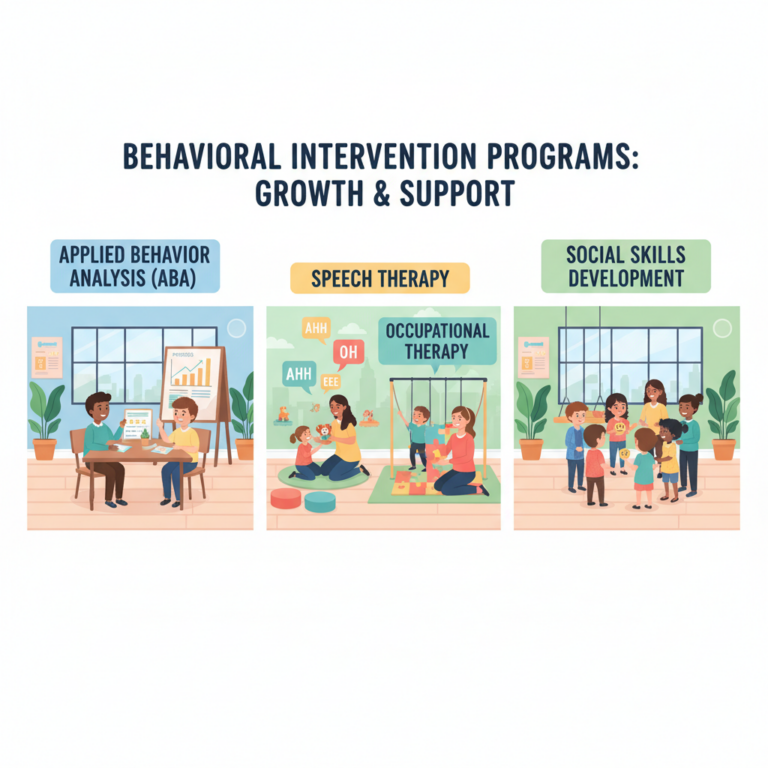
Applied Behavior Analysis (ABA) offers a toolbox of evidence-based approaches you can use at home, school, and in the community. Two methods stand out for caregiver training: Behavioral Skills Training and Natural Environment Training.
Behavioral Skills Training
Behavioral Skills Training (BST) uses a four-step process: instruction, modeling, rehearsal, and feedback. First, you receive clear instructions on a target skill, such as using a visual schedule or prompting communication with choice cards. Next, you watch a model—either a professional demonstration or video—so you can see the technique in action. Then you rehearse the skill while the trainer observes. Finally, you receive immediate, performance-based feedback to refine your approach. This cycle repeats until you feel confident and competent.
Natural Environment Training
Natural Environment Training (NET) emphasizes teaching skills within everyday contexts and routines. Rather than isolating targets in a clinical setting, you embed prompts and reinforcement into activities your child already enjoys, like snack time or playdates. NET helps children learn faster because they see the immediate relevance of a skill. It also keeps learners engaged by following their interests, which can lead to more spontaneous communication and generalization.
Integrating OT principles
Occupational therapy (OT) principles complement ABA by addressing sensory processing, fine-motor skills, and daily living routines. A comprehensive 79-page caregiver manual developed in 2024 draws on the Person-Environment-Occupation model and Sensory Integration theory to create practical modules with embedded videos, printable resources, and knowledge checks (University of St Augustine for Health Sciences).
By understanding how your child’s sensory profile influences behavior—whether they seek deep pressure or avoid loud noises—you can tailor interventions. For example, incorporating a scheduled sensory break before a challenging task may reduce the likelihood of a meltdown. OT-informed strategies also enhance daily living skills, such as dressing, grooming, and mealtime routines, empowering your child to participate more independently.
Reviewing research findings
Multiple studies confirm that caregiver skills training benefits both children with neurodevelopmental disorders and their families. Key findings include:
- Improved child development with effect size g = 0.30 (PubMed)
- Reduced problematic behaviors in children (g = 0.41) (PubMed)
- Enhanced caregiver parenting skills and knowledge (g = 0.72) (PubMed)
- Better caregiver psychological well-being (g = 0.52) (PubMed)
- Strengthened interpersonal family relations (g = 0.76) (PubMed)
Overall, caregiver-mediated interventions led to meaningful improvements in child behavior and family functioning (PubMed). Monthly training sessions at Kind Behavioral Health’s CCABA centers further reinforce these gains by keeping techniques fresh and tailored to your family’s evolving needs (Kind Behavioral Health).
Implementing skills at home
Turning theory into practice requires planning and consistency. Start by selecting one or two target behaviors or routines to focus on. You might choose increasing functional communication during meals or reducing tantrums at bedtime. Track your child’s responses with simple data sheets, noting prompts used and results achieved.
Pair interventions with daily activities. For example, if you’re working on requesting preferred items, set up a communication board by the toy shelf. Prompt your child to point to the desired picture before handing over the toy. Gradually fade prompts as they gain independence. Over time, you can expand this approach to other settings, from playgrounds to family gatherings.
Keeping sessions short and frequent—five to ten minutes several times a day—often works better than lengthy, formal drills. This flexible strategy aligns with Natural Environment Training and ensures skills stick.
Selecting a training program
Choosing the right caregiver training program can feel overwhelming. Here are key criteria to guide your decision:
- Evidence-based curriculum: Ensure the program includes proven ABA and OT methods, such as Behavioral Skills Training, modeling, rehearsal, and sensory integration strategies.
- Individualization: Look for programs that tailor sessions to your child’s developmental profile, sensory needs, and family routines.
- Ongoing support: Monthly check-ins or booster sessions help you refine techniques and troubleshoot new challenges.
- Delivery format: Decide whether you prefer in-person workshops, online modules, or a hybrid approach.
- Community resources: Programs connected to support groups or family education workshops can enhance your network and resilience.
You might explore autism parent training programs that offer structured modules, or attend autism family education workshops for interactive learning. If you seek peer connection, a support group for autism families can provide practical tips and emotional backup. For tailored counseling, consider counseling for autism caregivers or behavior coaching for parents.
Nationally, Autism Caregiver Training offers North America’s only online certification course for families and professionals working with individuals on the spectrum (Autism Caregiver Training). Bierman Autism Centers also provide on-demand webinars covering essentials like managing behaviors and increasing communication skills (Bierman Autism Centers).
By weighing these factors and exploring resources such as autism caregiver resources, training for autism at home, and resilience training for caregivers, you can find a program that fits your schedule, budget, and learning style.
This investment in your own skills lays the foundation for sustained progress, greater confidence, and a more harmonious family life. With the right training, you become the expert your child needs most.