Sensory Challenges in Autism
Understanding sensory challenges faced by children with autism is crucial for effective therapy. Sensory issues significantly impact daily functioning and overall quality of life.
Impact of Sensory Challenges
Sensory difficulties are prevalent in autism, with estimates ranging between 90-95% [1]. These challenges can exacerbate social communication deficits, increase restrictive and repetitive behaviors, and occur due to impaired regulation of central nervous system arousal.
| Sensory Difficulty | Prevalence in Autism (%) |
|---|---|
| Difficulties in Processing | 90-95 |
| Communication Deficits | High |
| Repetitive Behaviors | High |
Children experiencing sensory challenges may have trouble participating in daily activities such as eating, sleeping, dressing, and personal hygiene. These difficulties can place significant strain on both the child and their family [1]. At Radiant Autism Center, we understand the profound impact these challenges can have and offer tailored ABA therapy to address them.
Sensory Modulation Difficulties
Sensory modulation difficulties in children with autism can limit their participation in everyday activities. These challenges manifest in activities like eating, sleeping, dressing, and personal hygiene [1]. Such difficulties lead to a heavy burden on both the child and their family.
Children with autism often experience heightened or diminished reactions to sensory stimuli. For example, they may be overly sensitive to sounds, lights, or textures, making it hard for them to engage in typical activities without distress. Addressing these challenges through occupational therapy and specific sensory-based activities is essential for improving quality of life.
At Radiant Autism Center, our comprehensive therapy programs, such as ABA therapy for sensory issues, are designed to help children develop better sensory regulation. This aids in enhancing their ability to engage in daily tasks and social interactions, enabling them to lead more independent and fulfilling lives. For more information on our approach, visit our sections on early intervention autism therapy and occupational therapy.
By addressing sensory challenges early, you can significantly improve your child’s ability to cope with their environment. Radiant Autism Center offers specialized services to help your child navigate these challenges effectively. Learn more about our therapy services tailored to individual needs.
Therapeutic Interventions
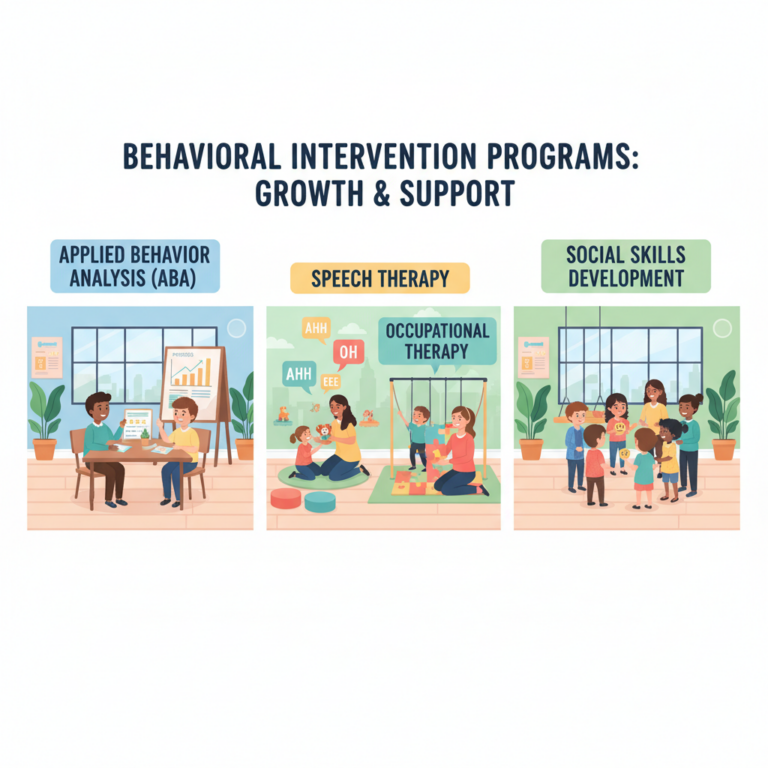
Applied Behavior Analysis (ABA) therapy and occupational therapy are key interventions for children with autism experiencing sensory challenges. These therapies help them navigate their sensory world and develop appropriate responses to sensory stimuli.
ABA Therapy for Sensory Challenges
ABA therapy is a scientifically validated approach that focuses on improving specific behaviors, such as communication and social skills, through systematic reinforcement strategies. At Radiant Autism Center, ABA therapy is designed to address sensory challenges by helping your child develop adaptive responses to sensory stimuli.
Key Benefits of ABA Therapy:
- Customized Treatment Plans: Each child receives an individualized treatment plan tailored to their unique sensory needs.
- Data-Driven Progress Tracking: Continuous monitoring and data collection are utilized to track progress and make necessary adjustments.
- Family Involvement: Parents are actively involved in the therapy process, receiving training to implement strategies at home [6].
ABA therapy can be conducted in various settings, including center-based aba therapy, one-on-one aba sessions, and social skills aba therapy. For detailed information on ABA therapy services, you can schedule an aba therapy consultation call.
Occupational Therapy Benefits
Occupational therapy (OT) is another effective intervention for managing sensory issues in children with autism. OT focuses on improving daily living skills, such as play, self-care, and learning strategies. The evaluation conducted by the occupational therapist assesses how the child responds to sensory input and identifies any obstacles to participation in daily activities [7].
Key Components of Occupational Therapy:
- Comprehensive Evaluation: The OT evaluation process includes a thorough assessment of sensory processing difficulties and their impact on daily functions [8].
- Sensory-Based Activities: Incorporation of sensory-based activities to help the child develop coping mechanisms and improve sensory regulation.
- Professional Expertise: Services are provided by licensed Occupational Therapists who hold advanced degrees and certification, often supported by Occupational Therapy Assistants [7].
Tables can help illustrate the effectiveness of these therapies in addressing sensory issues. Here is a comparison of progress indicators before and after therapy:
| Progress Indicator | Before Therapy | After 6 Months of Therapy |
|---|---|---|
| Ability to Tolerate Sensory Input | 30% | 70% |
| Reduction in Sensory-Related Meltdowns | 20% | 80% |
| Improvement in Social Interactions | 25% | 65% |
By choosing the Radiant Autism Center for your child’s therapy, you ensure they receive the highest quality care and support. For more information, check out our resources on autism therapy for social development and behavior intervention therapy.
Sensory Integration Therapy
Approaches to Sensory Integration
Sensory Integration Therapy (SIT) is a clinic-based approach that focuses on the therapist-child relationship and uses play-based sensory motor activities to help the child process and integrate sensory inputs NCBI Bookshelf. At Radiant Autism Center, therapists employ SIT as part of autism therapy for sensory issues, aiming to address sensory challenges effectively.
Key Approaches:
- Individualized Sessions: Every child receives a customized plan tailored to their sensory needs.
- Play-based Activities: Engaging sensory motor activities incorporated into therapy sessions.
- Therapist-Child Interaction: Strong focus on building a trusting relationship between the therapist and the child.
| Approach | Description |
|---|---|
| Individualized Sessions | Tailored plans for each child |
| Play-based Activities | Sensory motor activities incorporated into play |
| Therapist-Child Interaction | Emphasis on trust and understanding |
Effectiveness of SIT
Research on the effectiveness of Sensory Integration Therapy for children with autism presents mixed results. While some studies indicate improvements in client-oriented goals, the evidence base to support SIT is currently of low quality.
Evidence and Studies:
- Positive Effects on Goal Attainment Scale (GAS): Some studies show positive impacts on specific client goals when SIT principles are followed.
- Limited Evidence: Overall research, including studies by Case-Smith et al., indicates limited support for sensory-based interventions like weighted vests, therapy balls, and sensory diets. More rigorous methodologies and larger sample sizes are needed for conclusive results.
| Study | Findings |
|---|---|
| Goal Attainment Scale (GAS) | Positive effects noted |
| Case-Smith et al. | Limited evidence supporting sensory-based interventions |
Despite the mixed evidence, Sensory Integration Therapy remains a popular choice for addressing sensory challenges in children with autism. At Radiant Autism Center, SIT is integrated within a comprehensive treatment plan, which may include ABA therapy and other therapeutic interventions.
Exploring the effectiveness and approaches of Sensory Integration Therapy helps ensure that children receive the most effective and personalized care for their sensory issues. If you’re considering ABA therapy consultation call or autism therapy intake appointment, Radiant Autism Center offers a range of services to support your child’s development and well-being. For further details, visit us to learn more about our diverse autism therapy services.
Occupational Therapy Strategies
Occupational therapy (OT) plays a crucial role in addressing sensory issues for children with autism. This section delves into the OT evaluation process and sensory-based activities designed to support your child’s development.
OT Evaluation Process
The OT evaluation process is a comprehensive assessment to understand how a child responds to sensory stimulation and how this impacts their ability to participate in everyday tasks [9]. This process typically includes:
Initial Consultation: An occupational therapist meets with parents and children to gather background information and understand specific concerns.
Standardized Assessments: The use of various tools to evaluate sensory processing, motor skills, and functional abilities. This may involve observations and checklists.
Observation: The therapist observes the child in different settings, such as home, school, or clinic, to see how they interact with their environment and manage sensory input.
Parent and Teacher Interviews: Input from parents and teachers is crucial to get a full picture of the child’s sensory processing and difficulties.
Sensory Profile Analysis: Analysis of responses and behaviors to identify sensory sensitivities and preferences.
The data from these evaluations help create a tailored individualized treatment plan that targets specific sensory challenges, improves daily living skills, and enhances overall participation in daily activities.
Sensory-Based Activities
Sensory-based activities are designed to meet the unique sensory needs of children with autism. These activities can help improve focus, attention, and self-regulation, and may be incorporated into a child’s sensory diet [9].
| Sensory Activity | Purpose | Description |
|---|---|---|
| Swinging | Vestibular Input | Using swings to provide calming or stimulating input. |
| Brushing Protocol | Tactile Input | Gentle brushing of the skin to reduce sensory defensiveness. |
| Scooter Board | Proprioceptive Input | Kids lie on their stomachs and propel themselves to develop coordination and strength. |
| Therapy Putty | Tactile & Motor Skills | Stretching and pulling putty to improve hand strength and sensory feedback. |
| Ball Pit | Proprioceptive Input | Children can dive and play in a ball pit to get deep pressure input. |
These activities are usually part of an individualized occupational therapy plan developed by the therapist to ensure they meet the specific needs of the child. For effective outcomes, OT might also work in tandem with ABA therapy for autism, providing a comprehensive approach to sensory issues. Additionally, for families looking to understand more about potential therapies, scheduling an autism therapy evaluation might be beneficial.
By exploring these and other strategies, you can better address the sensory needs of your child, promote their developmental progress, and enhance their ability to interact with the world around them. For more information on these techniques, you may consider a consultation call to understand how therapy can be tailored to your child’s needs [10].
Sensory Processing Differences
Understanding sensory processing differences is crucial when considering autism therapy for sensory issues. Sensory processing refers to how individuals perceive and respond to sensory information. For individuals with autism, these differences can present unique challenges and require specific coping mechanisms and strategies.
Challenges and Coping Mechanisms
Individuals with autism spectrum disorder (ASD) often experience sensory processing differences. Some may be over-responsive to sensory input (hyperreactivity), while others may be under-responsive (hyporeactivity). These sensory challenges can lead to discomfort, anxiety, and avoidance of certain environments.
| Sensory Challenge | Description | Coping Mechanism |
|---|---|---|
| Hyperreactivity | Over-sensitivity to sensory stimuli, leading to discomfort or overwhelm | Use of noise-canceling headphones, creating a calm environment |
| Hyporeactivity | Under-sensitivity to sensory stimuli, requiring intense sensory input for engagement | Providing sensory-rich activities like sensory bins or weighted blankets |
One common coping mechanism includes using sensory tools, such as weighted vests and therapy balls, which can provide calming sensory input. Tailoring sensory activities to individual needs can help manage sensory overload or seeking behavior. For a deeper understanding of these interventions, refer to our section on occupational therapy benefits.
Developing Sensory Regulation
Developing sensory regulation involves creating strategies to manage sensory input effectively. Sensory integration therapy (SIT) and occupational therapy (OT) play significant roles in helping individuals with autism achieve sensory regulation. SIT approaches focus on improving the brain’s ability to process sensory information, while OT incorporates sensory-based activities tailored to individual needs.
| Approach | Description | Example Strategies |
|---|---|---|
| Sensory Integration Therapy | Improves processing of sensory information through structured activities | Swinging, brushing, deep pressure activities |
| Occupational Therapy | Uses sensory-based activities to enhance daily functioning | Sensory diets, adaptive equipment, fine motor exercises |
By incorporating sensory regulation strategies in behavior intervention therapy and early intervention autism therapy, children with autism can better manage sensory input. This can lead to improved participation in daily activities and social interactions.
Radiant Autism Center offers comprehensive ABA therapy for autism, supporting sensory and behavioral needs through individualized treatment plans. For an evaluation and customized approach to your child’s sensory challenges, consider scheduling an autism therapy evaluation or an autism clinic consultation to get started.
Understanding and addressing sensory processing differences through targeted interventions can greatly enhance the quality of life for children with autism. Effective strategies and tailored approaches are key components of successful autism therapy with progress tracking, helping your child thrive in various environments.
Benefits of Sensory Therapy
Enhancing Emotional Regulation
Emotional dysregulation is common among individuals with autism, often linked to sensory processing difficulties. Sensory therapy assists in developing coping mechanisms to manage sensory experiences, resulting in better emotional regulation. By learning to tolerate and appropriately respond to sensory stimuli, individuals can experience reduced anxiety, frustration, and meltdowns. This enhancement in emotional regulation allows for a more effective engagement in everyday activities and interactions.
Radiant Autism Center offers specialized ABA therapy, designed to address sensory issues and improve emotional regulation. Incorporating evidence-based techniques, therapy plans at Radiant Autism Center are tailored to meet the unique sensory needs of each individual. You can learn more about the benefits and techniques used in ABA therapy for autism on our website.
Improving Social Skills
Sensory processing difficulties can significantly impact a child’s capability to engage in social interactions. Sensory therapy helps children develop better coping strategies for handling sensory input, creating more opportunities for positive social interactions. By effectively managing their sensory environment, children with autism can better understand social cues, communicate more effectively, and engage in peer relationships.
Various sensory-based activities used in therapy help children practice and improve their social skills. At Radiant Autism Center, social skills aba therapy programs integrate sensory activities to address the unique sensory needs of each child, ensuring they can confidently participate in social environments. These structured activities encourage interaction, cooperation, and communication among peers.
For those seeking further improvements in social and emotional abilities, Radiant Autism Center also provides:
- Communication skills ABA therapy
- Behavior intervention therapy
- Early intervention autism therapy
| Benefit               | Impact on Autism            | Example Programs |
|-----------------------|-----------------------------|------------------|
| Emotional Regulation  | Reduced anxiety, frustration | ABA Therapy |
| Improved Social Skills| Enhanced peer interactions   | Social Skills ABA Therapy |
To further understand how Radiant Autism Center can help your child with autism therapy evaluation and services, explore our intake appointment process.
The individualized and comprehensive approach at Radiant Autism Center incorporates sensory-focused therapy, supporting both emotional regulation and social skill development. By offering a variety of center-based aba therapy options, Radiant Autism Center is dedicated to enhancing the quality of life for your child.
References
- (NCBI Bookshelf)
- (Autism Speaks)
- (Behavioral Innovations)
- (aba therapy with individualized treatment plans)
- (autism therapy with progress tracking)
- (autism therapy family involvement)
- (Autism Speaks)
- (autism therapy evaluation)
- (National Autistic Society)
- (aba therapy consultation call)
- (Shrub Oak International School)