As a parent or educator, you know that autism academic support is essential for unlocking your child’s full learning potential. Navigating the school system can feel overwhelming when you’re managing IEP implementation, specialized therapies, and classroom accommodations. But with the right guidance, you can build a cohesive plan that integrates iep support for autism and school based therapy autism, ensuring your child receives consistent, effective support across settings. In this guide, you will discover key challenges autistic students face, proven support strategies, how to develop an individualized intervention plan, and the services you can leverage to measure progress and empower your child’s academic growth.
Autism academic support overview
Autism academic support refers to a coordinated set of services, accommodations, and instructional methods designed to help students on the spectrum thrive in educational settings. These supports span universal classroom adjustments, targeted small-group interventions, and intensive one-on-one services. Many districts offer tiers of support aligned with your child’s Individualized Education Program (IEP) goals, combining therapy and academic instruction for seamless delivery.
According to IvyWise counselor Kimberly, there are three general levels of learning and special education support available to autistic students IvyWise
- Tier 1: Universal accommodations built into general education, such as extended time, visual schedules, and preferential seating
- Tier 2: Targeted interventions delivered in small groups, including social skills instruction and academic coaching
- Tier 3: Intensive individual supports, like one-on-one tutoring, in-school behavioral support, and specialized curriculum
By integrating services such as educational intervention autism and in school behavioral support within these tiers, you can ensure your child has a robust framework for learning and growth.
Identify common school challenges
Autistic students often navigate a range of academic and social hurdles that can impede classroom success. Understanding these challenges lets you tailor supports effectively:
- Social interactions and peer engagement can feel unpredictable and overwhelming
- Communication difficulties may include trouble with verbal instructions or expressive language
- Test anxiety and time pressures increase stress during assessments
- Sensory sensitivities—noise, bright lights, crowded hallways—can cause distraction or distress
- Working memory issues make note-taking, multi-step tasks, and organizing information more difficult
Inclusive education, where students with autism learn alongside non-autistic peers, improves social skills, peer interactions, empathy, and acceptance for all students Incredible Years. You can support inclusion by collaborating with teachers on autism school inclusion support and providing classroom accommodations that reduce sensory overload.
Implement proven support strategies
Effective autism academic support blends technology, structured instruction, environmental tweaks, social and communication training, behavioral approaches, and integrated therapies. Below are six core strategies:
Assistive technology tools
Incorporate digital and low-tech aids to reinforce learning and independence:
- Augmentative and Alternative Communication (AAC) apps like Proloquo2Go, TouchChat, and AssistiveWare to support non-verbal or minimally verbal learners Simitree
- Interactive educational apps such as Autism iHelp for speech, language, and cognitive skills
- Executive functioning tools like Todoist, Microsoft To Do, and Tiimo for planning, organizing, and time management
- Text-to-speech and speech-to-text software to accommodate diverse processing preferences
These tools complement autism cognitive support in school and can be integrated into daily lessons for greater engagement.
Structured teaching methods
Consistency and predictability help autistic learners navigate classroom routines:
- Visual schedules, picture cards, and charts to outline daily tasks and transitions Incredible Years
- Cue cards and non-verbal prompts that align with individual language levels
- Structured routines with clear beginnings and endings for activities
- Individual goal-setting frameworks to track progress
The Incredible Years Teacher Autism program shows that structured sessions and individualized cues improve engagement in early education settings.
Environmental accommodations
Modify the physical classroom to reduce sensory barriers and promote focus:
- Noise-canceling headphones or quiet workstations to minimize auditory distractions Concordia University, Nebraska
- Preferential seating away from doorways, windows, or high-traffic areas
- Flexible lighting options, including natural light and dimmer switches
- Scheduled sensory breaks or access to a calm-down corner
These adjustments, part of autism learning accommodations, create a supportive setting for learning.
Social and communication supports
Targeted interventions to build peer relationships and expressive skills:
- Social stories and role-playing to model appropriate social behaviors
- Peer-mediated instruction where classmates serve as social coaches
- Virtual reality or interactive robots for safe, repeatable social skills practice Linksaba
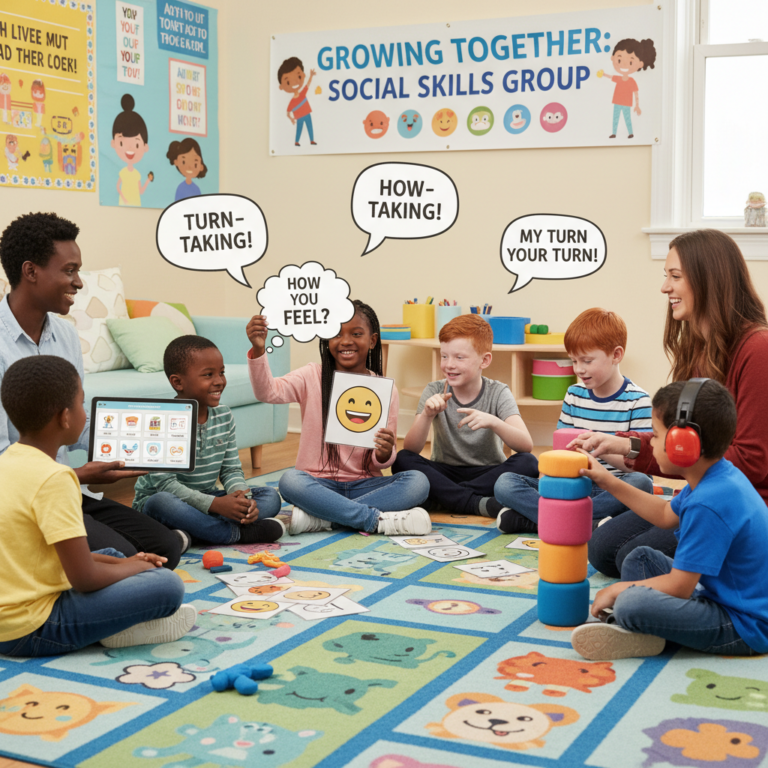
- Group therapy sessions focusing on conversational turn-taking and perspective-taking
By weaving these supports into daily activities, you foster natural opportunities for social growth.
Behavioral interventions
Evidence-based approaches help replace challenging behaviors with positive skills:
- Positive reinforcement strategies such as token economies and descriptive praising Incredible Years
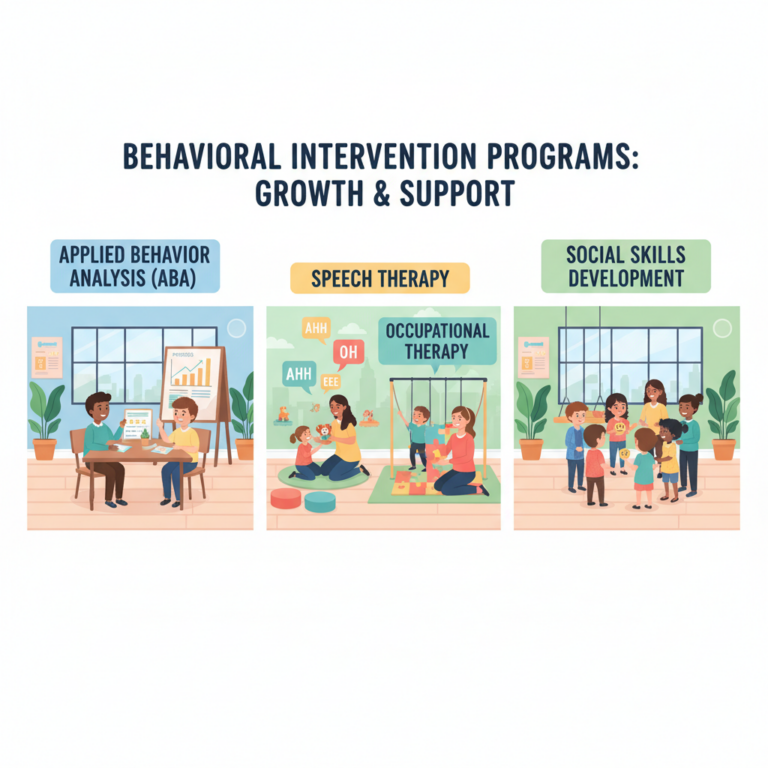
- Applied Behavior Analysis (ABA) techniques adapted for classroom use
- Functional Behavior Assessments to identify triggers and replacement behaviors
- Clear, consistent routines paired with visual behavior charts
Integrating in school behavioral support ensures behavioral goals align with academic and social objectives.
Therapies integration
Coordinate related services to maximize impact:
- Speech-language therapy embedded in literacy activities
- Occupational therapy working on handwriting during fine motor labs
- Physical therapy supporting motor planning in physical education
- Group social skills or play therapy woven into recess or lunch
Collaboration among therapists and educators, via school therapy for children with autism and therapies in school for autism, creates a seamless support network.
Develop individualized intervention plan
A tailored intervention plan ensures all supports work in concert to meet your child’s specific goals.
Using an IEP effectively
Your child’s IEP is the blueprint for academic success. To make it count:
- Define clear, measurable goals—“Jill will answer three story-comprehension questions twice a week” rather than broad statements Indiana Institute on Disability and Community
- Link each objective to evidence-based strategies and responsible staff
- Schedule regular progress reviews and data collection points
Partner with your district’s autism iep implementation services team to ensure fidelity and follow-through.
Collaborating with school staff
Strong communication and teamwork drive success:
- Hold quarterly meetings with teachers, therapists, and support staff
- Share observations from home, therapy sessions, and after-school programs
- Coordinate accommodations across general and special education settings
Leverage school collaboration autism center resources to streamline multidisciplinary efforts.
Setting measurable goals
Goals should be SMART—Specific, Measurable, Attainable, Relevant, Time-bound:
- Break academic tasks into discrete skills, such as “complete five math problems involving regrouping with 80 percent accuracy”
- Use graphs, checklists, and digital logs to chart weekly progress
- Celebrate milestones and adjust targets as your child advances
An autism learning intervention plan grounded in data keeps supports focused and effective.
Choose the right support services
Navigating available services can feel daunting. Consider these core options:
In-school therapy options
Therapy delivered within the classroom or pull-out rooms promotes generalization of skills:
- Speech-language therapists integrating communication goals into subject-area lessons
- Occupational therapists offering fine-motor practice during art or writing
- Behavior specialists running social skills groups during lunch or recess
Explore classroom therapy for autism and school-based therapy autism offerings in your district.
School-based ABA support
Applied Behavior Analysis in school settings targets specific behaviors within natural routines:
- One-on-one or small-group sessions embedded in instructional time
- Behavior technicians collaborating with teachers on reinforcement plans
- Data-driven decision-making for behavior reduction and skill acquisition
Connecting with school based aba support programs ensures continuity between therapy and classroom practice.
Professional intervention programs
Outside providers can supplement school services with specialized expertise:
- After-school social skills groups or summer camps tailored to autistic learners
- Private tutoring focused on reading comprehension, math strategies, or executive functions
- Community-based speech, occupational, or physical therapy integrated with educational goals
Resources like educational intervention autism and autism educational support services can help you locate reputable providers.
Measure progress and outcomes
Ongoing assessment and adjustment keep your plan responsive to your child’s evolving needs.
Monitoring academic growth
Use a mix of formal and informal measures:
- Curriculum-based assessments and classroom tests
- Teacher-reported checklists on attention, participation, and task completion
- Digital progress-monitoring tools that graph data over time
- Annual and triennial educational evaluations autism to review eligibility and service levels
Regular data reviews help you identify trends and celebrate gains.
Adjusting interventions over time
Be prepared to refine supports as your child develops:
- Update IEP goals based on progress data and changing priorities
- Introduce new accommodations or fade supports as skills generalize
- Reassess technology tools and teaching methods to match your child’s strengths
- Coordinate transitions between grade levels or school settings with fresh planning
Flexibility ensures your child continues to receive optimal support on their learning journey.
Empower your child’s growth
By combining targeted strategies, individualized planning, and the right mix of school-based and professional services, you can create a truly supportive learning environment. Maintain open communication with teachers and therapists, use data to guide decisions, and advocate for adjustments when needed. With purposeful autism academic support, your child can build confidence, independence, and academic success that extends far beyond the classroom. For further guidance on connecting with local services, visit school collaboration autism center or explore additional autism educational support services today.