Why Choose Radiant Autism Center
When considering Applied Behavior Analysis [1] for your child, choosing a trusted and effective provider is paramount. Radiant Autism Center is renowned for its exceptional services and comprehensive approach to treating autism.
Expert ABA Therapy Services
At Radiant Autism Center, you will find a team of highly qualified and experienced professionals dedicated to offering the best ABA therapy consultation call services. Each therapist is trained in evidence-based practices that are pivotal in creating substantial developmental gains. ABA therapy is widely recognized for its effectiveness in enhancing communication skills, fostering social interactions, and diminishing problematic behaviors [2].
Radiant Autism Center prides itself on delivering personalized care tailored to each child’s unique needs. The therapists conduct initial assessments, develop individualized treatment plans, and continuously monitor and revise these plans to ensure ongoing progress. For more information on how ABA therapy can improve your child’s communication skills, visit communication skills aba therapy.
| Service | Description |
|---|---|
| Initial Assessment | Comprehensive evaluation to determine the child’s needs |
| Treatment Planning | Development of individualized treatment plans |
| Ongoing Monitoring | Regular assessments and plan revisions to ensure progress |
Comprehensive Autism Treatment
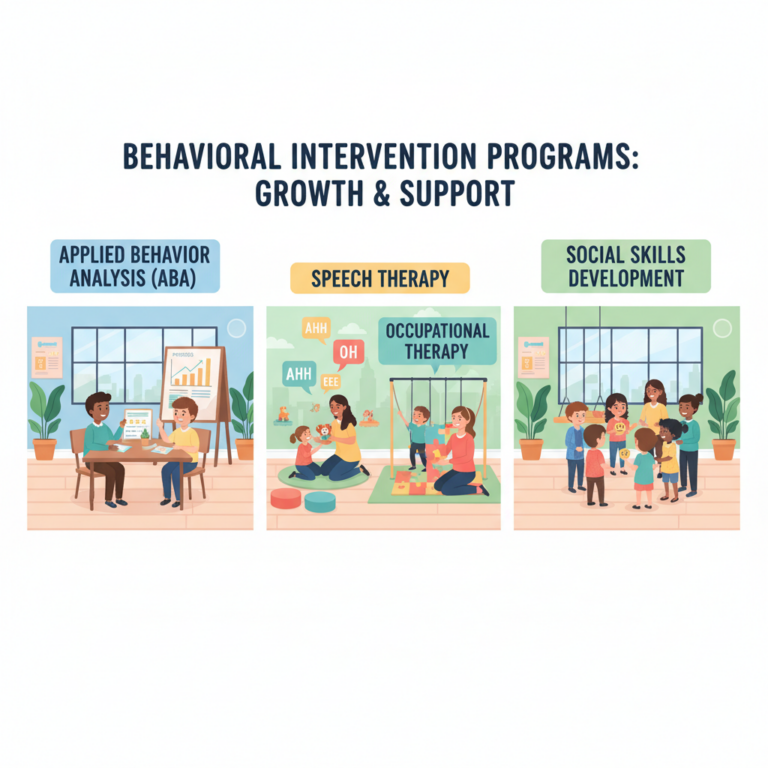
Radiant Autism Center is not solely focused on ABA therapy but offers a full spectrum of autism treatment services. The center adopts a holistic approach to help children achieve their highest potential by integrating various services that address multiple aspects of development.
These services include:
- Behavior intervention therapy
- Social skills training
- Family support programs [4]
- Early intervention autism therapy
Engaging in a comprehensive treatment plan ensures that your child receives the necessary support in all developmental areas. For instance, ABA therapy at Radiant Autism Center can span 3 to 5 years, with sessions scheduled 2 to 5 times per week, each lasting 3-7 hours.
Choosing Radiant Autism Center guarantees access to top-tier professionals, individualized treatment plans, and a comprehensive approach to autism treatment. Their commitment to excellence ensures that your child will receive the best care on their journey toward progress and development.
For more details on the benefits of ABA therapy, including improving communication and reducing challenging behaviors, visit aba therapy for autism.
ABA Therapy at Radiant Autism Center
At Radiant Autism Center, ABA therapy is tailored to meet the unique needs of each child. This approach ensures that the therapy is effective and meaningful for their progress.
Individualized Treatment Plans
Radiant Autism Center prioritizes individualized treatment plans for each child, recognizing the unique requirements and strengths that each individual possesses. Through customized intervention, therapists address specific goals and behaviors, incorporating evidence-based practices to ensure effective outcomes.
The development of an individualized treatment plan begins with a comprehensive assessment, which includes:
- Functional behavior assessment
- Various skill assessments
- Family input
- Data collection
These assessments help create a roadmap for intervention, outlining personalized goals, behavioral interventions, family involvement strategies, and methods for data collection to measure progress towards goals [6].
| Aspect | Details |
|---|---|
| Sessions per week | 2-5 times |
| Hours per week | 10-40 hours |
| Session duration | 3-7 hours |
Figures courtesy Surpass Behavioral Health
Collaboration with Families
Collaboration with families is a cornerstone of ABA therapy at Radiant Autism Center. This partnership strengthens the impact of therapy and ensures that progress is supported both within and outside of clinical settings.
Family collaboration starts with the initial consultation, where professionals assess the child’s current skills, understand family dynamics, set goals, and provide education on ABA. The journey includes:
- Initial consultation: Assessing skills, understanding family dynamics, goal setting, and education on ABA.
- Ongoing communication: Regular updates, feedback sessions, and involvement in therapy sessions.
- Family training: Equipping families with strategies and tools to support their child’s development at home [6].
The continuous collaboration involves assessment, treatment planning, and regular revisions to foster meaningful development and behavior change. Additionally, ABA therapy can be delivered through various modes including telehealth, school-based consultation, and home-based services, allowing for customized interventions [7].
Explore more about personalized approaches and family collaboration in our sections on ABA Therapy for Autism and Parent Training for Autism.
The Benefits of ABA Therapy
Applied Behavior Analysis (ABA) therapy offers numerous advantages for children with autism. By leveraging evidence-based techniques, ABA therapy helps enhance communication skills and fosters social interactions, significantly contributing to children’s development and success.
Enhancing Communication Skills
ABA therapy is pivotal in enhancing communication skills for children with autism [8]. Through techniques like prompting, shaping, and reinforcement, ABA therapists work to improve a child’s ability to make eye contact, initiate conversations, and respond appropriately to questions. The focus is on both verbal and non-verbal communication, providing children with the tools they need to express themselves effectively.
Evidence-based techniques used in ABA therapy aim to achieve the following:
- Eye Contact: Encourages children to make and maintain eye contact during interactions.
- Conversational Skills: Helps in initiating and maintaining conversations.
- Responsive Interactions: Improves the ability to respond appropriately in varying social scenarios.
Implementing ABA therapy ensures that progress in communication is integrated into real-life situations, making interactions more meaningful and effective. For more details on how ABA therapy can enhance communication, consider exploring communication skills ABA therapy.
Fostering Social Interactions
Social interactions can often be challenging for children with autism. ABA therapy fosters these interactions by enhancing social behaviors and relationships. It employs positive reinforcement to encourage the growth of new skills, leading to improved social interactions [2]. This practice promotes meaningful connections and helps in developing essential social skills.
Key areas of focus include:
- Social Behaviors: Teaching appropriate social behaviors and responses.
- Relationships: Improving the ability to build and maintain relationships.
- Group Activities: Participation in group activities to foster teamwork and cooperation.
The continual reinforcement and practice in social contexts help children apply these skills in various situations, from playgrounds to classrooms. For further information, visit social skills ABA therapy.
| Benefit | Outcome |
|---|---|
| Enhanced Communication | Increased ability to express needs and feelings |
| Improved Social Interactions | Better peer relationships and teamwork |
| Positive Reinforcement | Encouragement of desired behaviors |
ABA therapy at Radiant Autism Center tailors these interventions to the individual needs of each child. The structured approach ensures lasting benefits, contributing significantly to the child’s overall development.
For more about our personalized approach and to schedule an ABA therapy consultation call, explore ABA therapy with individualized treatment plans and center-based ABA therapy.
ABA Therapy Consultation Process
The process for an Autism Behavioral Analysis (ABA) therapy consultation at Radiant Autism Center is meticulously designed to cater to the unique needs of each child. The steps involved ensure a comprehensive approach, combining expert evaluation, customized treatment strategies, and continuous improvement.
Initial Needs Assessment
The journey begins with an in-depth initial needs assessment conducted by a licensed professional. This critical step involves evaluating the child’s current skills, identifying areas that require improvement, and understanding family dynamics. The consultation includes:
- Assessing communication and social skills
- Reviewing behavior patterns and identifying triggers
- Discussing family goals and concerns
The preliminary assessment lays the groundwork for the development of an individualized treatment plan. For more information, check our page on autism clinic consultation.
Tailored Treatment Plans
Using the data from the initial assessment, a tailored treatment plan is created to address the specific needs and goals of the child. These treatment plans focus on enhancing communication skills, reducing challenging behaviors, and fostering social interactions. Components of the tailored plan include:
- Specific, measurable goals
- Communication skill-building activities
- Behavior reduction strategies
- Direct 1:1 therapy sessions
Radiant Autism Center ensures that each plan is designed to evolve with the child, making necessary adjustments based on ongoing assessment results. Learn more about ABA therapy with individualized treatment plans.
| Treatment Focus | Description |
|---|---|
| Communication Skills | Activities aimed at improving verbal and non-verbal communication |
| Behavior Reduction | Strategies to reduce challenging behaviors |
| Social Interactions | Techniques to enhance social skills and peer interactions |
Continuous Monitoring and Revision
Continuous monitoring and revision are integral to the ABA therapy consultation process. Regular progress tracking allows therapists to adjust strategies to better meet the child’s evolving needs. This involves:
- Weekly progress reviews
- Monthly team meetings to discuss adjustments
- Regular feedback sessions with parents
The aim is to ensure effective intervention and consistent progress toward the child’s developmental goals. Discover more about our autism therapy with progress tracking.
| Monitoring Element | Frequency |
|---|---|
| Progress Reviews | Weekly |
| Team Meetings | Monthly |
| Parent Feedback Sessions | Regularly |
Radiant Autism Center emphasizes a collaborative approach, keeping families engaged and informed throughout the ABA therapy process, ensuring each child’s path to progress is supported and guided with precision.
Importance of ABA Therapists
ABA (Applied Behavior Analysis) therapists are pivotal in delivering effective treatment for children with autism. At Radiant Autism Center, the quality of care hinges on the expertise and qualifications of the ABA professionals.
Educational and Professional Standards
ABA therapists and providers adhere to stringent educational and professional criteria to ensure that your child receives the highest quality care.
- Certification: Most qualified practitioners hold certifications from the Behavior Analysis Certification Board (BACB). This includes credentials like Board Certified Behavior Analyst (BCBA) and Registered Behavior Technician (RBT).
- Education: ABA therapists typically possess degrees in psychology, behavior analysis, or related fields. Advanced roles, such as BCBAs, often require a master’s degree or higher.
- Training: Continuous training is essential for maintaining certification and staying updated with the latest methodologies, techniques, and research in ABA therapy.
For families seeking comprehensive support, it’s essential to understand the rigorous standards that ABA therapists maintain. Check out our services for ABA therapy for preschoolers to see how these standards translate into effective treatment plans.
Certification Requirements
ABA therapists must complete various certification requirements to offer their expertise. These requirements ensure that therapists are well-equipped to handle the complexities of autism treatment.
| Certification Level | Requirements | Continuing Education |
|---|---|---|
| BCBA | Master’s degree, supervised experience, BACB exam | 32 hours every two years |
| RBT | High school diploma, 40-hour training, RBT exam | Annual renewal, continuing education units (CEUs) |
BCBA: Board Certified Behavior Analysts must hold a master’s degree, complete supervised experience, and pass the BACB certification exam. They are required to complete 32 hours of continuing education every two years to maintain their certification.
RBT: Registered Behavior Technicians must have a high school diploma, undertake 40 hours of training, and pass the RBT examination. They are required to renew their certification annually and complete continuing education units (CEUs).
Interested in enrolling your child in our program? Learn more about our ABA therapy new client intake process or ABA therapy with individualized treatment plans.
Internal links provide further details on specialized therapy options and processes to guide families through their journey. Explore our comprehensive services such as parent training for autism to support the entire family.
Success Stories with ABA Therapy
Positive Behavior Reinforcement
Positive behavior reinforcement is a cornerstone of ABA therapy. At Radiant Autism Center, therapists use this method to help children learn new skills and behaviors. By rewarding positive actions, children are encouraged to repeat those actions, which leads to faster learning and greater overall progress [9].
| Behavior | Positive Reinforcement Strategy |
|---|---|
| Communication Skills | Verbal Praise, Token Rewards |
| Social Interactions | Extra Playtime, Social Rewards |
| Daily Routines | Stickers, Small Toys |
These strategies help instill essential skills and behaviors, aiding your child’s overall development. For more information, visit our section on communication skills ABA therapy.
Family Support for Progress
Parental involvement is key in achieving successful outcomes with ABA therapy. At Radiant Autism Center, families are actively involved in the therapy process to maximize the benefits. Parents contribute valuable insights into therapy plans and extend the learning outside of therapy sessions [9].
Ways Families Can Support ABA Therapy
- Participating in Therapy Sessions
By being present and engaged, parents can observe techniques and methods used by therapists. - Implementing Strategies at Home
Practicing the same positive reinforcement techniques at home ensures consistency, which is crucial for progress. - Providing Feedback
Communicating with therapists about what works and what doesn’t helps in tailoring the treatment plans to better meet the child’s needs.
| Family Role | Contribution |
|---|---|
| Participation | Attending Sessions, Observing Techniques |
| Home Implementation | Consistent Practice, Reinforcement |
| Feedback | Communicating Progress, Challenges |
For more information on the importance of family involvement, check our articles on autism therapy family involvement.
Consistent and structured ABA therapy enables children to reach important developmental milestones, and with parental support, the benefits extend far beyond the therapy sessions. This collaborative effort brings families closer to achieving long-term developmental goals that contribute to greater independence for the child. For additional family support resources, check parent training for autism.
References
- (ABA therapy)
- (Cleveland Clinic)
- (social skills aba therapy)
- (parent training for autism)
- (Surpass Behavioral Health)
- (Dream Big Children)
- (Advanced Autism Services)
- (Inclusive ABA)
- (Divine Steps Therapy)